
Most CPG founders do not fail because they lack passion or product-market fit. They fail because they run out of money before they reach profitability. Retail expansion costs real money: slotting fees, deductions, inventory builds, and the brutal reality of 60-90 day payment terms. When founders do not understand their financing options, they either over-dilute with equity or fall into predatory debt traps charging 30-56% APR.
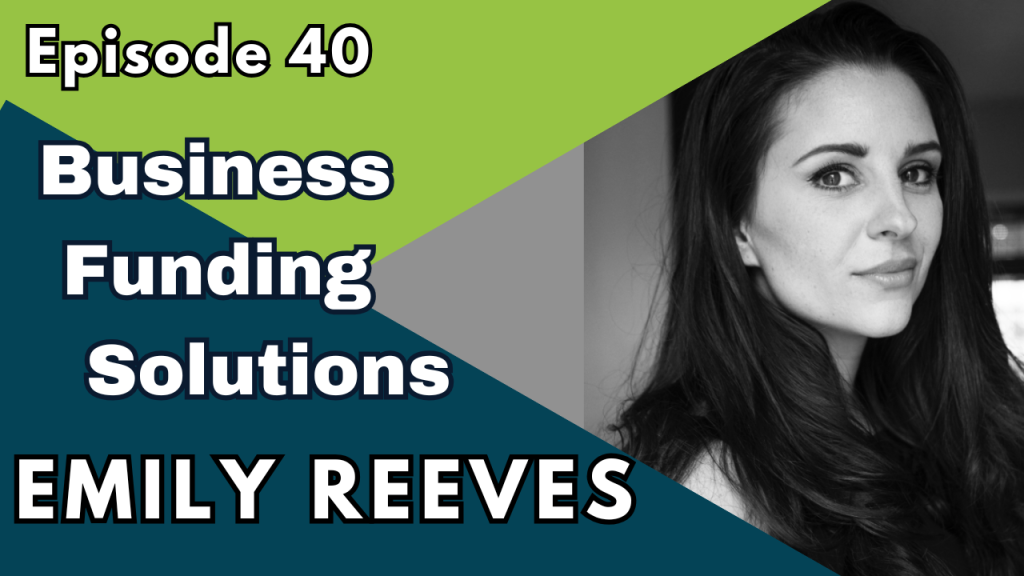
In Episode 40 of DissedMedia: A Startup Story, Ben Olmos sits down with Emily Reeves, Vice President of Capital Solutions at Bridge Marketplace, to break down how consumer packaged goods companies can access working capital without giving up equity. The conversation is direct, occasionally uncomfortable, and exactly what founders need to hear before signing bad loan documents.

Who Emily Reeves Is
Emily did not set out to become a capital expert. She was studying for the LSAT, planning to become a lawyer, when she fell backwards into factoring, a type of financing where businesses sell their receivables at a discount to accelerate cash flow. It was not glamorous, but it was fascinating.
She spent years talking to thousands of borrowers across every industry imaginable: companies importing paint adhesive from Norway, contractors sealing sidewalks for Dollar General, and CPG brands trying to get on retail shelves. She learned the mechanics of money, the psychology of founders under pressure, and the gap between what banks claim to offer and what small businesses actually need.
From there, she moved to C2FO, working with massive retailers like Walmart, Amazon, and TJ Maxx on supply chain financing. Then Bridge, where she connects businesses with over 200 lenders using a tech-forward marketplace. Emily is not a theorist. She is an operator who has seen what works, what fails, and why most founders wait too long to ask for help.
The Hidden Cost of Retail Shelves
One of the most important parts of this episode is Emily walking through the actual cost structure of getting a CPG product into a big box store. Founders see the placement as the win. Emily sees it as the beginning of a cash flow problem.
Here is what most founders do not budget for:
Slotting fees: retailers charge brands to secure shelf space. This is not speculation. This is standard.
Deductions: promotional costs, circulars (a Costco circular can cost $25,000 for six weeks), co-marketing expenses, and markdowns.
Payment terms: many retailers operate on net 60 or net 90 day terms. That means a founder delivers product, waits two to three months to get paid, and still has to cover payroll, production, and the next order in the meantime.
Forecast volatility: Emily describes a frozen food brand that forecasted $20 million in sales with a major retailer and hit $4 million. The company had already invested in inventory, co-packers, and distribution. The shortfall nearly destroyed the business.
The takeaway is simple: getting into Target or Walmart is not the finish line. It is the start of an entirely new set of financial obligations that most founders are not prepared to manage.
The Right Way to Use Debt
Emily’s rule is straightforward: use debt for the things you can get debt for. Use cash for the things you cannot.
Purchase order financing, invoice factoring, and asset-based lending exist specifically to solve cash conversion problems. Founders can finance POs, inventory, and receivables. What they cannot finance: marketing spend, insurance, hiring, and other operating expenses.
This is where founders make mistakes. They burn through cash trying to cover everything, then realize too late that lenders will not give them money for payroll or Google Ads. The smarter play is to offload the financeable expenses to debt, preserve cash for the rest, and keep the business moving.
Emily also breaks down cash conversion cycles. If a founder is paying for goods, delivering them two months later, and waiting another 90 days to get paid, that is a 150-day cycle. The money is tied up, the business is stalled, and growth becomes impossible. Debt products like PO financing and invoice factoring collapse that cycle, freeing up capital to reinvest immediately.
How Bridge Actually Works
Bridge is positioned as a capital marketplace, not a lender. The distinction matters.
Most founders knock on one or two bank doors, get rejected, and assume they are out of options. Bridge flips that model. A business submits high-level financials once. Over 200 lenders review it in real time and submit indicative terms. Founders can compare loan types, pricing, terms, and lender reputations before committing to anything.
Emily describes it as “TurboTax for business lending.” The analogy works. Upload financials once, let the system match you with the right lenders, then choose what makes sense for your business. No chasing down five different banks. No repeating the same pitch to skeptical loan officers. Just clarity, speed, and options.
The platform also creates a deal room, so every new lender a business talks to has immediate access to financials. This matters when financing needs change, which they always do. A founder who needs a PO loan today might need asset-based lending in six months. Bridge keeps that infrastructure in place so founders are not starting from scratch every time.
The Merchant Cash Advance Trap
This is where the conversation gets uncomfortable.
Emily explains that many CPG founders fall into merchant cash advances (MCAs) or revenue-based financing because it is fast and easy. No intensive underwriting. No full financial package. Sometimes no personal guarantee. A company can get $200,000 in three to four days.
The cost? 30% to 56% APR.
Founders justify it because they need cash immediately and banks move slowly. But the repayment structure kills businesses. MCA lenders take weekly or monthly payments directly out of revenue, which destroys cash flow. The business starts operating just to service debt, not to grow.
Emily is direct: good, cheap, fast, pick two. MCA loans are fast, but they are not cheap, and they are not good for the business. She describes working with multiple founders who stacked bad debt because they kept chasing speed over strategy. By the time they try to refinance, their cash position is so damaged that sophisticated lenders will not touch them.
The warning is clear: if a founder is considering an MCA, they have already waited too long to plan their financing properly.
Founder Mistake: Not Knowing Your Numbers
One of Emily’s biggest frustrations is founders who cannot answer basic questions about their business.
She will ask: Why did your cost of goods go up 20% in Q2? The founder responds: Let me call my accountant.
That is a red flag. Lenders are not giving loans to accountants. They are giving loans to founders. If a founder does not know their numbers, COGS, margins, cash flow, outstanding invoices, the lender assumes the founder cannot manage money. And they are probably right.
Emily’s point is not that founders need to do their own bookkeeping. It is that founders need to know what is happening in their business. When Walmart has not paid in 45 days, the founder should know. When freight costs spike, the founder should know. When a buyer forecast is wildly optimistic, the founder should push back.
Ben adds his own story: working with a client who did not know what QuickBooks was. That is an extreme case, but it illustrates the problem. Founders who treat financials as someone else’s job lose control of their business long before they lose access to capital.
Passion vs. Profit: The Cupcake Problem
The most memorable moment in the episode is Emily’s framing of the cupcake business versus the sock business.
She asks: would you rather build a cupcake company because you love cupcakes, or a sock company because the unit economics make sense?
Most people pick cupcakes. They think passion drives success. Emily argues the opposite. Startups require resilience, and resilience comes from understanding constraints. The sock company wins because it is built on profitable fundamentals, not emotional attachment to a product.
She is not saying founders should not care about their product. She is saying that caring is not enough. If the margins do not work, if the CAC is too high, if the business model requires endless capital injections, passion will not save it. At some point, the numbers have to work.
Ben ties this back to a principle he has repeated throughout the podcast: businesses exist for revenue and profitability first. Everything else, culture, mission, perks, comes from profit. If the business cannot turn profit, it does not survive long enough to care about the rest.
Tariffs, Supply Chain, and Market Shocks
Emily also addresses how Bridge responded to the recent tariff chaos.
When tariffs hit, CPG brands that were importing from China suddenly faced massive cost increases. Companies that did not need financing before needed it immediately. Companies that had financing in place needed more of it.
Bridge moved quickly. They went to their lender network, identified which lenders were still lending aggressively, and matched businesses with capital sources that could handle the uncertainty. Some lenders pulled back. Others doubled down. Bridge’s job was to separate signal from noise and keep founders moving.
Emily also notes that the tariff situation exposed how unprepared many founders were. They had not diversified suppliers. They had not built margin buffers. They had not modeled worst-case scenarios. The brands that survived were the ones who had already thought through contingency plans.
The takeaway: external shocks are not anomalies. They are business realities. Founders who plan for volatility survive. Founders who assume smooth sailing do not.
What Founders Should Do Next
This episode hands founders a clear decision framework:
1) Know your financing options before you need them
Applying for capital when the business is desperate means accepting worse terms, higher costs, and fewer options. The best time to secure financing is when cash flow is strong and lenders see stability.
2) Use debt strategically
Finance POs, inventory, and receivables with debt products designed for those use cases. Preserve cash for things like marketing, hiring, and insurance that lenders will not touch.
3) Avoid merchant cash advances
If an MCA looks like the only option, the real problem is that the founder waited too long to build a financing strategy. The cost is not worth the speed.
4) Understand your numbers inside and out
Lenders will ask about COGS, margins, payment terms, and cash flow. If a founder cannot answer those questions confidently, the lender will walk. More importantly, the founder is operating blind.
5) Treat financing like infrastructure, not a side project
Finding capital is a full-time job if done wrong. The smarter play is to use platforms like Bridge that aggregate lenders, streamline diligence, and keep financing options open as the business evolves.
6) Plan for the real cost of retail
Slotting fees, deductions, payment delays, and forecast misses are not edge cases. They are standard. Founders who do not budget for them will burn through capital faster than they expect.
Where to Learn More
Emily Reeves and Bridge Marketplace
Email: ereeves@bridgemarketplace.com
Emily Reeves on LinkedIn
Bridge has over 200 active lenders on the platform and offers financing from $10K to $2M+ for CPG companies, franchises, and retail businesses.
About the Show
DissedMedia: A Startup Story follows the build-in-public journey of DissedMedia and The Daily Pitch, with founder and operator conversations focused on what it really takes to build, scale, and survive.