
Raising capital is one of the most time-consuming and emotionally draining parts of building a startup, and for many founders, it is also the least understood. Between outdated pitch deck advice, myths about “warm intros,” and an increasingly crowded venture landscape, it is no wonder startup fundraising can make founders feel stuck.

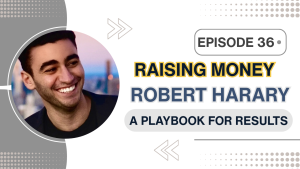
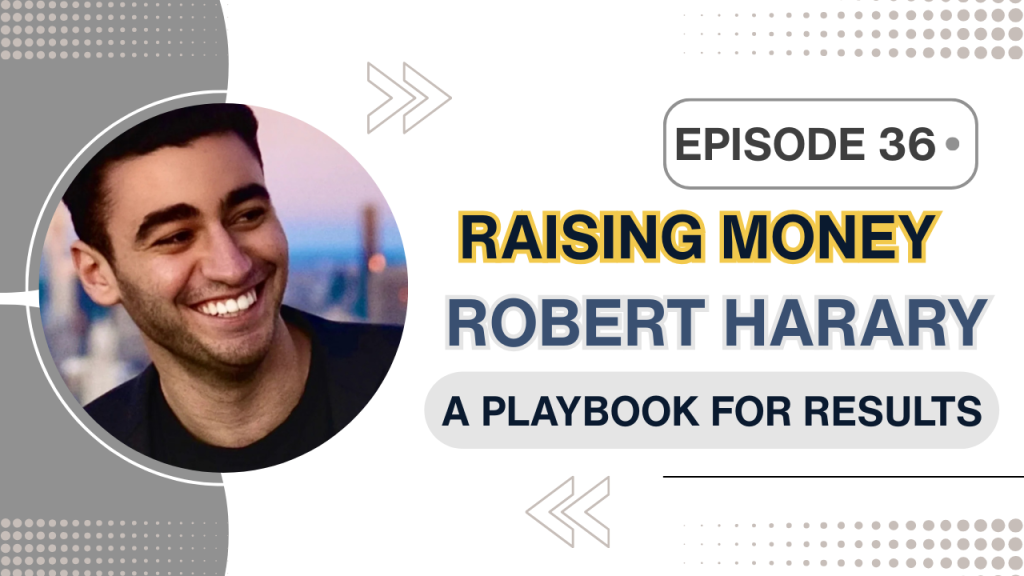
In Episode 36 of DissedMedia: A Startup Story, venture capitalist Robert Harary pulls back the curtain on how fundraising actually works today. As the founder of Decko, a pitch deck and storytelling firm, and Raisi, an investor outreach platform, Robert sits at the intersection of founders and capital every day. His insights challenge many of the assumptions founders still rely on and replace them with practical, modern strategies that work in today’s market.
Fundraising Is a Founder’s Second Job, Whether You Like It or Not
Most founders start companies because they love building products, solving problems, or serving customers. Few start because they want to spend months raising money. But as Robert explains, fundraising often becomes a parallel job, one that founders are rarely trained for.
Early-stage founders are expected to:
- Build pitch decks
- Tell a compelling company story
- Identify the right investors
- Run consistent outreach
- Answer hard diligence questions
And all of that often happens before meaningful capital is in the bank.
That gap, between what founders are good at and what fundraising demands, is exactly where many startups stall.

The Three Things Investors Actually Care About
Across thousands of investor conversations, Robert sees the same three factors consistently drive interest:
- Traction – Revenue, growth, usage, or clear momentum
- Team – Founders with credibility, experience, or rare insight
- Product – Something that clearly solves a real problem
Not every startup has all three. Some raise on team alone. Others raise on product strength or early traction. But understanding which of these is your strongest hook is critical, because that is what should lead your fundraising narrative.
One of the biggest mistakes founders make is hiding their strongest signal deep in a pitch deck instead of leading with it.
Why Old Pitch Deck Rules No Longer Work
Advice like the “10–20–30 rule” or rigid slide templates once made sense in a smaller, more centralized venture ecosystem. But venture capital has changed dramatically.
Today:
- There are hundreds of thousands of active investors
- Not all investors care about the same metrics
- Attention spans are shorter than ever
Investors often spend 30 seconds to 3 minutes on a first pass through a deck. In that window, they are not following a linear story. They are scanning for signals that match their investment criteria.
That is why Robert advocates abandoning templates in favor of key excitement factors. Your deck should surface what is most compelling immediately and make it easy for the right investors to lean in, while naturally filtering out the wrong ones.
The Real Purpose of a Pitch Deck
A pitch deck does not close a round. It does not convince skeptics. And it does not replace conversations.
What it does do is create shared context.
A strong deck helps investors:
- Quickly understand what you are building
- See why it matters
- Ask smarter questions
Its job is to get investors to the “jumping-off point,” the moment where they get the opportunity well enough to explore it further.
Confused investors do not say maybe. They say no.

Cold Outreach Is Not the Enemy, Bad Outreach Is
Founders are often told that warm introductions are the only way to raise capital. Robert calls this one of the biggest myths in startup fundraising.
Warm intros do not get checks. Strong companies do.
Institutional investors wake up every day looking for deals. If your company fits their thesis, they care far more about relevance than about how the email landed in their inbox. With the right targeting, messaging, and timing, cold outreach can outperform informal networks, especially for founders outside traditional venture hubs.
Fundraising, at its core, is a numbers game:
The right founder plus the right investors plus enough meetings equals a closed round.
Angel Investors, VCs, and Family Offices Are Not the Same
Another key takeaway from the episode is understanding who you are raising from.
- Angel investors often invest smaller checks and may be motivated by personal interest, belief in the founder, or alignment with the mission.
- Venture capital funds need outsized returns. A 2x or 3x outcome does not move the needle. They are looking for companies that can return the entire fund.
- Family offices sit somewhere in between, often combining institutional resources with more flexible decision-making.
Knowing which category you are targeting, and aligning expectations accordingly, can save founders months of wasted effort.
Preparing for Fundraising Is More Than Making Slides
What founders often underestimate is how much preparation fundraising requires. The most valuable work happens before a single investor meeting: pressure-testing assumptions, clarifying the story, and anticipating hard questions.
That preparation does not just help raise money. It makes founders sharper operators. By the time fundraising begins, the best founders already understand their business through an investor’s eyes.
The Bigger Picture: Supporting Builders of the Future
At its core, Robert’s work, and the theme of this episode, is about leverage. Not everyone builds groundbreaking technology. But supporting the people who do, and helping capital flow efficiently to them, is how progress compounds.
Fundraising does not have to feel opaque or gatekept. When founders understand the rules of the game as it exists today, they can play it with confidence.