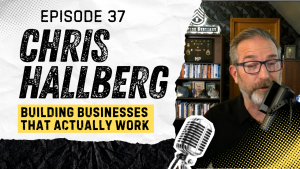
Most leadership teams don’t fail because they lack talent. They fail because execution is inconsistent: priorities drift, accountability blurs, meeting notes disappear into the void, and process lives in someone’s head (or in 17 different apps no one opens). In Episode 37 of DissedMedia: A Startup Story, Ben sits down with Chris Hallberg, an EOS Implementer since 2014, Army National Guard veteran, former business owner, and leadership coach, to unpack the systems that turn good intentions into repeatable results.EOS Implementer Microsite Chris is also #9 on Inc.com’s “Top 50 Leadership and Management Experts” list, a signal that his style is built for operators who care about outcomes, not hype.Inc.com

The conversation centers on a simple promise: build companies that actually work, not just when the CEO is in the room, but every week, across every team.
Chris Hallberg’s Operating Philosophy: Mindset, System, and “Glue”
Chris frames sustainable leadership as a three-part stack:
- Mindset: what he calls the “Business Sergeant” approach, direct, mission-focused leadership that creates clarity and responsibility.
- System: a practical operating cadence (especially EOS / Entrepreneurial Operating System) that aligns vision, people, data, issues, process, and traction.
- Glue: the infrastructure that keeps execution from falling apart between meetings, where tools, processes, and knowledge live together instead of scattering across a messy tech stack.
That “glue” is where GoExpand shows up as a major focus of the episode.
Why Leadership Teams Get Traction (or don’t)
If you’re not deep in EOS, Chris describes it as “practical tools to align and synchronize all the moving parts of your business,” anchored by six key components: Vision, People, Data, Issues, Process, and Traction.
A few leadership takeaways he returns to repeatedly:
“Right people / right seats” Isn’t a Slogan It’s a Growth Constraint
Chris uses the EOS framing: get the right people (aligned to core values) in the right seats so they Get it, Want it, and have Capacity (GWC). Once that’s true for most roles, many recurring problems “evaporate” because the machine stops getting gummed up.
Execution Gets Real in a 90-day World
Long-range vision matters, but traction happens when you bring it down to the ground: quarterly priorities (EOS “Rocks”), weekly scorecards, and a meeting cadence that forces ownership and follow-through.
Document the 20% of Process That Produces 80% of Outcomes
Chris pushes back on bloated SOPs. Instead, he recommends one-page processes that capture the essentials, and making them easy to find, so people can execute without interrupting teammates or guessing with the P&L.
GoExpand: Command Central for Execution
A major chunk of the episode is Chris explaining GoExpand as an agentic business operating system, a “single source of truth” that brings strategy, accountability, meetings, people systems, and company knowledge into one place.
Importantly, he’s explicit that GoExpand isn’t trying to replace everything:
- It doesn’t replace Slack, Teams, or email.
- It aims to be the “command central” / North Star where execution lives, while you keep specialized tools where they belong.
What Stands Out For Leadership + Management Teams
From a management operator’s perspective, several features he describes map directly to common failure points:
AI knowledge layer: Leaders can query policies, procedures, and company knowledge and get answers fast, so work doesn’t stall, and people don’t have to “disturb a single soul” to find basics.
Meeting commitments that don’t disappear: Chris describes a future state where meeting commitments automatically show up on dashboards after the meeting, reducing manual follow-up and broken promises.
Performance + alignment visibility: He outlines a dashboard approach where leaders can see the signals that matter (promise-keeping, Rocks, measurables, process adherence, values alignment), making coaching, then tough decisions, more grounded and less emotional.
Hiring support using Big Five (OCEAN): Chris emphasizes structured hiring and describes using Big Five-style assessments inside the platform so teams interview for fit more consistently, rather than trusting first impressions.
The Culture Proof Point: “Best Places to Work” Outcomes
Chris shares a notable benchmark: he says his clients have collectively won ~200 “Best Places to Work” awards, emphasizing these are based on engagement surveys rather than “paid trophy case” vanity awards. Whether you track awards or not, the leadership signal is clear: tight execution systems often correlate with higher engagement because “good looks like” is visible and consistent.
5 Action Steps You Can Apply This Week
If you’re leading a team and want immediate wins from this episode’s ideas:
- Write your “one-page process” for a core workflow (sales handoff, onboarding, support escalation). Keep it short and usable.
- Define 3–5 weekly scorecard numbers that drive monthly results, then review them weekly.
- Run one Level-10-style meeting: fewer topics, stronger ownership, and real to-dos.
- Audit “tool sprawl”: list every app that touches execution, and identify what nobody uses.
- Standardize hiring for one role using a consistent rubric (values + outcomes + structured questions), so you stop “congratulating yourself on the first 10 minutes.”
Links mentioned in the episode (connect with Chris)
- EOS Implementer page:
https://www.eosworldwide.com/chris-hallberg - Business Sergeant:
https://www.bizsgt.com - GoExpand + free sandbox demo (Figment):
https://goexpand.com - Email:
chris@goexpand.com - LinkedIn (Chris requests connections):
https://www.linkedin.com/in/chris-hallberg-01516315