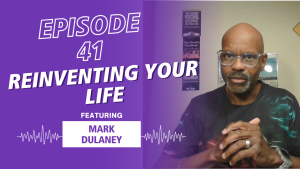
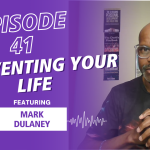
In this episode of DissedMedia: A Startup Story, host Ben sits down with Mark Dulaney for one of the most candid conversations the show has featured to date. What unfolds is not a highlight reel of overnight success, but a raw, reflective discussion about failure, responsibility, health scares, and the quiet danger of mediocrity.
Mark’s story does not begin with venture capital or viral wins. It begins with a wake-up call.
After decades of inconsistency, starting projects, abandoning them, and restarting from scratch, Mark faced a life-altering prostate cancer diagnosis. That moment stripped away comfort, momentum, and illusion. What remained was urgency. And with it, a decision to stop surviving and start owning.
That choice became the foundation for what Mark now calls Ending Mediocrity, not as a judgment of others, but as a mirror for ourselves.

Mediocrity Is Not About Comparison. It Is About Potential.
One of the most powerful reframes in the episode is Mark’s definition of mediocrity. It is not about being worse than someone else. It is about falling short of what you know you are capable of.
If you want to earn one million dollars a year but settle indefinitely at one hundred thousand, that gap is not society’s fault. If you want better health, deeper relationships, or financial stability, but continue repeating the same patterns, it is not bad luck. It is unaddressed behavior.
Mark argues that most people already know what to do. What is missing is understanding why they do not do it.
The Cost of Comfort and the Myth of Starting Over
Throughout the conversation, Mark and Ben unpack a shared experience many founders and creatives quietly live with. Restarting instead of refining.
New idea. New domain. New plan.
When progress stalls, burn it down and begin again.
Mark admits he bought hundreds of domain names chasing the next big thing instead of improving what already existed. The result was motion without momentum.
Consistency, not intelligence or talent, was the missing ingredient.
And that lesson applies just as much to content creation, startups, and careers as it does to health and relationships. Algorithms do not reward bursts of motivation. Neither does life.
Victimhood Is the Most Expensive Mindset You Can Hold
A recurring theme in the episode is responsibility, especially in a culture increasingly trained to outsource it.
Mark does not mince words. If you are not the problem, you cannot fix the problem.
Blaming politicians, the economy, past trauma, or the system may feel validating, but it strips you of agency. Worse, it creates a permanent dependency loop where someone else is always supposed to rescue you.
Ben reinforces this with a principle he used while leading teams. You are allowed to point out problems, but only if you are willing to be part of the solution.
Ownership is not harsh. It is empowering.
Why Success Looks Easier Than It Is
Another hard truth discussed is that people love the benefits of success but rarely respect the cost.
We see CEOs, creators, and founders enjoying freedom, but not the constant mental load, the lack of true off time, or the years of invisible work. Success is not leisure. It is responsibility at scale.
The illusion that wealth equals ease is one of the biggest traps holding people back. As Mark points out, the work does not disappear. It compounds.
From Book to the Movement of Ending Mediocrity
Unlike his previous books, Mark is not writing his next one in isolation. The Eight Ways to Create and Live a Mediocre Life is being built alongside an alpha community. Real people applying the ideas in real time.
The goal is not just to publish pages. It is to create proof. Case studies. Accountability. Momentum.
This shift from author to movement builder is itself a reflection of Mark’s transformation. No more hiding behind preparation. No more comfort in unfinished work.
Urgency Changes Everything
Cancer did not just challenge Mark’s health. It exposed time as the only non-renewable asset.
Urgency eliminated excuses.
Urgency ended restarts.
Urgency demanded follow-through.
And that may be the episode’s biggest takeaway. Most people do not need more motivation. They need a reason strong enough to make quitting unacceptable.