
Key Takeaways
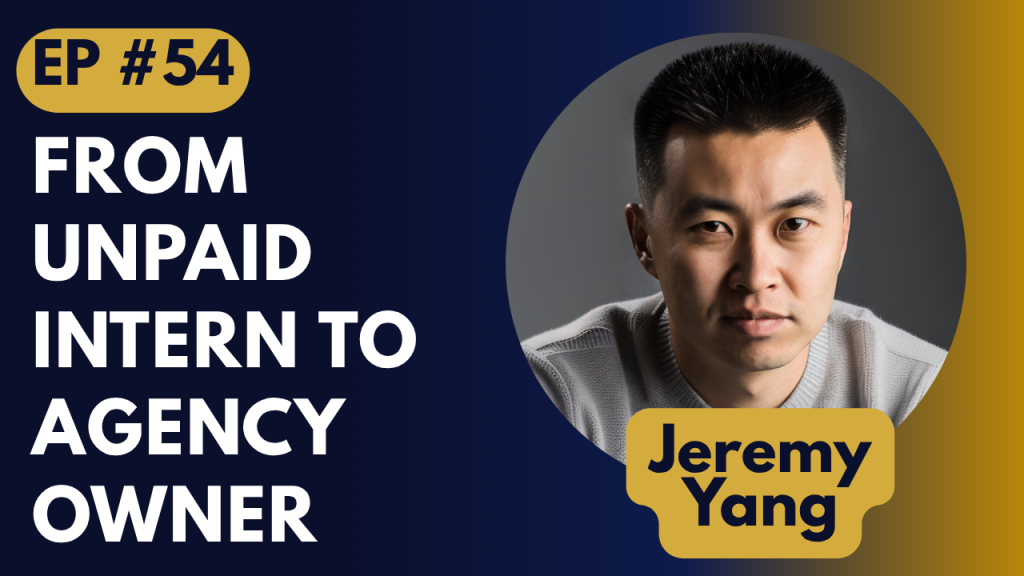
- Jeremy Yang shares his journey from unpaid intern to agency owner, emphasizing how to build a business from nothing.
- Paid advertising strategy combines psychology and data; understanding your audience is crucial for success.
- Entrepreneurs should treat paid and organic marketing as one cohesive system to maximize growth opportunities.
- Social proof is crucial for startups; testimonials and case studies help convert skeptical buyers into customers.
- Authenticity in messaging provides a competitive edge in a world saturated with AI-generated content.
If you have ever wondered how to build a business from nothing, Jeremy Yang’s story is the clearest answer you will find. In Episode 52 of DissedMedia: A Startup Story, paid media expert and agency founder Jeremy Yang breaks down his remarkable journey from unpaid intern at 36 to agency owner, sharing what he learned about paid advertising strategy, media buying for beginners, and how startup marketing on a budget is not only possible but can be executed smarter than most people realize.

Who Is Jeremy Yang?
Jeremy Yang is the founder of Digital Goliath, one of Australia’s leading paid media and digital advertising agencies. His path to building that business was anything but conventional. He walked away from a six-figure franchise operation, returned to university as a mature-age student at 35, graduated at the top of his class with a perfect GPA, and still could not land a single marketing job.
So he did what most people would never consider. He accepted a full-year unpaid internship. At 36, Jeremy spent twelve months updating WordPress websites and manually transcribing YouTube videos without a paycheck, entirely in pursuit of getting close enough to the industry to learn what actually worked. That year of zero income and maximum humility is what eventually led him to media buying, a mentor who believed in him, and the agency he runs today.
His story is proof that you can learn how to build a business from nothing when you are willing to stay in the room long enough to figure it out.
How to Build a Business from Nothing Using Paid Advertising Strategy
One of the most valuable moments in this episode is Jeremy’s explanation of what paid advertising strategy actually requires and why it is one of the most accessible paths available to entrepreneurs starting from zero.
Paid advertising, done correctly, is not guesswork. It is a system built on two foundational pillars: psychology and data. You need to understand why people make decisions, what language moves them to action, and what emotional state they are in when they encounter your message. Then you need the discipline to test, measure, and iterate based on what the numbers tell you.
This is the part that surprises most people learning media buying for beginners. It is not about having the biggest budget. It is about having the sharpest understanding of your audience and the patience to let data guide your decisions rather than your instincts. Jeremy learned this the hard way, and he shares exactly how in this conversation.
Why the Early Days of Digital Advertising Will Not Come Back
Jeremy entered the paid advertising world around 2017 and 2018 and is the first to say the landscape looked nothing like it does today. Cost per click was a fraction of what it is now. Organic reach was still meaningful. The platforms were, in his words, still in their cowboy era.
His most important piece of advice from that period is one every entrepreneur doing startup marketing on a budget needs to hear: if something is working right now, maximize it immediately. Gaps in the market close. The cheap attention available today will not be cheap tomorrow. The businesses that capitalize on low-cost opportunities early are the ones that can afford expensive attention later from a position of strength.
This applies directly to how you think about learning how to build a business from nothing in 2026. The window is always open, but it is never open in the same way twice.
Why Organic Social Media Is No Longer Enough on Its Own
Both Ben and Jeremy are direct about this. Organic reach on every major social platform has been deliberately reduced over time. What worked in 2018 or even 2021 does not produce the same results today. This does not mean organic content is worthless. It means it cannot be your only growth strategy.
Jeremy’s framework is clean and repeatable. Organic content builds credibility and keeps you visible. Paid advertising strategy is what you use to grow your reach. The entrepreneurs who win combine both, using paid data to inform what organic content they create next and pushing their best organic content into paid promotion to extend its reach.
For anyone serious about startup marketing on a budget, this is the most important shift in mindset you can make. Stop treating paid and organic as separate strategies and start treating them as one system.
How to Build a Business from Nothing with Your First Ad Campaign
One of the most practical sections of the episode is Jeremy walking through how to approach paid advertising when you genuinely have nothing. No brand recognition. No audience. No budget to waste.
His starting point is ruthless clarity about who you are trying to reach. Not a broad demographic. A specific person with a specific problem who is actively looking for a specific solution. Most entrepreneurs either skip this step entirely or define their audience so broadly that their ads end up speaking to no one.
Once you know exactly who you are talking to, you test the offer itself, not the creative. Does this person want what you are selling? Are they willing to pay what you are asking? If the answer is no, no amount of clever copywriting will save your campaign. This is where most media buying for beginners fails, not because the ads are bad but because the offer is wrong before the campaign even starts.
After the offer is validated you test the creative. What hooks stop the scroll? What language connects with this person’s actual experience? This is the psychology side of the equation and it is built through repetition, testing, and relentless observation.
Social Proof Is the Startup Founder’s Most Underused Asset
For entrepreneurs who cannot control their price point or compete on budget, Jeremy has one consistent piece of advice: invest everything you have in social proof.
Testimonials, case studies, third-party validation, reviews. These are the trust signals that turn a skeptical buyer into a paying customer. When you are figuring out how to build a business from nothing and you do not have a recognizable brand name, social proof is the closest thing to borrowed credibility that actually converts.
This is especially relevant for anyone working on startup marketing on a budget. You may not be able to outspend your competitors. But you can out-prove them. One powerful testimonial from a real customer who got a real result is worth more than a hundred dollars of cold ad spend to an audience that does not know you yet.
AI, Authenticity, and What Comes Next for Entrepreneurs
Toward the end of the episode Ben and Jeremy land on a topic that resonates far beyond digital advertising. In a world where AI can generate ad copy, blog posts, and video scripts in seconds, the entrepreneurs who win will be the ones who can prove they have actually lived what they are talking about.
Authentic human experience shared in an honest voice is not just good branding in 2026. It is a genuine competitive advantage that no algorithm can fully replicate. This is the core of why a show like DissedMedia: A Startup Story exists and why conversations like this one with Jeremy matter.
Listen to the Full Episode
Episode 52 of DissedMedia: A Startup Story with Jeremy Yang is available now on Apple Podcasts, Spotify, and YouTube. If you are serious about paid advertising strategy, want to understand media buying for beginners, or are simply trying to figure out how to build a business from nothing with limited resources and maximum determination, this episode is required listening.
Connect with Jeremy Yang at https://digitalgoliath.com.au or find him on LinkedIn at https://www.linkedin.com/in/jeremy-yang/
Subscribe to The Daily Pitch on YouTube and help us reach 100,000 subscribers in 2026: https://www.youtube.com/@DissedMedia?sub_confirmation=1