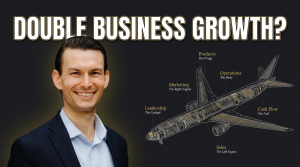
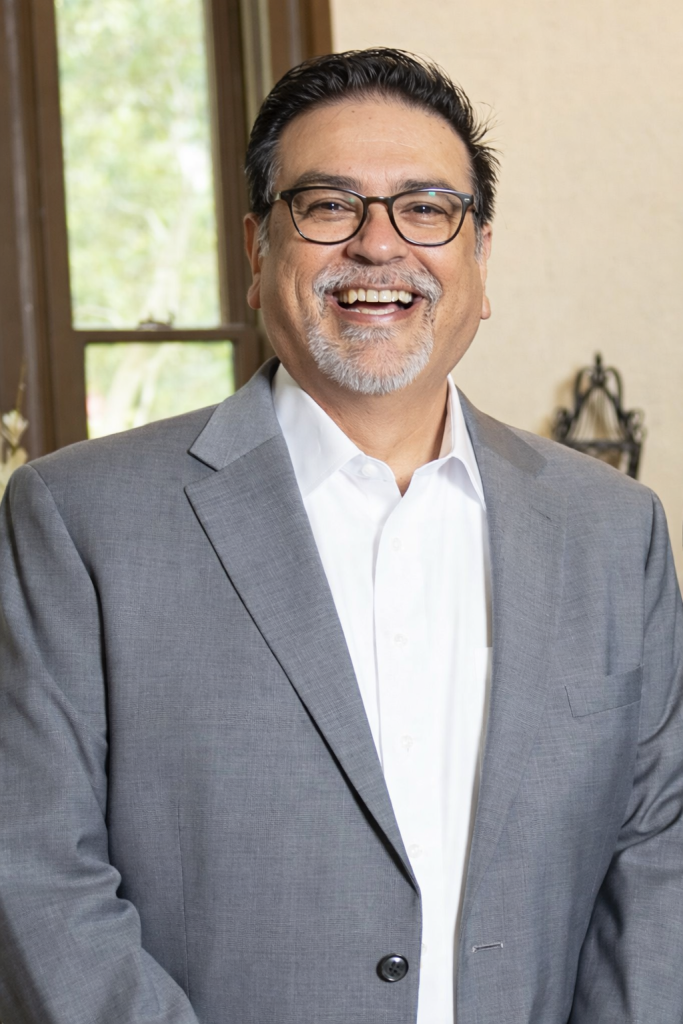

How to be a better leader comes down to getting four things right at the same time: trust, communication, processes, and routines. That is the short answer Ben Olmos gave when he sat down with John Brink on the On the Brink podcast, and it is the thread running through his entire career. Ben spent more than thirty years in consumer packaged goods, taught for two decades, earned a PhD, and built the DissedMedia podcast, and he keeps returning to the same point. Leaders stall when one of those four cores breaks down, and they start improving the moment they repair it. What follows unpacks how Ben thinks about getting better, why so many capable people plateau, and the quiet mistakes that hold leaders and entrepreneurs back.
The Four Cores of How to Be a Better Leader
When John asked about the biggest mistakes leaders make, Ben’s answer organized itself around four fundamentals he calls the four cores: trust, communication, processes, and routines. Trust comes first because everything in a business moves at the speed of trust. When a team trusts each other and trusts the person leading them, decisions happen faster and people take ownership of outcomes. When trust runs low, every approval crawls and every handoff gets second-guessed.
Communication sits right next to trust because the two feed each other. You cannot build trust without open and honest communication, and you cannot communicate openly inside a team that does not trust you. Ben treats them as a pair that either lift each other up or pull each other down together.
The two cores leaders neglect most are processes and routines. A good process gives incoming work a place to go. When a request, an order, or a problem lands and there is no defined path for it, the result is chaos and confusion. Strong processes remove that uncertainty before it spreads. Routines do the same job for people. Weekly, monthly, quarterly, and annual rhythms tell a team what to expect and when, and that predictability is where confidence is built. Anyone serious about how to be a better leader has to get all four working at once, because a single weak core is usually what drags an entire operation down. This is the same systems thinking behind building a business that runs without you, where repeatable processes carry the load instead of the founder.
Why Capable People Plateau and How to Start Getting Better Again
Ben’s view on plateaus starts with attitude rather than ability. He talks about the difference between what he gets to do and what he has to do, and that reframe changes everything about how a person shows up. People who treat their work as an obligation tend to coast. People who treat it as an opportunity keep climbing. He credits his parents for the work ethic underneath that mindset, recalling that his father never called in sick and never claimed to be too stressed or burned out to work.
The harder truth Ben shares is that he found his passion by spending years doing jobs he did not enjoy. Washing dishes, delivering pizza, and repairing appliances all taught him what he wanted to move toward. If you are trying to understand how to be a better leader, the starting point is honest reflection on whether you are growing or simply repeating the same year over and over. The way out of a plateau is to keep reaching for work that stretches you, even when it is uncomfortable, and to stop waiting for the perfect role to arrive before you give your full effort.

The We Are a Family Myth That Quietly Holds Teams Back
One of the sharpest moments in the conversation is Ben’s take on companies that describe themselves as a family. His point is direct. Your family does not expect you to deliver value, and your family does not remove you when money gets tight, but a business will. Treating colleagues as a close-knit team is a worthy goal, and many leaders earn that closeness over time. Expecting it on day one, and using family language to paper over performance problems, sets a team up for confusion.
What businesses actually reward is output. Companies pay for results because they want to be around tomorrow, and a leader who understands that stops chasing titles and starts delivering value. Ben’s advice to his own kids captures it well. You do not have to be the smartest person in the room. You have to be the hardest working one, the person who shows up early, stays late, and asks to do more. A leader who builds that reputation becomes hard to replace. The same standard applies when assembling a team, because the people worth keeping are the ones with attitude, passion, and work ethic, and part of leadership is making the difficult call to move on from people who work against the group. If your focus is developing those qualities in others, the deeper playbook lives in how to develop leadership skills in employees.
The Biggest Mistakes Leaders and Entrepreneurs Make
Small business owners tend to fall into a specific trap. Most people start a company because they are good at one particular thing, then try to do far more than they are trained to do. The strong salesperson tries to run the books. The operator tries to lead marketing. Without repeatable processes, the work stops being systematic and starts being improvised, and improvisation does not scale.
Ben points back to the four cores to diagnose almost any struggling organization. When a company is not working well, it is usually communicating poorly, running on low trust, drowning in chaotic processes, or operating with no routines at all. Get a handle on those four areas and performance improves. In a manufacturing setting the cost of ignoring them is obvious, because weak quality controls and weak routines push flawed product out the door, and that leads to lost customers, lost employees, and lost revenue. The principle that connects every successful business Ben has worked inside is simple to say and hard to live. They are genuinely good at trust, communication, processes, and routines.
Leading Through Change With SWOT and Porter’s Five Forces
Some challenges arrive that no plan anticipated. John described paying tens of millions in lumber duties and bonding requirements after trade rules shifted, the kind of external shock a single owner cannot forecast. Ben’s answer was to widen the lens with two frameworks every leader can use. SWOT separates the internal from the external, and the opportunities and threats are the external forces, new laws, new competitors, and new technology, that you cannot control but must respond to. Watching those two letters closely keeps a leader from being blindsided.
Michael Porter’s five forces gives a second angle for finding room to move when conditions tighten. Ben’s instinct in a squeeze is to run a hard brainstorm on the underlying asset. He asks where the customers a company does not yet serve are, which competitors hold the most share, and how the same raw capability could be modified to reach a higher-margin product or a new industry. Thinking through every realistic pivot is core to how to be a better leader during a downturn, because the leaders who survive disruption are the ones who treat a closed door as a signal to find another route to market.
From 5.50 an Hour to a PhD: Ben’s Case for Earning It
Ben’s own path explains why he leads the way he does. He tested out of high school early because he wanted to be working, then spent years in jobs that made money without building a career. His break came as a contract worker at Coca-Cola earning five dollars and fifty cents an hour, making service calls to fast-food chains. He saw the internal job postings that required a degree and five to seven years of experience, did the math, and realized that going back to school on the company tuition program would give him both by the time he finished. Two decades later he had moved from the call center to running national-account execution for Disney, Walmart, and McDonald’s, all while raising a family and earning his degrees.
That arc is why Ben argues a college degree is one path to success rather than the only one. He believes anyone who treats a diploma as the sole proof of intelligence is missing the point, because companies pay for value no matter where it came from. His story has a lot in common with guests who rebuilt their working lives from scratch, a theme explored in career reinvention after 50. The real lesson in how to be a better leader is that the discipline you build doing unglamorous work becomes the foundation everything else stands on.
Frequently Asked Questions
What makes a good leader?
A good leader builds trust, communicates openly, runs clear processes, and establishes dependable routines. Ben Olmos frames these as the four cores, and he argues that a leader strong in all four creates an environment where people know what to expect, take ownership, and deliver consistent results. Skills and charisma help, and the four cores are what hold an organization together when conditions get hard.
Why do talented employees plateau in their careers?
Talented people usually plateau when they shift from treating work as an opportunity to treating it as an obligation, and when they stop reaching for tasks that stretch them. Ben’s advice is to keep volunteering for uncomfortable, unfamiliar work, since that is where growth happens. The plateau breaks the moment someone trades coasting for deliberate effort and keeps showing up with full intensity.
What are the most common mistakes leaders and entrepreneurs make?
The most common mistakes trace back to weak processes and missing routines, along with trying to personally handle work outside your training. Small business owners often overextend into bookkeeping, operations, or marketing they were never equipped to run. Ben recommends diagnosing any struggling team against the four cores of trust, communication, processes, and routines, because one of those four is almost always the real problem.
Can you be a successful leader without a college degree?
Yes. Ben Olmos went from a five-dollar-an-hour contract role to a PhD, and he is clear that a degree is one route to success rather than a requirement. Companies pay for value and results, so a leader who delivers output, builds a strong reputation, and keeps learning can succeed with or without formal credentials.
Watch the Full Conversation
Ben joined John Brink on the On the Brink podcast for the full discussion on leadership, plateaus, and building something meaningful before anyone knows who you are. You can find Ben and download the first chapter of his book free at benolmos.com. Follow John on his YouTube channel and listen to On the Brink on Apple Podcasts.