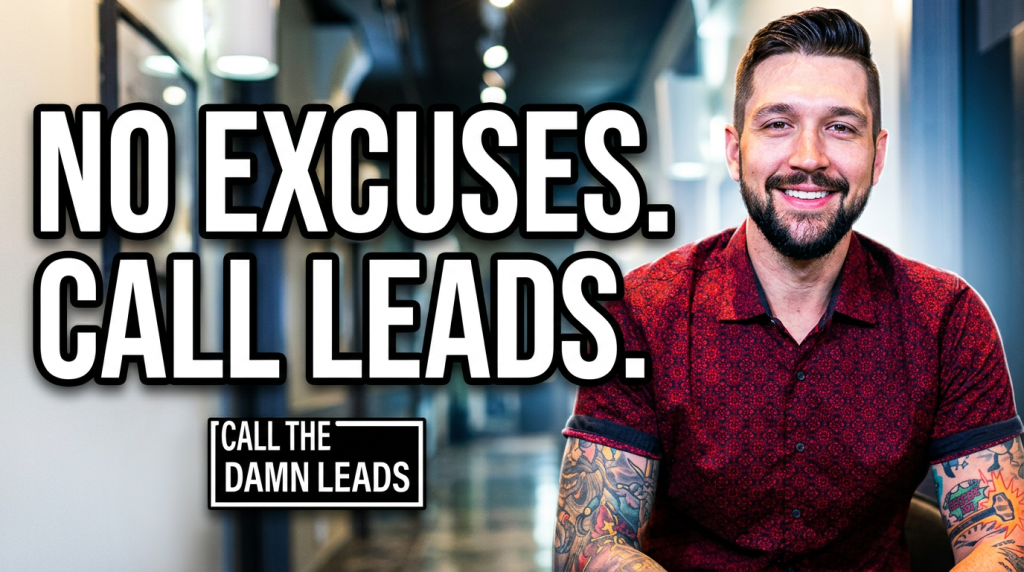

On episode 82 of Dissed Media: A Startup Story, Ben talks with Drewbie Wilson, founder of Call The Damn Leads and a five-time author who has generated more than $15 million in sales across industries. Drewbie’s core message centers on sales execution: consistent, unglamorous follow-up work is what separates people who grow their business from people who stay stuck. Along the way, the conversation covers his early years hustling on the streets, the origin of his trademarked brand, why customer service has collapsed, and how he rebuilt his confidence by losing 100 pounds.
Sales Execution Beats Excuses
Drewbie didn’t start out as a natural. He grew up hustling on the streets, selling anything he could get his hands on. He barely graduated high school with a 1.6 GPA and failed English three times, not because he couldn’t read or write, but because he refused to do the tedious daily work that didn’t interest him.
What changed his trajectory was a decision to stop avoiding the boring, repetitive work that generates revenue, day after day. He fell into sales almost by accident, through a family connection, despite growing up thinking salespeople were slimy and manipulative. What he found instead was an industry with no barrier to entry. Any background, any personality, any starting point can build a real career in sales, provided a person is willing to put in the work.

From Insurance Sales to a Trademarked Phrase
Drewbie’s path into sales started through a family connection who ran an insurance agency. Within a few years he became one of the top producers in his market, then hit a plateau around year four. Commissions stalled at the same threshold no matter how hard he worked the leads he was given.
He solved it with simple math: more people to talk to equals more conversations, equals more sales, equals more commission. So he taught himself Facebook ads and landing pages and started generating his own leads. His production nearly doubled month over month, fast enough that other agents in his market accused him of cheating the system. Instead, he turned it into a side business, building lead generation for other agents.
That business is where the phrase was born. Nearly every client conversation ended the same way: if you would just call the damn leads, you’d sell more. Drewbie joked about putting it on a T-shirt. A trademark filing and eighteen months later, the U.S. Patent and Trademark Office confirmed he owned the phrase outright. In 2023, he left the corporation he’d spent years with and built Call The Damn Leads into a full brand: a podcast, a book, and a movement for sales professionals who are tired of hiding behind a screen.
Why Service Is at an All-Time Low
Drewbie and Ben spend a good chunk of the episode on why customer service feels worse than ever, even as technology has made everything else faster. Drewbie’s take: it’s never been easier to hide behind a text, an email, or a social media comment instead of picking up the phone. That avoidance has bled into how businesses treat their customers overall.
Ben connects it to his own upbringing, running a paper route and later working a corporate customer service job where every interaction happened by phone. Both agree that fewer jobs today force people into real one-on-one conversation, and the service quality shows it. Drewbie’s read is straightforward: good service still wins. When he gets good service, he spends more, stays longer, and tells other people about it. That is still how a brand grows.
When AI Support Fails: The Case for Human Conversations
Drewbie shares a story from that same morning: trying to complete a balance transfer on a credit card, getting routed to an AI assistant that couldn’t help, then getting routed to an AI phone line that also couldn’t help. He describes himself as a believer in technology who has simply hit the limit of what a chatbot can solve. AI can handle menial tasks, but it can’t replace a human who genuinely understands the context of a problem and cares about solving it.
That distinction, caring more than a robot does, is what Drewbie sees as the real edge for anyone willing to have the awkward, difficult conversations that most people now avoid. It’s also why he tells young people entering the workforce to take a sales job on purpose, even an uncomfortable one, because learning to talk to strangers builds a communication skill that compounds for the rest of a career.

The Boring Work Drives Sales Execution
A theme runs through the whole episode. The tedious, day-to-day tasks, the calls, the follow-up emails, the unglamorous parts of the job, are what actually drive revenue. Drewbie ties this back to his own school experience. He understood the material fine and always aced his quizzes. Homework is what he avoided, and failing English three times was the direct result.
He connects that same pattern to how schools train students for factory-style work: clock in, complete assigned tasks, take more work home for free, then repeat the cycle in a job. That same aversion to repetitive work shows up in adult sales careers, except the stakes are a paycheck instead of a grade. Sales execution means doing the boring work consistently, long after the initial excitement of a new job, a new deal, or a stage appearance wears off. Events, speaking, and podcasts are fun, Drewbie says, but they rarely move the revenue needle the way the calls and the follow-up do.
Self Discipline Built His Confidence First
Before Drewbie rebuilt his sales numbers, he rebuilt his body. He describes himself as the chunky kid growing up, wearing adult-sized pants in middle school. In his late teens, he cut out soda and sweets and lost about 100 pounds, driven partly by wanting more confidence and more attention from the people he wanted it from.
Then he got comfortable. A long relationship, a pregnancy, and a steady stream of sympathy snacks and leftover Thanksgiving dinners brought back 85 of the 100 pounds he’d lost. Around the time his son was born, he found personal development content from speakers like Zig Ziglar, Jim Rohn, and Eric Thomas, and started asking himself a direct question: what am I doing that I need to stop doing?
Waking up earlier and filling his mornings with motivational content rebuilt his confidence and his physique together. He describes a direct correlation between the two: the more consistent he stayed in the gym, the better his confidence, and the better his confidence, the easier it became to pick up the phone and have hard conversations with prospects and clients. Physical discipline and sales confidence, in his experience, are the same muscle.
How Does Drewbie Stay Motivated After Years in the Same Industry?
He compares long-term sales work to riding the same rollercoaster repeatedly. The first few rides deliver a rush: the climb, the anticipation, the drop. Ride it five or six times and it becomes predictable. Most of the sales veterans Drewbie talks to in his own business are stuck at exactly this point, burned out after ten or twenty years, aware the market and the algorithms have changed, but unsure how to get excited about doing the same tasks again.
Staying engaged, in his view, means deliberately changing part of the ride: a new market, a new angle, a new way of measuring progress. In his own business right now, that means shortening the gap between when a customer buys and when they get their first real result, since a faster win gets customers talking about the product sooner. Measuring those incremental improvements is what keeps the work interesting once the initial novelty wears off.

Why No Two Sales Processes Are the Same
Asked what worked in sales before that doesn’t work anymore, Drewbie pushes back on the premise. Every method, in his experience, still works in the right context. Selling farm equipment in a city is a hard sell. Selling the same equipment in a farming town is easy. What actually shifts is cyclical: for a stretch, cold calls land because people answer their phones, then a season arrives where they don’t, so email becomes the better channel, until inboxes get noisy again and calls come back around.
Timing matters as much as channel. Real estate agents have to be available from 5 p.m. to 9 p.m. because that’s when their 9-to-5 clients are free to look at homes. A business-to-business seller targeting bankers has the opposite window, 9 to 5 and never on a holiday. Watching the trend in a specific market, Drewbie argues, tells a salesperson which communication method will actually hedge their bet.
Know Your Industry, Know Your Customer
Ben raises a rule he repeats in every class he teaches: know your industry, know your company, know how they make money. Drewbie adds the piece he thinks completes it: know your customer. He reaches for the old cliche about selling ice to an Eskimo and turns it around. Selling someone ice they already have gets a one-time sale and a customer who probably regrets the purchase. Selling them the tool that solves the actual problem, the ax that shaves the ice and helps build a home, is what builds a real, repeat relationship.
What Is Drewbie’s Big Goal for Call The Damn Leads?
Drewbie’s stated goal: by 2030, every airport in the United States carries the Call The Damn Leads brand somewhere, whether that’s a hat, a T-shirt, or someone reading his book at the gate. He wants real people wearing the brand to recognize each other in a terminal and feel a shared sense of respect for being in the sales game. He calls the goal deliberately oversized, since small goals stop being motivating once he knows he can hit them.
Watch the Full Episode
Catch the full conversation on Dissed Media: A Startup Story, available on Spotify, Apple Podcasts, and YouTube. Find Drewbie’s books and resources at Call The Damn Leads, and grab the first chapter of Ben’s book free at benolmos.com.