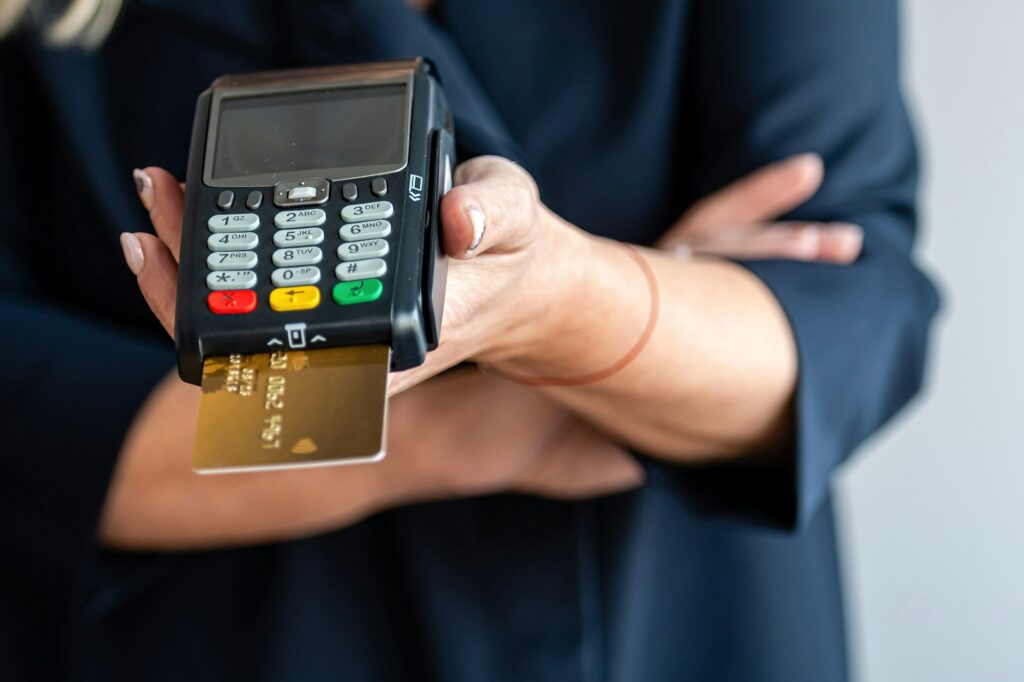

The “leave a tip” screen is the digital prompt that appears on a point-of-sale tablet or payment terminal asking customers to add a gratuity before completing a transaction. What started as a feature in sit-down restaurants has spread to coffee shops, food trucks, counter-service cafes, retail checkout lines, and online checkout flows. Customers now encounter tip prompts when buying a bagel, picking up dry cleaning, or paying for a haircut at a self-checkout kiosk.
For small business owners, the tip screen is a genuine operational decision with real consequences for staff compensation, customer experience, and brand perception. This guide covers how the tip screen backlash actually works, what the data shows about its effects, and the practical options small businesses have for handling it well.
Why the leave-a-tip screen creates friction
Tipping in the United States has historically followed a clear social contract: you tip for table service, you tip your hairdresser, you tip delivery drivers. Digital payment terminals broke that anchor.
When a customer pays on a tablet at a counter-service coffee shop, the screen rotates to face them and presents three preset amounts, often 18%, 20%, and 25%, plus a “no tip” option in smaller text at the bottom. The social dynamics of that moment are different from a restaurant tip line on a paper receipt. Someone is standing behind the counter watching. Other customers may be in line. The “no tip” option requires an active choice rather than simply leaving a line blank.
Research on the phenomenon shows that the backlash is less about the amount and more about the context. Customers who feel tipping is appropriate to the interaction tip without resentment. Customers who feel the prompt is out of place report feeling pressured and respond negatively to the business rather than to the payment system.
What “tip creep” means for small businesses
Tip creep is the term for the gradual expansion of tip prompts into contexts where gratuity was not previously expected. For small businesses, it creates a specific problem: the tip screen can generate short-term revenue for staff while generating long-term brand erosion with customers who feel manipulated.
The businesses most exposed to backlash operate in high-frequency, low-dwell-time categories where customers return often and small friction compounds. They rely on software platforms, such as Toast, Square, or Clover, that default to tip prompts and require active configuration to change.
The case for keeping tip prompts
In many service categories, tips represent a meaningful portion of employee compensation. Removing the prompt in the name of customer experience can directly reduce take-home pay for workers who have come to rely on that income. The businesses where tip prompts work well have a genuine service component, a direct relationship between customer and staff, and established tipping norms the customer already understands.
Options for handling the tip screen
Adjust the preset amounts
Most platforms let you set custom tip percentages. Starting presets at 15%, 18%, and 20% rather than 18%, 20%, and 25% reduces the implied floor while keeping the prompt active.
Make the no-tip option visually equivalent
Some platform defaults present tip amounts prominently and the no-tip option in smaller text or a different color. Configuring the no-tip option to be visually equivalent removes the pressure dynamic without eliminating the option to tip.
Disable for specific transaction types
Several platforms allow tip prompts to be disabled for certain item categories, transaction sizes, or order types, so you can address the friction where it is concentrated without affecting the full operation.
Build tip expectation into pricing
Some small businesses have moved toward pricing that reflects the full cost of the service and removed tip prompts entirely. This requires honest communication with staff and customers, but eliminates the friction entirely and tends to produce clearer customer expectations.
Address it directly with customers
Being transparent about how tips are distributed and what they mean for staff tends to convert ambiguous social pressure into an informed choice, which customers respond to more positively even when the outcome is the same.
Responding to tip screen backlash online
When customers post negative reactions to a business’s tip screen on review platforms or social media, defensive responses that explain why tips are important tend to escalate the conversation. Responses that acknowledge the customer’s experience and explain the business’s actual approach tend to defuse it.
A simple framework: acknowledge that tipping norms are genuinely changing and the experience can feel unexpected, explain how tips are used at your business without being defensive, and invite the customer to reach out directly. For more on managing difficult customer dynamics, see the related piece on handling conflict in a business context.
The tip screen question sits inside a broader set of questions about how small businesses structure their operations. The businesses that handle it best have made a deliberate choice rather than accepted a default, and can explain that choice clearly when asked.
Frequently asked questions
Why do so many businesses now have tip screens?
Digital point-of-sale platforms like Square, Toast, and Clover include tip prompts as a default feature. As these platforms replaced cash registers across service businesses, the tip prompt spread into categories where gratuity was not previously standard.
Can a small business turn off the tip screen?
Yoos. Most major POS platforms allow tip prompts to be disabled, configured with different amounts, or restricted to specific transaction types. It requires going into platform settings rather than accepting the default.
Does removing the tip screen hurt employees?
It can, depending on how tips are distributed and what portion of compensation they represent. The decision should be made in consultation with staff, with a clear plan for how compensation is structured if tip prompts are reduced or removed.
What preset tip percentages reduce backlash?
Starting presets at 15%, 18%, and 20% rather than the common 18%, 20%, 25% default tends to reduce the feeling of pressure while keeping tips available. Making the no-tip option visually equivalent to the tip buttons also reduces friction.
How should a business respond to negative reviews about tip screens?
Acknowledge the customer’s experience, explain clearly how your tip policy works and how tips are used, and avoid a defensive tone. The goal is to signal that the business made a deliberate choice rather than just accepting a default.