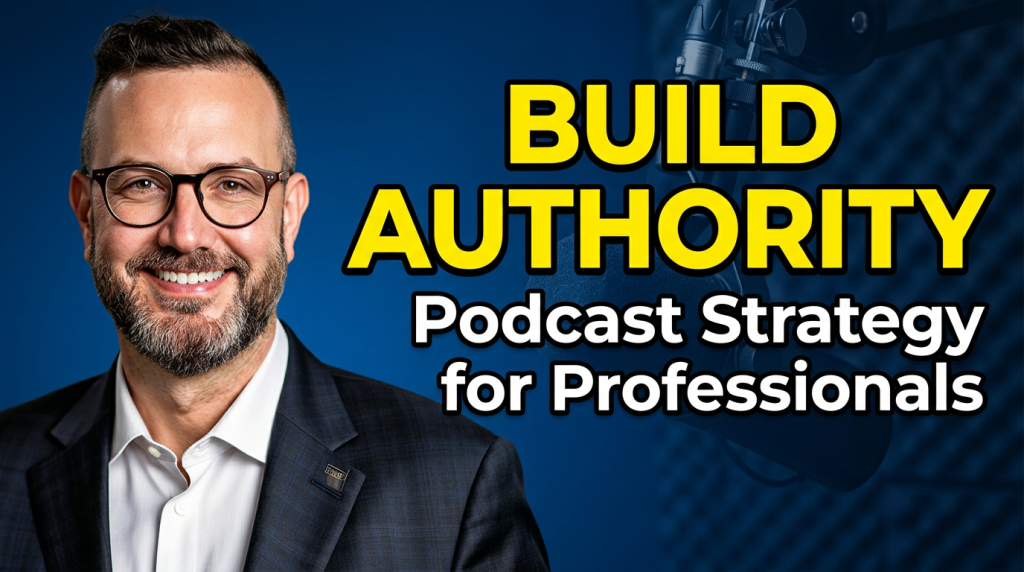

Authority marketing through podcasting gives attorneys and service professionals a way to attract high-value clients before a sales conversation ever begins. When a prospective client has already consumed hours of your content, listened to you explain the exact problem they are facing, and heard you articulate solutions in their own voice, the first consultation becomes a formality. That is the model Dennis "DM" Meador has spent the last two years building at scale, and in Episode 77 of DissedMedia: A Startup Story, he breaks down exactly how it works. Building that authority is at its core a thought leadership strategy.
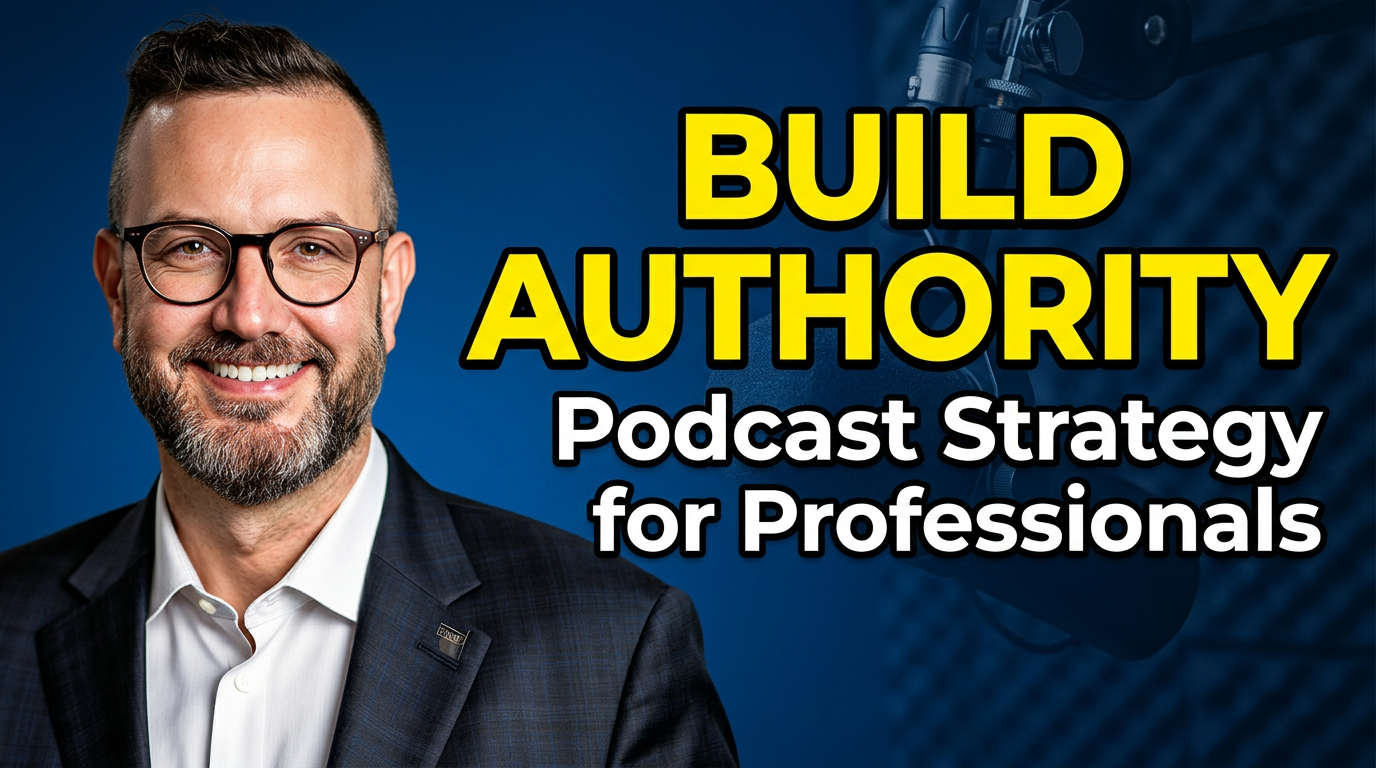
What Is Authority Marketing and Why Does It Matter for Professionals
Authority marketing is the practice of positioning yourself as the recognized expert in a specific niche, so that prospects come to you already convinced you are the right person for the job. For attorneys, consultants, and other service professionals, this distinction carries enormous practical weight. When two lawyers offer the same service at similar price points, the one who has published fifty episodes answering the exact questions a prospect is asking will consistently win the client. The podcast becomes a pre-qualification engine running around the clock.
Dennis built The Legal Podcast Network and The Authority Podcast Network on this premise. His team runs 250 shows and produces 350 episodes per month with a staff of 75. The volume alone tells you something: this is a repeatable system that works for professionals who want to own their market without competing on price or relying on referrals alone.
The core insight Dennis returns to throughout the conversation is deceptively simple. Most content creators optimize for reach. They want more views, more followers, more impressions. Professionals who use authority marketing through podcasting optimize for relevance. They want the right fifty people to find them, trust them, and call them. Those are completely different games, and conflating them is one of the most expensive mistakes a professional can make with their marketing budget.
The Math Behind Competing for Clients vs. Competing for Views
Dennis makes this argument with numbers, and the numbers are hard to argue with. A niche podcast episode that reaches fifty qualified listeners, four of whom become clients at twenty-five thousand dollars each, generates one hundred thousand dollars in revenue. A viral video with a million views and a four-thousand-dollar YouTube ad check does not come close. When you frame authority marketing through podcasting this way, the logic becomes obvious: for professionals whose average client value is high, mass reach is largely irrelevant.
This is why Dennis coaches his clients to stop measuring success in downloads and start measuring it in consultations. The attorney who gets three new estate planning clients from a podcast episode that forty people heard has outperformed the content creator with ten thousand monthly listeners who cannot convert a single one. Authority marketing flips the vanity metrics on their head and replaces them with business outcomes.

How the Authority Podcast Model Works in Practice
The structure Dennis uses for his clients is straightforward. Each episode answers one specific question a prospective client is already asking. An estate planning attorney might record an episode titled something like: what happens to my house if I die without a will in Texas? That episode is trying to be the best possible answer to that exact question for the person in Texas who is searching for it right now. When that person finds it, listens to it, and hears the attorney explain the answer clearly and confidently, a relationship has already begun.
This is the mechanism Dennis described as pre-selling trust. By the time a prospect calls the office, they have already decided. The consultation is a formality. For professionals who have spent years competing in a commoditized market where clients shop by price and location, this shift in dynamic is transformational.
He also shared two client case studies that illustrate the leverage this model can create when news breaks in a specialized area. In both instances, a client had niche content already published and indexed. When a major national story touched their specialty, those episodes were already positioned to capture the surge in searches. Attorneys who had been local practitioners suddenly found themselves nationally wait-listed, because they had published consistently on the right topic before the moment arrived.
Founder-Led Media and Why You Cannot Hide Behind a Logo
One of the sharper observations Dennis makes in the conversation is that every business owner already has a public brand, whether they have chosen to build one or not. The question is whether you are intentional about it. In an era where AI can generate generic content at scale and every competitor has access to the same tools, authenticity has become the primary differentiator. The professional who shows up on camera as themselves, speaks in their own voice, and brings genuine expertise to their content cannot be replicated by a competitor running a templated marketing program.
Founder-led media is the idea that the person who built the business is the most credible voice for that business. This applies directly to authority marketing through podcasting because the whole model depends on prospects trusting the host before they meet them. A logo cannot build that trust. A face, a voice, and a consistent body of content can.
Dennis acknowledges that not every attorney or professional is a natural performer. His team has developed systems for coaching reserved or camera-shy clients to present authentically without forcing them into a persona that does not fit. The goal is congruence: the version of you that appears in a podcast episode should match the version of you that shows up in the consultation room. When those two line up, the trust transfer that happens through content becomes a real business asset.
For a deeper look at how digital storytelling builds credibility for businesses competing at any scale, see this earlier piece on how small businesses can compete with big brands online through authentic marketing.
The Human-AI-Rehumanize Workflow
Dennis runs a content operation producing hundreds of episodes per month, and his team uses AI extensively. His framework for how AI fits into the process is worth paying close attention to. He describes it as human, AI, rehumanize. A human creates the raw material, AI assists with production, and then a human brings the final product back to life with the kind of personality and specificity that makes it feel real.
The problem he identifies with purely AI-generated content is what he calls the vanilla problem. When AI produces content without a strong human voice guiding it, the output tends toward the average. It is technically correct, reasonably structured, and completely forgettable. For authority marketing through podcasting to work, the content cannot be forgettable. It has to carry the authority of a real expert who has actually handled the cases, argued the arguments, and lived the professional experience.
His team uses AI to scale production, handle distribution, manage show notes, and assist with research. The voice in the episode, the opinion in the answer, the judgment call about how to frame a complex legal issue for a lay audience, those come from the attorney. That division of labor is what makes the model sustainable and what keeps the content authentic enough to actually build trust.

Building a Business That Runs Without You
Beyond the content strategy, Dennis shared a personal dimension to the conversation that framed the whole discussion differently. He is relocating to Merida, Mexico with his wife, who is expecting their first child together. The move is partly a lifestyle choice and partly a test of a business principle he has been working toward: building a company that operates and grows without requiring his daily presence.
He has a team of 75 and 250 active shows. The systems are in place. The question he is now sitting with is whether the operation can continue at that level while he steps back. For founders who think about authority marketing through podcasting as a business model, this is the long game: build a system where the content keeps working, the clients keep coming, and the founder involvement becomes optional rather than essential.
The content you publish today continues to generate authority and attract clients long after the episode date. A well-positioned podcast episode answering a specific legal question can remain in search results for years. That is the compounding nature of authority marketing that distinguishes it from advertising: ads stop working the moment you stop paying for them. Content keeps working.
For startup founders and content creators thinking about how to build a content-driven business that scales, the episode on marketing a startup through content strategy from VidFest covers complementary ground on building audience and authority through video and digital content.
Frequently Asked Questions About Authority Marketing Through Podcasting
What is authority marketing through podcasting and how does it work for professionals?
Authority marketing through podcasting is the practice of publishing niche, expert-driven audio or video content that answers the specific questions your ideal clients are already searching for. For professionals like attorneys, consultants, and financial advisors, each episode functions as a pre-consultation that builds trust before any direct contact occurs. When a prospect discovers your content, listens to you address their exact situation, and hears your expertise over multiple episodes, they arrive at the first consultation already confident you are the right fit. Dennis Meador model at The Legal Podcast Network operationalizes this at scale, producing FAQ-style episodes aimed at specific search queries within each attorney practice area.
How many listeners does a professional podcast need to generate clients?
Far fewer than most people assume. Dennis makes the case that a niche episode with fifty targeted listeners can generate more revenue than a viral video with a million views, if those fifty people are the right prospects at the right moment. For high-value professional services where a single client engagement can be worth tens of thousands of dollars, conversion quality matters far more than audience size. A podcast built around authority marketing is trying to be the most credible answer available to a very specific question asked by a very specific person.
Can a professional who is not comfortable on camera still use a podcast to build authority?
Yes, and Dennis team works with reserved or camera-shy professionals regularly. The goal of authority marketing through podcasting is congruence. The version of you in the episode should sound and feel like the version of you in the consultation room. His team coaches clients to speak naturally, answer questions the way they would with a client sitting across from them, and resist the impulse to be someone they are not. The authenticity is the asset. AI-generated polish or a practiced TV persona will not build the same level of trust as a real professional speaking plainly about something they genuinely understand.
How does AI fit into a podcasting strategy built around authority marketing?
Dennis uses a human-AI-rehumanize framework. Humans generate the raw expertise and record the content. AI assists with production, distribution, show notes, and research. Then human editors and producers bring the final product back to a standard that feels personal and specific rather than generic. The risk of relying too heavily on AI in an authority marketing context is that AI tends toward average, and average content does not build authority. The expert voice, judgment, and real-world experience must remain the core of every episode for the strategy to work.
Connect with Dennis "DM" Meador
Website: dmondemand.expert
The Legal Podcast Network: thelegalpodcastnetwork.com
Speakeasy Marketing: speakeasymarketinginc.com
LinkedIn: linkedin.com/in/dennismeador