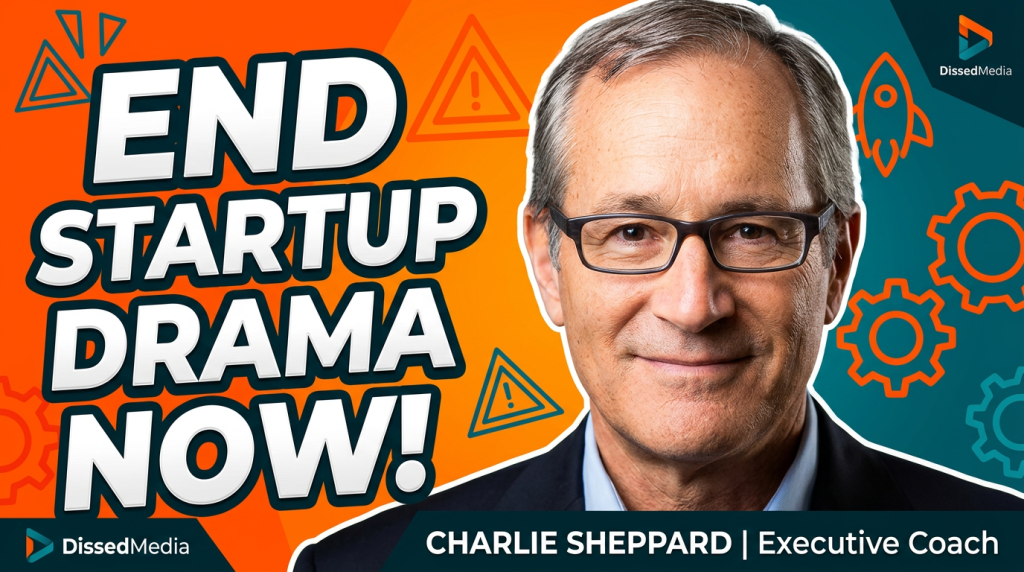

Every leader has been there. The strategy is solid. The plan is in place. And yet the same problems keep coming back, the same conflicts keep resurfacing, and the toxic work environment gets worse instead of better. According to behavioral scientist and executive coach Charlie Sheppard, the answer has almost nothing to do with strategy. The real culprit is the drama triangle – and it comes standard with every human being.
Charlie Sheppard joined Episode 72 of DissedMedia: A Startup Story to share 40 years of insight on why the drama triangle quietly destroys organizational culture, what it takes to build real leadership development from the inside out, and what leaders and founders can do right now to break the pattern.

Who Is Charlie Sheppard?
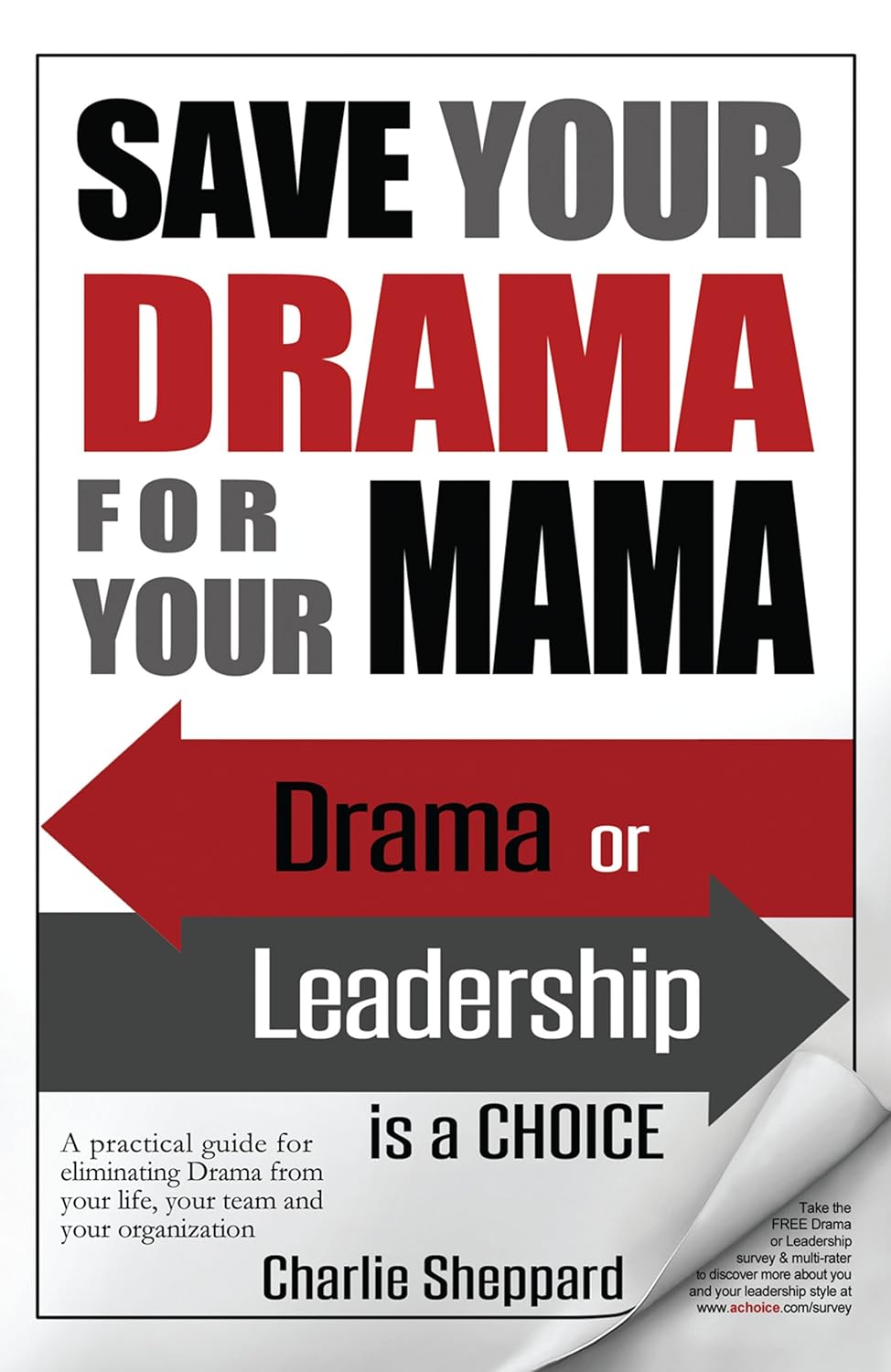
Charlie Sheppard is the founder of Sheppard Partners and the Human Presence Institute, a professor at Hult International Business School and World Bridge University, and the author of Save Your Drama for Your Mama (grab your copy on Amazon). With clients including AstraZeneca, Pfizer, and Genentech, Charlie has spent four decades at the intersection of behavioral science, leadership coaching, and high-stakes negotiation – helping leaders escape the drama triangle and build cultures where real leadership development can take root. He also holds a 33-year record of zero work stoppages in labor negotiations – across multiple unions, multiple languages, and some of the most complex bargaining environments imaginable.
Get Charlie Sheppard’s Books
Charlie’s flagship book Save Your Drama for Your Mama is available on Amazon. It is the essential read for any leader or founder who wants to understand why drama – not strategy – is what is truly holding their team back. Grab your copy here.
Charlie is also launching The Path of Light – a 12-book children’s series designed to help parents get their kids into a calm, positive state before bed. Book one is live on Kickstarter right now and needs your support to fund the artwork for the remaining 11 books. Back the Kickstarter here.
The Drama Triangle vs. The Leadership Triangle
The central framework in Charlie’s work is the drama triangle – a behavioral pattern first mapped by psychiatrist Stephen Karpman in 1968 and applied powerfully to leadership coaching by Charlie over four decades of work. Karpman identified three roles people slip into during conflict: the victim, who feels powerless and drains energy from the environment; the rescuer, who over-helps and enables rather than empowers; and the persecutor (what Charlie calls the adversary), who criticizes, controls, and assigns blame. What makes the drama triangle so insidious in any organization is that people do not stay stuck in one role – they cycle between all three, often within a single conversation, without ever noticing.
Charlie’s Leadership Triangle is his version of what researchers call the empowerment triangle or winner’s triangle – the proven antidote to the drama triangle. Each dysfunctional role gets replaced with a healthy counterpart: the victim becomes the visionary who puts energy into the environment, the rescuer becomes the coach who empowers rather than enables, and the adversary becomes the catalyst who challenges without tearing people down. The goal of real leadership development, in Charlie’s framework, is to build a culture so immune to the drama triangle that the empowerment triangle roles become the team’s default setting.
What makes this framework so powerful is that Charlie is not talking about dramatic, over-the-top behavior. He is talking about automatic patterns that create a toxic work environment without anyone realizing it. The drama triangle is not about personality types. It is about patterns – and patterns can be changed through intentional leadership development.
“The patterns of drama come as standard equipment with every human being,” Charlie told Ben on the episode. “Leadership is optional.”
Why Managers and Leaders Share the Same Core Behaviors
One of the most counterintuitive things Charlie shared is that the behaviors of great managers and great leaders are far more similar than most frameworks suggest. Most leadership training draws a sharp line between management and leadership. Charlie’s behavioral science lens collapses that distinction. Both great managers and great leaders need to listen well and communicate clearly. When you understand that leadership and drama in the workplace operate at the behavioral level first, it becomes much easier to coach and develop people.
How to Stay Out of the Drama Triangle Under Pressure
So how do you actually do it? How do you lead through chaos and pressure without slipping into drama yourself? Charlie’s answer is surprisingly simple, and it starts with the body.
“The first thing you have to do is breathe,” Charlie said. “Almost always when somebody goes into drama, they stop breathing. Their breath gets shallower.”
One belly breath creates enough cognitive space to ask a simple question: is this the best choice I can be making right now? That pause is the difference between an automatic drama triangle response and a conscious leadership choice. Stopping workplace drama ultimately comes down to that three-millisecond window – and whether you use it or lose it.
33 Years, Zero Strikes: The Negotiation Framework That Actually Works
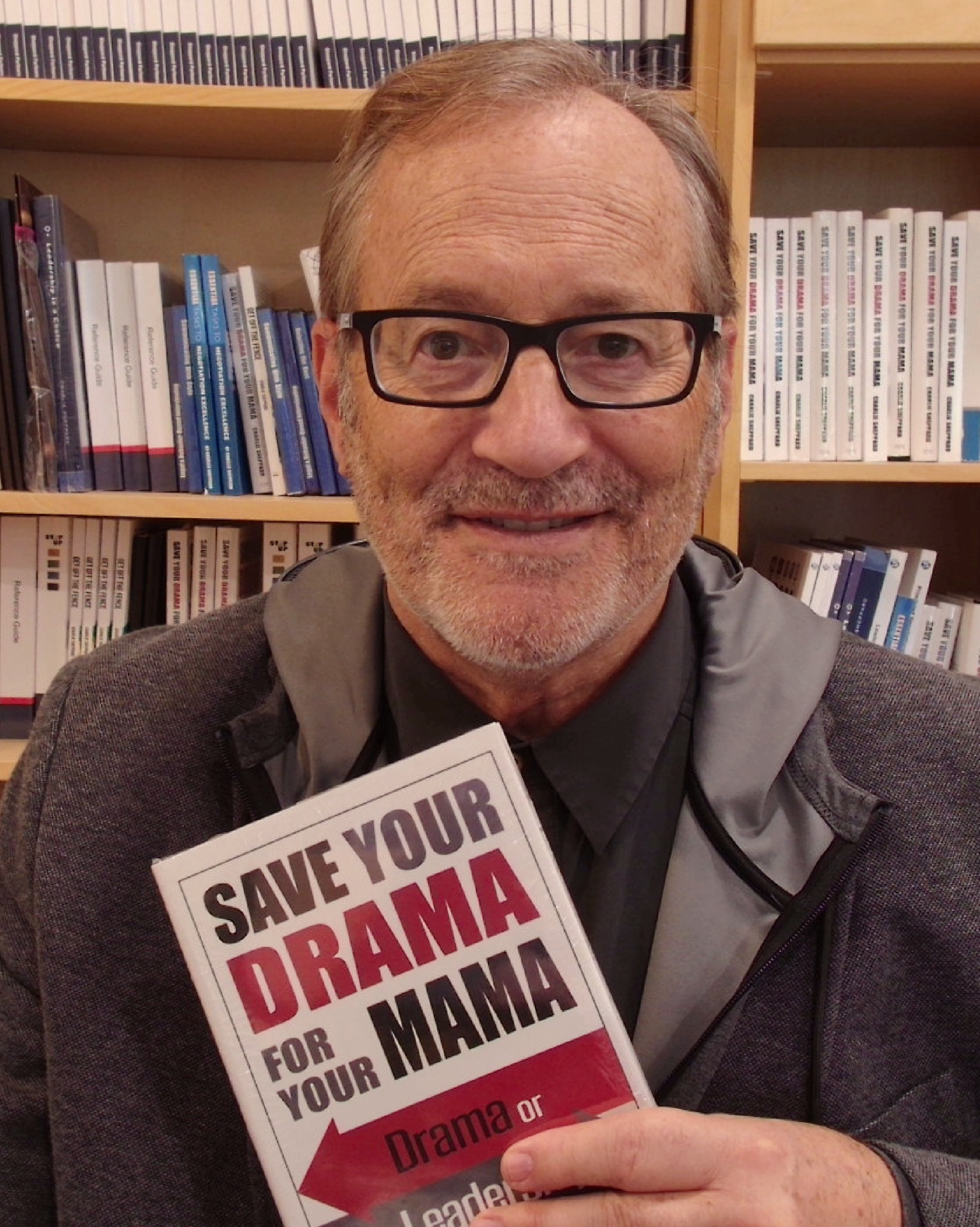
Charlie’s 33-year record of zero work stoppages in labor negotiations is one of the most remarkable achievements in this space. When Ben asked him how he does it, Charlie’s answer came back to the same foundation: relationship before bargaining. Most negotiators walk into the room focused on positions and leverage. Charlie walks in focused on building real relationship first – often using a mutual gains bargaining process around something safe before ever getting to the hard stuff. He also shared the story of his colleague Alan Parker, who was knighted in Australia for negotiating water rights policy with 400 different constituents in record time using the same relational frameworks.
Locus of Control: The Pattern That Gets Leaders in Trouble Fastest
When Ben asked Charlie what patterns he sees most often getting leaders in trouble, the answer was immediate: external locus of control. Blaming circumstances, blaming the environment, positioning yourself as the victim of forces outside your control. Internal locus of control – taking ownership, architecting outcomes, controlling what you can – is not about ignoring real obstacles. It is about recognizing that leadership and drama in the workplace are both fundamentally about where you locate your power.
What Charlie Is Working On Right Now
Charlie closed the episode with three projects firing him up every morning. First, The Path of Light – a 12-book children’s series launching via Kickstarter. Second, the inaugural Human Presence Institute weekend, a free program in the San Francisco Bay Area certifying facilitators to spread human presence work worldwide. And third – perhaps most staggering – a molecule through his biotech company Arjuna Therapeutics targeting the metabolic engine of cancer cells across all solid tumors, aiming to make advanced cancer survivable with clinical trials targeted for 2027.
Connect with Charlie Sheppard
- Save Your Drama for Your Mama (Amazon): https://amzn.to/4u9q1Og
- The Path of Light Kickstarter: Back it here
- Website: sheppardpartners.com
- Human Presence Institute: humanpresence.org
- Arjuna Therapeutics: arjunatherapeutics.com
- LinkedIn: search Charlie Sheppard
Watch Episode 72 on YouTube
Subscribe and help us reach 100,000 subscribers by end of 2026: https://www.youtube.com/@DissedMedia?sub_confirmation=1
Frequently Asked Questions
What is the Drama Triangle in leadership?
The Drama Triangle is a behavioral pattern describing three roles – victim, rescuer, and adversary – that people default to automatically under pressure. These roles take energy out of any environment and are the true opposite of effective leadership. The Leadership Triangle replaces each with the visionary, the coach, and the catalyst.
What is the book Save Your Drama for Your Mama about?
Save Your Drama for Your Mama by Charlie Sheppard reframes the traditional manager vs. leader conversation around drama vs. leadership. Charlie argues that drama – not poor strategy – is what truly holds leaders and organizations back, and the book provides frameworks for recognizing and breaking those patterns.
How did Charlie Sheppard achieve 33 years of zero work stoppages in labor negotiations?
Charlie attributes his negotiation track record to building genuine relationship before any bargaining begins. Rather than walking into negotiations focused on positions and leverage, he uses relational frameworks to create shared understanding and mutual investment in an outcome – making deal-making a natural result rather than a battle.
What is the Human Presence Institute?
The Human Presence Institute is Charlie Sheppard’s initiative to spread the concept of human presence – the idea that being fully present as a human being is the force multiplier behind leadership, influence, and relationships. The inaugural program is a free weekend experience in the San Francisco Bay Area, with plans to certify facilitators to deliver it worldwide at no cost.
What is Arjuna Therapeutics?
Arjuna Therapeutics is Charlie Sheppard’s biotech company developing a molecule that targets the metabolic engine of cancer cells across all solid tumors. The company aims to enter clinical trials in 2027 and is currently in a fundraising round.
What is locus of control and why does it matter for leaders?
Locus of control refers to whether a person believes they control their own outcomes (internal) or whether external circumstances control them (external). Charlie identifies external locus of control as one of the most common patterns that gets leaders in trouble quickly, regardless of how talented they are.