
Recently, I encountered a situation involving harnessing AI in the classroom. One of my students used ChatGPT for a discussion assignment. Instead of penalizing them with a zero, which I’ve heard some faculty do for AI tool use, I chose a different path. I reduced their grade, but only because they didn’t make proper use of AI, simply copying and pasting the tool’s output into their discussion response. This incident, marking my first direct observation of AI used in an assignment, sparked my curiosity about other educators’ perspectives. To gather insights, I summarized the incident (without revealing specific assignment details or student identity) and shared it in a faculty Facebook group I belong to. My goal was to understand my peers’ views on my approach to this emerging educational challenge.
This incident sparked a lively debate, revealing a spectrum of viewpoints on the use of AI in education. It was a clear demonstration of how AI is becoming an integral part of our students’ lives. While some educators view this as a threat, I see it as an opportunity. AI can be an extraordinary tool for augmenting student learning, not replacing it. It can help students improve their research abilities, learn how to extract relevant information, and enhance their writing skills. I found that the diversity of opinions underscores the need for a thoughtful and informed approach about how to approach AI in the classroom.
A New Frontier: The Challenges of AI in Education
Integrating AI into educational environments certainly brings a mix of opportunities and challenges. While the potential of harnessing AI in the classroom for enhancing learning is considerable, it’s not a straightforward journey. The technology is in its nascent stages, raising questions about its reliability and the ethical nuances of its use. This was evident when one of my students used an AI tool for their assignment, sparking a debate around academic integrity, specifically whether it’s akin to plagiarism. Furthermore, concerns about data privacy and the possibility of AI spreading misinformation are real and need to be addressed as we navigate this new terrain in education. These challenges highlight the need for a balanced approach in embracing AI’s potential while being mindful of its limitations and ethical implications.
These challenges are not insurmountable, but they do require careful consideration and planning. As educators, we need to be aware of these issues and work towards solutions that protect our students while also leveraging the benefits of AI. The controversy surrounding the use of AI in education is not just about the technology itself, but also about how it is used. The ethical implications of AI use in the classroom are a hot topic of discussion among educators and policymakers alike.
In the case of my student using AI, the question of plagiarism was raised. Some argued that using AI to complete assignments is akin to copying someone else’s work, while others contended that as long as the student is learning and understanding the material, the use of AI is just another tool in their educational arsenal. This debate highlights the need for clear guidelines and policies regarding the use of AI in education.
Data privacy is another significant concern. With AI systems often requiring access to vast amounts of data to function effectively, there are legitimate worries about how this data is stored and used. Schools and educational institutions need to ensure that they have robust data protection measures in place to safeguard their students’ information.

Preparing Teachers for the AI Revolution
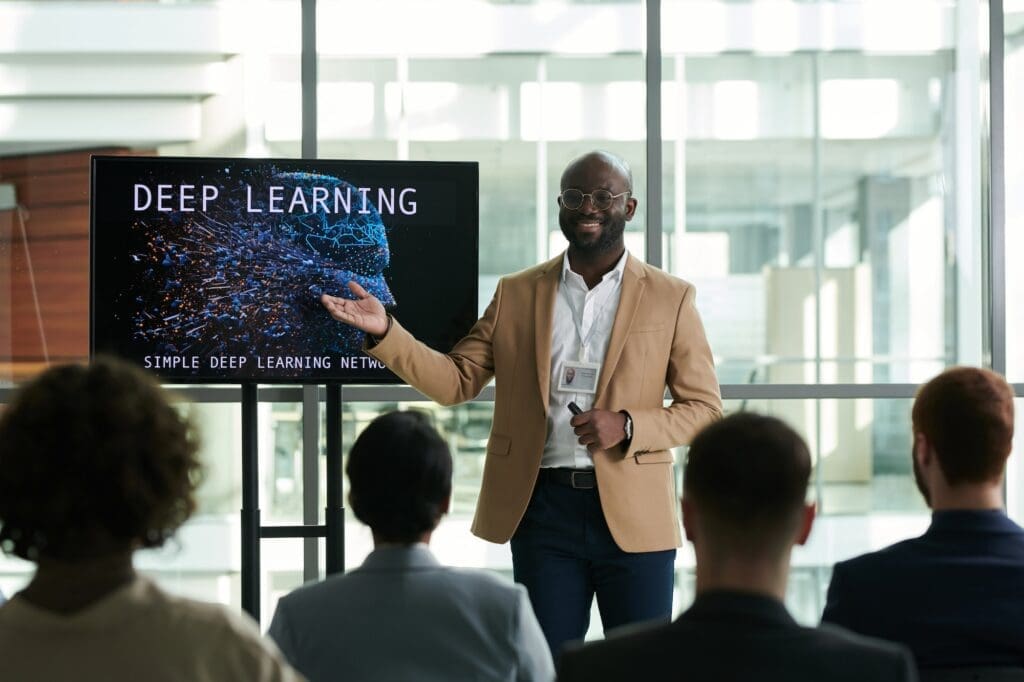
As educators, it’s crucial to stay ahead of the curve, especially as our students step into a world increasingly shaped by AI. Many teachers, however, feel underprepared to navigate this evolving landscape. This underscores the need for comprehensive professional development programs that can equip educators not just with the technical know-how of harnessing AI tools in the classroom but also with an understanding of the ethical implications and best practices. Simply introducing AI tools is not sufficient; we must ensure that teachers are adept in harnessing these tools effectively and responsibly to enrich the learning experience and prepare students for a future where AI plays a significant role.
The International Society for Technology in Education (ISTE) and other organizations like TeacherGoals and Coursera are leading the way in preparing educators for the AI revolution. ISTE’s AI Exploration for Educators program and TeacherGoals’ comprehensive training in AI provide not only technical knowledge but also address ethical considerations and best practices. These programs, complemented by Coursera’s course designed by teachers for teachers, bridge the gap between commonly held beliefs about AI and its actual implications, ensuring that educators are well-equipped to guide their students in the responsible use of AI.
However, preparing teachers for the AI revolution is not a one-time event but an ongoing process. Continuous support and resources are needed for educators to effectively integrate AI into their teaching practices. This could take the form of online communities where teachers can share their experiences and learn from each other, or ongoing training sessions that delve into more advanced aspects of AI. With the right resources and support, teachers can become confident navigators of the AI landscape, ready to guide their students towards a future where AI is an integral part of their lives and careers.
The Need for Evolution in Academia
The advent of AI has exposed the limitations of traditional academic models. Many educators feel that academia is already lagging behind, unsure of how to integrate AI into existing curriculums. As I delved into this issue, I came across an insightful paper titled “Incorporating Artificial Intelligence Into The Classroom: An Examination Of Benefits, Challenges, And Best Practices” by Dr. Nouridin Melo. The paper highlights the potential of AI to revolutionize the way students learn and teachers teach, but it also underscores the challenges that come with it, such as the need for technical expertise, limited resources, and ethical concerns.
The paper suggests that one of the key benefits of harnessing AI into the classroom is the ability to provide students with a more personalized learning experience. However, the integration of AI into the classroom also presents a range of challenges, such as data privacy and ethics, the need for ongoing training and support, and the potential for unequal access to technology and digital skills. To address these challenges, the paper recommends partnering with a reliable AI provider, starting small, and fostering ethical and critical thinking.
The future of education is here, and it’s time for academia to evolve to meet it. We need to rethink our approaches to teaching and learning to align with the realities of the 21st century. This includes updating our policies on academic integrity, investing in AI education for teachers, and developing curriculums that incorporate AI learning. As we navigate this new frontier, we must ensure that we are doing so in a way that is ethical, equitable, and beneficial for all students.