

Personal development is not a destination. It is a practice that nobody ever fully completes, and the leaders who understand that are the ones who tend to become genuinely effective. Dr. Andy Neillie has spent more than 20 years studying, coaching, and speaking about what separates managers from high-achieving leaders, and in Episode 68 of DissedMedia: A Startup Story, he joined Ben Olmos for one of the most honest conversations about leadership development, self-awareness, and personal growth this show has produced. The conversation ranges from servant leadership philosophy and difficult workplace conversations to NPS scores, employee retention, and the surprising leadership lessons buried inside life with a rescued dog.

From Bad Boss to Leadership Coach: Dr. Andy Neillie’s Origin Story
Dr. Neillie’s path into leadership coaching did not start in a classroom. It started on a construction site, working for a boss with a serious anger management problem and a power tool in his hand. That early experience of what leadership should not look like planted a question that would drive the next four decades of his professional life: why do so many people in positions of authority manage so poorly, and what would genuinely good leadership actually look like?
He went on to encounter a second formative negative example, a manager who consistently took credit for his team’s work, always ensuring he looked good in front of clients and senior leadership while the people who did the actual work remained invisible. That experience crystallized a conviction Andy carries into every keynote and every coaching engagement: leaders are at the bottom of the pyramid, not the top. Their job is to make their people look good, equip them to excel, and create the conditions for others to succeed.
That conviction, combined with a natural gift for communication that others recognized before he did, led him into more than 20 years of speaking and consulting with corporations, trade associations, and privately held companies. Along the way he earned his doctorate, researching the personal dimensions of leadership effectiveness. He and his wife also built and ran a portfolio of Central Texas retail businesses for 15 years, selling them last year for a multiple of EBITDA. The retail chapter, which he entered during the 2008 financial crisis after losing $85,000 in a single phone call as an outside consultant, gave him a ground-level education in employee retention that his consulting work alone never could have.
The Four Leadership Necessities: Conviction, Competence, Character, and Covenant

After more than two decades of studying what managers who are becoming high-achieving leaders actually do differently, Andy has distilled the pattern into four necessities.
Conviction is the first. Emerging leaders are people of bigger-picture thinking. They are not heads-down on their own task list all day. They look outward and forward, understanding the strategic context of what their team is doing and why it matters beyond the quarterly KPI.
Competence is the second, and it is not about the leader’s own technical skills. It is about the leader’s commitment to ensuring their team can execute. The question a developing leader constantly asks is: am I doing what I need to do so that my people can do what they need to do? This servant leadership orientation, where the leader’s primary job is to remove obstacles and build capability in others, is what separates managers who happen to be good at their jobs from leaders who build high-performing teams.
Character is the third and the one Andy considers most fundamental. You will never be a better leader than you are a person. Fair-minded, other-oriented, selfless. Leaders eat last, not first. The classic leaders eat last philosophy, articulated famously by Simon Sinek but rooted in military tradition and servant leadership teaching going back centuries, shows up in everything from how Andy coaches the difficult conversations he describes to how he thinks about the relationship between leaders and the people they serve.
Covenant is the fourth, and it is where leadership gets genuinely hard. The leadership covenant is not just a performance contract. It is the dynamic, ongoing tension between holding people accountable to the work the business needs done and caring enough about those same people to make space for their full humanity. Andy gave a vivid example: a manager whose team member needed to go to Chicago to help an aging parent move into memory care, having already burned through all their PTO. The manager figured out how to make it happen. That is covenant leadership in action, and it is what distinguishes emerging leaders from people who simply hold titles.
Why Employee Retention Is a Leadership Problem, Not an HR Problem
One of the most practically grounded parts of this conversation was Andy’s argument that employee retention is fundamentally a leadership issue. Replacing an employee costs anywhere from $25,000 to $200,000 depending on the role and the industry. A new hire takes six months or more to reach the productivity level of the person they replaced. And in high-turnover environments like the retail businesses Andy ran, that cycle repeating over and over becomes one of the biggest drags on profitability a business can face.
The companies that crack employee retention, Andy observed, are typically the ones that create environments where people feel their work matters, have a community they consider their people, and experience genuine autonomy and accountability in their roles. He pointed to a Pacific Northwest consulting firm that gave its employees control over their own vacation time and client selection and has achieved an NPS score of 78, a number that dwarfs the 40-to-50 range that companies like Chick-fil-A score. The connection between employee happiness, leadership quality, and customer loyalty expressed through net promoter score is not soft or accidental. It is a measurable business outcome.
This connects directly to what Ben explored in his own doctoral research on positive psychology in the workplace. Happy people stay. Customers of happy people return. The business that generates a virtuous cycle from those two dynamics builds something far more durable than one built purely on operational efficiency. For more on building teams people choose to stay on, see our conversation with Rich Ashton on developing leaders from within in Episode 66.
How to Have Difficult Conversations Without Being Harsh
One of the clearest markers Andy uses when he begins an engagement with a new company is watching who is having the hard conversations. The people having them are the emerging leaders. The people avoiding them are managers who have not yet made the transition. Learning to have a hard conversation that is not a harsh conversation, one that retains the dignity of the person across the desk while still addressing what needs to be addressed, is in his view one of the most important skills in leadership development.
He made an observation about Gen Z and Gen Alpha entering the workforce that stopped the conversation cold: according to research from Forrester or Gartner, members of these generations will quit before having a difficult conversation with their manager. Not because they are incapable of growth, but because they have not been given the frameworks, the language, or the emotional experience of working through conflict and coming out stronger on the other side. The challenge for leaders managing these generations is not to avoid difficult conversations but to learn how to create enough trust and psychological safety that those conversations feel like coaching rather than attacks.
Andy has written a free eight-page e-book on exactly this topic: The Three Imperative Leadership Conversations, covering how to hold a hard conversation, a coaching conversation, and a threefold affirmation conversation. It is available at leadershipmaterials.com as a free download.
Self-Awareness: The Foundation of Personal Development for Leaders
Ben and Andy spent considerable time on a topic that does not appear in most leadership training curricula: what does it actually mean to know yourself as a leader, and how do you develop that self-awareness in practice?
Andy’s framework has three components. First, recognize that your strengths almost always have corresponding weaknesses. The quick wit that defuses tension in a room is the same trait that can race ahead of people who need more time to process. The big-picture thinker who spots opportunities others miss is the same person who frustrates their team by moving on before details are confirmed. Personal development for leaders is not about eliminating weaknesses. It is about developing enough awareness to know when your strengths are serving the situation and when they are working against you.
Second, build in regular feedback from people who will tell you the truth. Andy sits on several boards specifically because he believes every leader needs a leader, someone who will ask the hard questions no one in the room around them is willing to ask. Without that external accountability, self-awareness becomes self-deception dressed up as introspection.
Third, Andy practices what he calls the leader’s hour: a structured start to the day that for him includes spiritual disciplines, a review of his calendar and priorities, and sometimes physical exercise or journaling. The goal is not productivity optimization. It is to be more aware of others and less centered on himself as he moves through the day. He was careful to note that he does not do this every day, and the leadership lesson in that admission is as important as the practice itself: nobody arrives at high-achieving leadership. The goal is to know how to get back on the horse when you have fallen off.
The GOLDen Principles: Leadership Lessons from a Rescued Dog

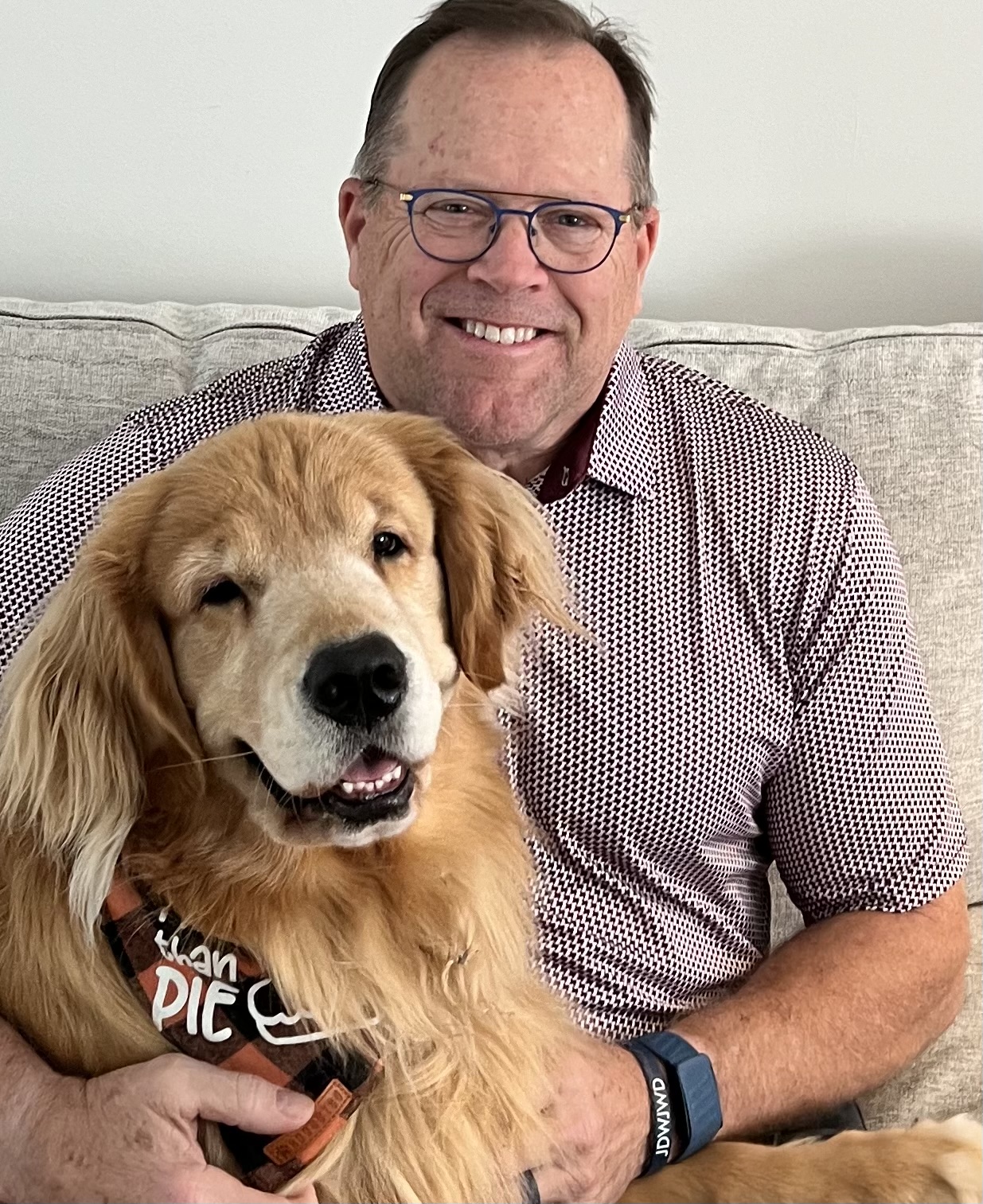
One of the most distinctive elements of Andy’s work is his book, The GOLDen Principles: Life and Leadership Lessons from a Rescued Dog. The premise sounds playful, but the leadership lessons it carries are anything but superficial. The book grew directly out of his experience with Redford, a golden retriever rescued from a puppy mill in Arkansas who came to Andy traumatized, fearful, and deeply resistant to the kind of command-and-control leadership Andy had defaulted to in his professional life.
Learning to lead Redford taught Andy to lead differently. Getting down to Redford’s level rather than demanding Redford come up to his. Finding the proactive yes before the reactive no. Rewarding what was going right rather than fixating on correcting what was going wrong. Living in the current reality rather than mourning what was lost or dreading what might come next. When one of their dogs needed to have a leg amputated due to cancer, the vet told Andy and his wife that dogs live in the present moment. The dog was not going to grieve the missing limb. She was going to get up and figure out how to chase the ball with three legs. That is a personal development lesson most humans spend decades learning.
A publisher heard Andy give a speech called The Redford Principle: Trust Takes Time, asked if he had more dog stories, and The GOLDen Principles was born. It is structured like a Chicken Soup for the Soul, short practical leadership lessons drawn from life with rescued pets, but each one maps to a real and recognizable leadership situation. You can get a copy of The GOLDen Principles on Amazon here.
Frequently Asked Questions: Personal Development and Leadership
What is the difference between a manager and a leader?
Andy’s working definition: management is about things and leadership is about people. Management is measurable, goal-oriented, and task-focused. Leadership is about conviction, character, and the ability to unlock the potential of the people around you. Both matter, and they are not in opposition, but the transition from manager to leader requires a fundamental shift in orientation from completing tasks to developing people.
How do you develop self-awareness as a leader?
Start by recognizing that your strengths have corresponding weaknesses. Build in structured feedback from trusted advisors who will tell you the truth. Establish a morning practice, whether spiritual, physical, journaling, or simply reviewing your calendar with intention, that helps you center yourself before the day pulls your attention outward. And stay open to feedback even when it is the same feedback you have been getting for years. Knowing how to get back on the horse is the skill. Nobody stays on it all the time.
What are the best leadership books for personal development?
Andy referenced several across the conversation: James Clear’s Atomic Habits, David Allen’s Getting Things Done, and works by Marcus Buckingham, Stephen Covey, John Maxwell, and Patrick Lencioni. His own book, The GOLDen Principles, approaches leadership development through the lens of rescued dogs and is one of the more distinctive entries in the self improvement books category for leaders. The honest caveat from Andy: there is nothing new to say about leadership that Marcus Aurelius and others did not say 2,000 years ago. What matters is finding the voice that helps you actually internalize and apply the lessons.
Where to Find Dr. Andy Neillie
Dr. Andy Neillie can be reached at neillieleadership.com (spelled N-E-I-L-L-I-E). His free e-book, The Three Imperative Leadership Conversations, is available at leadershipmaterials.com, where you can also sign up for his regular leadership blog. His book The GOLDen Principles is available on Amazon here.
Episode 68 is available now wherever you listen to podcasts. Watch the full conversation on the DissedMedia YouTube channel at @DissedMedia and subscribe to help us reach 100,000 subscribers by the end of 2026.