
Most entrepreneurs start a business because they are great at something. A skill, a service, a product, a vision. What very few of them do is build that business with the end in mind. They are not thinking about how to build a scalable business when they are grinding through their first year. They are not thinking about fundability when they are bootstrapping their way to cash flow. And they are almost never thinking about entrepreneurship through acquisition as a path to growth or what happens when it is time to exit. Tyrus Shivers thinks about all three, and he has built an entire operating system around it.
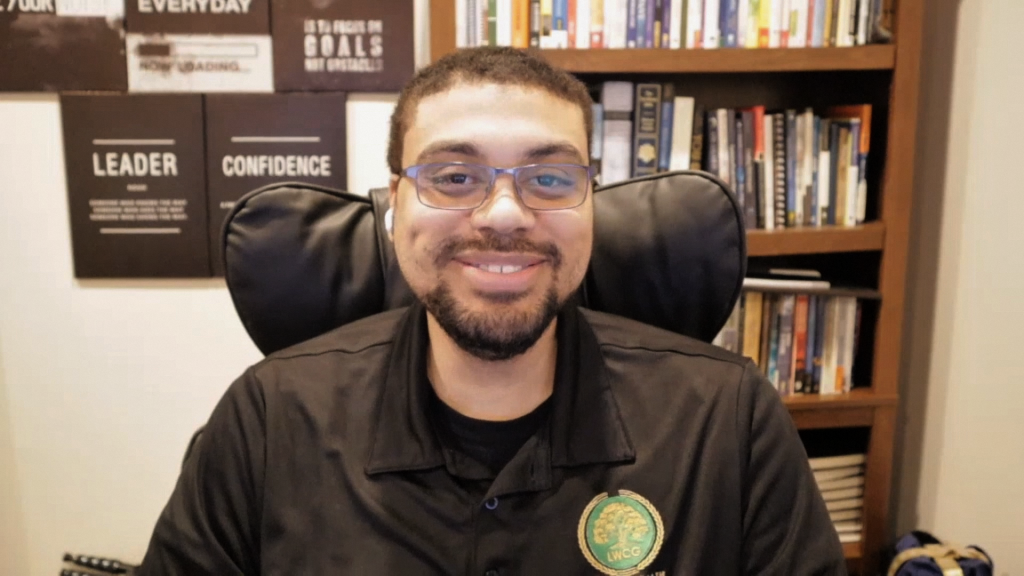
In Episode 57 of DissedMedia: A Startup Story, host Ben Olmos sits down with Tyrus Shivers, founder and CEO of Legacy Wealth Capital Group and creator of LBOS, the Legacy Business Operating System. Tyrus is a retired US Air Force veteran who started his first business at eight years old, bootstrapped a property management company to 1.2 million dollars in eighteen months, coached over a thousand entrepreneurs, and collaborated with names like Eric Thomas and Master P. His mission is to help founders stop running a job disguised as a business and start building a legacy. This episode covers how to build a scalable business from the ground up, what raising capital for small business actually looks like in practice, the growing wave of entrepreneurship through acquisition, and why the next great wealth opportunity might not be in tech at all.
Who Tyrus Shivers Is
Tyrus Shivers grew up watching his family work in ways that most people never see. Factories, lumber mills, 21-day stretches of 12-hour shifts with seven days off. His great-grandfather chopped cotton at eight years old for a nickel a week. His grandmother picked cotton for ten dollars per hundred pounds. These were not abstract stories to Tyrus. They shaped everything about how he thought about work, ownership, and the difference between the two.
At eight years old he started printing business cards. His first client was a cousin who ran an HVAC company. Even then, Tyrus understood something that most people do not figure out until much later: working hard and owning something are not the same thing. His family worked extraordinarily hard. But they did not own anything. He decided early that he was going to change that equation.
He went to college, lost his scholarship while pledging in his second year, and ended up doing exactly what he swore he would not do: working long days in HVAC and pulling UPS shifts on the side. He enlisted in the Air Force with plans to make it a twenty-year career, completed officer training, and was medically retired after two and a half years due to a diagnosis that ended his active duty service before it really began. He finished his bachelor’s degree in legal studies after leaving the military, then completed a dual MBA and master’s degree in cybersecurity.
From there he moved into government contracting, always with that nagging sense that ownership was where he was supposed to be. He got into real estate, launched a property management company, and took it from zero to 1.2 million dollars in eighteen months. People started asking how he did it. That question became a coaching practice. The coaching practice became a platform. Two venture capitalists saw him speak at an event, approached him about scaling their capital raising course, and Tyrus responded with a counterproposal: full partnership or nothing. They accepted. Legacy Wealth Capital Group was born.
The Legacy Business Operating System
LBOS is Tyrus’s answer to the question every serious entrepreneur eventually has to ask: why does growing feel harder the bigger we get? The answer, in his framework, is almost always the same. The business was built around the owner instead of being built to run without the owner. The systems are informal. The roles are blurry. The capital structure is reactive rather than strategic. And the exit, if anyone has thought about it at all, is an afterthought.
LBOS is designed to help founders build a business that is scalable, fundable, and sellable. These are not just aspirational words. They are structural requirements that shape every decision a business makes, from how it hires to how it documents its processes to how it presents itself to potential investors or acquirers. Understanding how to build a scalable business means understanding that scalability is not a feature you add later. It is a design choice you make at the foundation. Tyrus challenges his clients to stop thinking like operators and start thinking like investors. This is the core of how to build a scalable business the right way. An investor looks at a business as an asset. An operator looks at it as their baby. That mental shift, from owner to investor, is where legacy wealth building actually begins.
The Real Pain Points Entrepreneurs Bring to the Table
When Ben asks Tyrus how he identifies what a business actually needs, his answer is disarmingly simple. He listens. He asks targeted questions. And then he challenges the business owner directly, because most of the founders who come to him are operators who started a business thinking they had to do everything themselves.
The pattern is almost universal. They are great at the thing they built the business around. They are not great at accounting, marketing, data, operations, or the dozen other functions a business requires to grow. And instead of hiring for those gaps, they try to fill them personally, usually at the cost of the thing they are actually good at. Tyrus’s first move is always the same: identify what the owner is supposed to do and get everything else off their plate. The follow-up question is always capital, because the reason most founders do not delegate is that they tell themselves they cannot afford to.
Raising Capital for Small Business: What It Actually Looks Like
One of the most grounded and practical conversations in this episode is around raising capital for small business in the early stages, before there is a track record, before there is a prototype, and sometimes before there is even a proven revenue model. Tyrus does not treat this as a mystery. He treats it as a skill, and he traces it back through history to prove his point.
Rockefeller, Carnegie, and Vanderbilt built their earliest businesses on vision before they had investors behind them. Jeff Bezos raised his first Amazon capital from his parents after getting turned down by the largest book publisher in the country. Bill Gates pitched a thousand people and got checks from a hundred. These were not businesses with proven ROI. They were ideas backed by conviction and clarity of vision.
Tyrus’s own first experience raising capital came while he was still working a government contracting job. He talked about real estate every single day. A colleague finally challenged him: if you had the money, what would you do? Tyrus had his answer ready, every contractor, every detail, every step of the plan. They went to a cafe across the street. He rattled it all off. The colleague handed him a hundred thousand dollar check on the spot and told him that if the deal worked, he had more money and all of his friends had money too.
The lesson Tyrus draws from that story is not that capital is easy to find. It is that the founders who raise capital are the ones who can walk an investor through their plan in plain English without fumbling. Investors are not buying the deck. They are buying the person behind it. They want to know what the vision is, how it will be executed, and how they will get their return. The founders who cannot answer those questions clearly do not raise capital. The ones who can raise it faster than they expect.
Entrepreneurship Through Acquisition: The Opportunity Nobody Is Talking About
One of the most compelling themes in this episode is the idea that the next major wave of wealth creation is not going to come from founding new companies. It is going to come from acquiring existing ones. Entrepreneurship through acquisition is the strategy Tyrus believes will define the next decade of independent wealth creation. Tyrus has been tracking this shift closely and sees several forces converging at the same time.
Baby boomers are retiring at scale, and legacy wealth building at the community level depends on whether the next generation of entrepreneurs steps up to acquire these businesses rather than letting them disappear. The estimate being discussed in deal-making circles is eighty-four trillion dollars in assets and businesses that will be handed over or shuttered in the coming decade. Many of these are profitable, established operations with real customers and real cash flow. Their owners either cannot find buyers or do not know where to look. For founders who understand how to evaluate, acquire, and operate a business, this is a generational opening.
Private equity has noticed. Firms that used to ignore any company under twenty million in revenue are now dipping into the lower middle market. Tyrus reads that as a signal, not a threat. If institutional money is moving in that direction, the opportunity is real. He is already working on acquisitions in non-emergency medical transportation, commercial workspace, podcast studios, and video production, all businesses with existing demand, established customers, and clear paths to scale.
He is also watching the blue collar sector closely. HVAC, plumbing, electrical, construction services. While everyone chases AI companies and tokenization plays, Tyrus points out that the companies building and cooling the data centers that power those AI tools are going to be extraordinarily valuable. Somebody has to build the infrastructure. Private equity has already figured this out. Entrepreneurship through acquisition in these sectors is not a contrarian bet. It is following the smart money.
Legacy Wealth Capital Group and the Path to IPO
Tyrus is deliberate about how Legacy Wealth Capital Group is structured and where it is headed. The plan is not to take on private equity funding and eventually get acquired. The plan is to go public. He is candid about why. Private equity firms are built to extract value and exit. Legacy Wealth Capital Group is built to pour value back into every business it touches, and Tyrus believes the IPO path is the one that keeps that mission intact while also giving everyday investors the chance to participate.
Legacy wealth building is the operating thesis behind every decision the company makes. The company currently co-owns six businesses and is actively working on three acquisitions. It raises capital through a combination of direct investor relationships, Regulation CF crowdfunding, and webinars where Tyrus presents the vision and the pitch deck directly to potential investors. He is also watching what raising capital for small business will look like inside a tokenized share environment and tracking tokenization closely and following the SEC’s movement on legislation that would regulate the tokenization of company shares. He wants to be close enough to that frontier to pivot quickly when the regulatory environment clarifies, without being so far out ahead that a policy change wipes out the position.
Legacy wealth building at that scale requires patience, infrastructure, and a clear vision. The long-term goal is a billion-dollar company built primarily through acquisitions in essential industries, with a fund launching in Q3 targeting opportunities in the biotech sector where specific tax structures make the investment particularly attractive.
What AI Actually Means for Business Owners
Ben and Tyrus spend real time on this topic and land in the same place. AI is not coming for the jobs of people who are adding genuine value. It is coming for the roles that were already being done mechanically, the middle layer of work that required education but not creativity. The people who have the most to fear from AI are the ones who were never really irreplaceable to begin with.
For business owners, the opportunity in AI is not to be disrupted by it. It is to use it as a force multiplier. More output with the same team. More creative work with fewer repetitive hours. More leverage for the founder who already understands their business and their customers. Tyrus sees the content creation space as one of the clearest examples of this shift in action, and Legacy Wealth Capital Group’s planned podcast studio and video production acquisitions are a direct expression of that belief.
How to Connect with Tyrus Shivers
Website: legacywealthcapitalgroup.com
About the Show
DissedMedia: A Startup Story follows the real-time build of DissedMedia Corporation and The Daily Pitch, featuring candid conversations with founders, operators, coaches, and experts on what it actually takes to start, grow, and sustain a business.