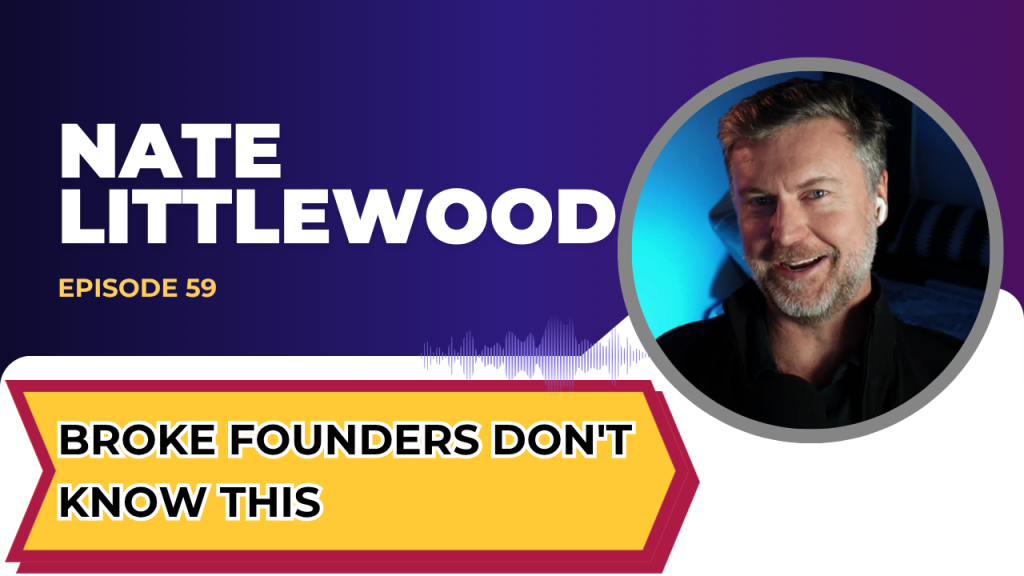

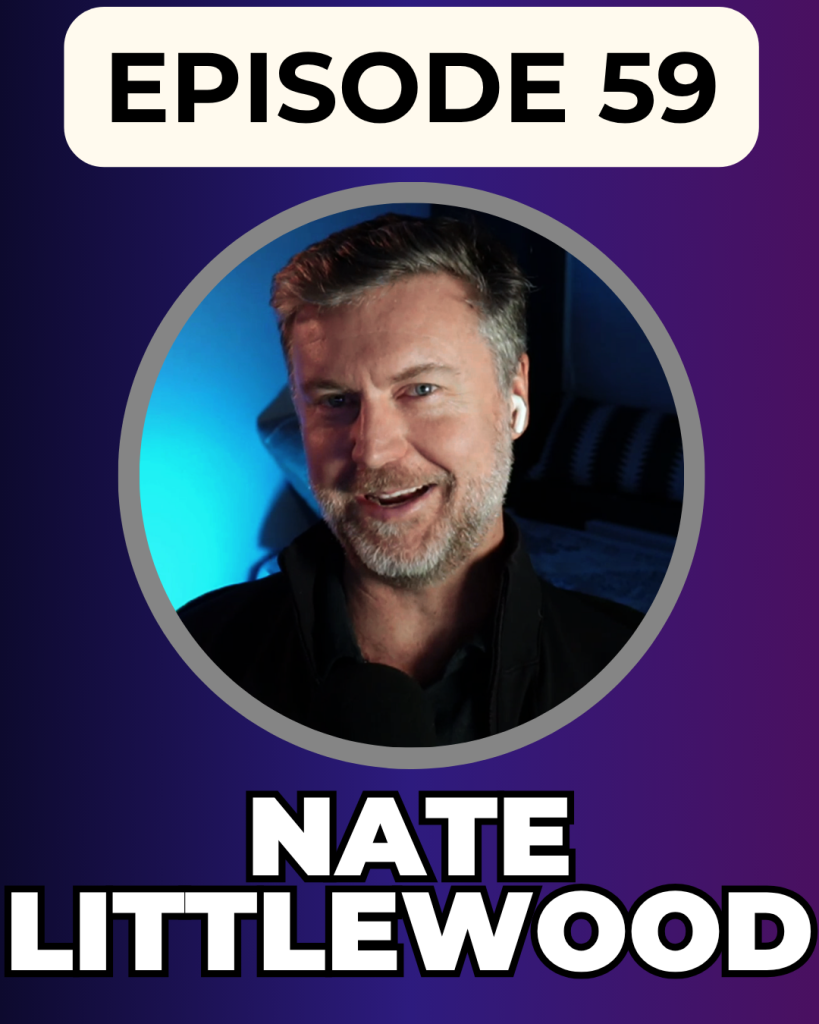
Nate Littlewood built an e-commerce brand from a $40,000 Kickstarter campaign into a seven-figure business. Today, as the founder of Future Ready CFO, he helps e-commerce and CPG founders do the same thing, and in Episode 59 of DissedMedia: A Startup Story, he shares the financial truths most founders learn far too late. If you have ever stared at your bank account wondering where all the revenue went, this conversation with a fractional CFO is for you.
Who Is Nate Littlewood?
Nate Littlewood spent the first decade of his career on Wall Street at a global investment bank, where he learned to read financial statements like a story. He transitioned into the startup world in 2016 and bootstrapped Urban Leaf, an urban gardening brand, from a Kickstarter campaign into a seven-figure e-commerce company. That firsthand founder experience is what separates him from a traditional fractional CFO. He describes his approach as a co-founder on demand who just happens to be really good with finance.
Today, through Future Ready CFO, Nate works exclusively with e-commerce and CPG founders running seven-figure businesses, typically companies with two to eight employees that have found product-market fit but have not yet built the financial systems they need to scale sustainably.
Why Most Founders Come Looking for a Fractional CFO Too Late
In the episode, Nate is direct about a pattern he sees repeatedly. Most founders do not seek financial help until they have been in business for two to three years and have already experienced real pain. That pain shows up in predictable ways: founders who are not paying themselves consistently, founders who have discovered they lost hundreds of thousands of dollars selling into a channel they did not fully understand, and founders who are working harder than ever but cannot explain where all the money went.
The financial complexity of physical products businesses is unlike anything in software or services. When you are investing in inventory, managing supplier payments, dealing with distributor chargebacks, and waiting 60 to 90 days to get paid by retail customers, cash flow becomes an existential problem, not just a spreadsheet exercise.
The Three Types of Founders
One of the most valuable frameworks Nate shares is his system for categorizing the founders he meets. He puts them into three buckets.
The first is the product person. These founders love building and often end up with catalogs that are far too large. Nate looks at metrics like revenue per SKU to identify which products are actually justifying their existence and which ones are quietly dragging down profitability.
The second is the marketing wizard. These founders understand Meta and Google, know their cost per click, and are comfortable optimizing their ad dashboard. They tend to keep moving on their own and are often not the best fit for fractional CFO support because they are already operating in a mode that works for them.
The third is the business owner. These are the founders who know a little about everything, have been beaten up by their finances, and are curious enough to want to actually understand the math behind their company. According to Nate, these are the people he can help the most because they are coachable and understand what is at stake.
The Brick and Mortar vs. Direct to Consumer Decision
One of the most practical conversations in the episode covers whether CPG founders should pursue brick and mortar retail or build through direct to consumer channels first. Nate’s default recommendation for early-stage founders is direct to consumer, and the reasoning is grounded in financial reality.
Selling through major retailers means dealing with slotting fees, placement fees, promotional chargebacks, and trade spend that can eat up 30 to 35 percent of top-line revenue before a single dollar reaches the founder. Add to that the extended payment terms and the cash you are effectively lending to your retail partner for free, and the economics can be brutal.
More importantly, the feedback loop from direct to consumer is dramatically shorter. A founder who sells online can iterate on packaging, messaging, or product formulation within weeks. That same iteration inside a major retailer’s supply chain can take years.
Nate’s advice: nail your product and your story through direct to consumer first, then pursue wholesale with eyes wide open about what it will cost.
A Real Case Study: Doubling Profitability in One Year
The most instructive section of the episode is a case study Nate walks through involving a husband and wife homewares business that had been growing slowly for nearly a decade. When Nate came on board, the business was generating 5 to 10 percent growth year over year with no real marketing investment. After analyzing their unit economics, he recognized that their profit per order was high enough to support paid advertising profitably.
What Nate did next is a masterclass in incentive alignment. Rather than simply hiring a media buying agency on a standard monthly retainer, he structured an agreement where the agency only got paid based on the incremental profit they generated above the business’s existing baseline. The agency was not earning a fee for work the business was already doing on its own. They were earning a percentage of the new value they created.
The result was a business growing at 100 percent year over year in profitability. Nate’s goal in structuring the deal that way was intentional: he wanted to pay the agency more than their standard retainer if things went well, because that would make his client the agency’s best account and most prioritized relationship.
The Cash Conversion Cycle: The Hidden Lever Most Founders Ignore
The cash conversion cycle is one of the most powerful and least understood concepts in physical products businesses. It refers to how long it takes a business to turn supplier payments into cash receipts from customers. For many CPG companies, that cycle can run six to twelve months or longer. That means money is tied up in inventory and receivables for the better part of a year before it comes back.
Nate has been working to engineer what he calls a negative cash conversion cycle for this same homewares client. By moving a significant portion of their procurement to Faire, a wholesale marketplace that offers 60-day payment terms, and layering in an additional financing solution that adds another 60 days, the business can now receive payment from a customer before the supplier invoice even comes due.
This is the same model Amazon operates on. Amazon collects payment from buyers immediately but does not pay vendors for weeks. When a small business can replicate that structure, cash stops being a constraint on growth. The more the business grows, the more cash it generates.
The E-Commerce Boom Is Over
Nate offers a clear-eyed analysis of what has happened to physical products businesses over the past five years. During COVID, debt was cheap, ad costs were low, and e-commerce was booming. Founders were making bets on inventory with favorable economics on both sides of the equation.
That environment has completely reversed. Debt is more expensive and harder to secure. Ad costs on Meta and Google have risen significantly. EBITDA margins for physical products businesses were already running at high single digits in the best of times, and margin compression across the industry has only accelerated. Nate describes the current landscape as one that is weaning out the founders who cannot run a genuinely profitable operation.
For the founders who remain, the path forward requires understanding the risk and reward profile of every inventory purchase, treating each purchase order like a probabilistic bet, and building financial systems that give you clarity on whether the bet is worth making.
AI Is Changing What a Fractional CFO Can Do
The episode closes with a wide-ranging conversation about how artificial intelligence is reshaping financial advisory work. Nate believes the technology is already lowering the cost of delivering expert financial support, which means smaller businesses that previously could not afford a CFO will increasingly be able to access that level of help on a fractional basis.
His own focus in response to AI is to sharpen the human side of the work: helping founders understand how to ask better questions of their data, navigate the emotional side of financial decision-making, and build a healthier relationship with their numbers. As he puts it, the data and the models are easy to generate with AI. The last frontier for human advisors is the interface between people and their data.
Ben adds his own perspective from both the analytics world and the classroom: AI is an augmentation tool, not a replacement. The people who will thrive are the ones who can use it to eliminate low-value work and free themselves up for the synthesis, critical thinking, and connection-making that machines still cannot do well.
Where to Find Nate Littlewood
Nate Littlewood is the founder of Future Ready CFO and the host of the Profits on Purpose podcast. He works with e-commerce and CPG founders at the seven-figure stage who are ready to build financial clarity and scale profitably.
Website: https://www.futurereadycfo.com
LinkedIn: https://www.linkedin.com/in/nathanlittlewood
Podcast: Profits on Purpose
Listen to Episode 59
If this episode brought value to your business, share it with a founder who needs to hear it. The show is on a mission to reach 100,000 YouTube subscribers by the end of 2026, and every share helps get there.