


Estimated reading time: 8 minutes
The global birthrate is anticipated to peak in 2025, marking a pivotal moment in demographic trends. This peak signifies the culmination of a period of relatively stable birth rates before a projected decline sets in. The implications of this shift are profound, affecting various aspects of society, including education systems, the workforce, and the broader economy. The decline in birth rates will lead to a reduction in the younger population, impacting the demand for educational services. While it may help to improve diversity and inclusion, it will also create challenges in maintaining a vibrant, dynamic labor market.
We Are Not Alone
Many countries worldwide are experiencing significant birth rate declines, a trend that has widespread implications for societies and economies. This decline is not isolated to one or two regions but is a global phenomenon, affecting both developed and developing nations.
In the G7 nations, which include Canada, France, Germany, Italy, Japan, the United Kingdom, and the United States, the decline in birth rates and the resultant aging populations have been particularly notable. These countries have historically had lower fertility rates than the global average, and this gap has narrowed over time. The consequences of these demographic changes are multifaceted, ranging from labor shortages to increased pressure on pension systems and healthcare services due to the rising median age of populations. Japan, for instance, has been facing below-replacement fertility for decades, leading to one of the oldest median ages globally. Similarly, Italy recorded its lowest number of babies born in 2018, and the U.S. witnessed the lowest number of births in 32 years (Pew Research Center).
Globally, every country among the 49 most populous has seen a decline in birth rates over the last 70 years, with some countries experiencing more dramatic decreases than others. For example, China’s birth rate plummeted by 81% from 1950 to 2021, while South Korea’s birth rate dropped by an astonishing 86% during the same period. These declines are generally seen as the result of socio-economic development, including factors like improved living standards, expanded education and career opportunities for women, growing urbanization, and increased access to family planning services. However, these demographic shifts also pose significant challenges, such as labor market impacts, economic productivity issues, and shifts in consumer demand which may necessitate a reevaluation of current growth models (Visual Capitalist).
The Educational Impact
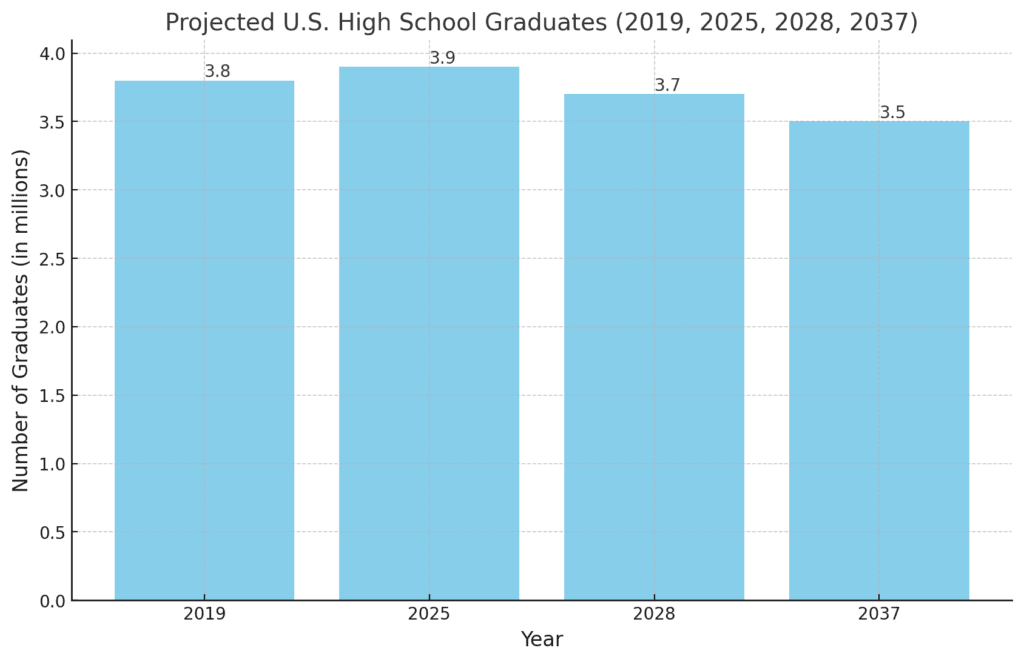
The trends in high school graduation rates and the demographic makeup of graduating classes in the U.S. are shifting. According to a report released by the Western Interstate Commission for Higher Education (WICHE) and featured on Cognia and Inside Higher Ed, the number of high school graduates in the U.S. is projected to peak at 3.9 million with the class of 2025. Following this peak, a decrease is expected in the annual number of graduates, with projections indicating that the class of 2037 will have about the same number of graduates as the class of 2014, around 3.5 million. This trend is largely attributed to declines in the birth rate and smaller elementary school cohorts.
Colleges and universities are already experiencing declining enrollment trends, a situation exacerbated by the pandemic but rooted in deeper demographic changes. Data from the National Student Clearinghouse Research Center highlight a consistent decline in college enrollment over recent years, underscoring the urgency of addressing this issue. Institutions like Sweet Briar College and Green Mountain College have faced severe financial challenges leading to drastic measures, including closures and mergers. These cases exemplify the vulnerabilities of higher education institutions to demographic and financial pressures.
Changing Perception of College Value
It doesn’t help that there is a growing debate over the value of a college degree, fueled by skyrocketing tuition costs and a disconnect between academic training and job market demands, is reshaping the landscape of higher education and workforce development. As tuition fees continue to climb, outstripping inflation and wage growth, students are increasingly burdened with debt, raising critical questions about the return on investment of a traditional four-year degree. This financial strain is juxtaposed against a job market that increasingly values practical skills and adaptability, highlighting a mismatch that leaves many graduates underemployed or in fields unrelated to their studies. The situation is prompting a reevaluation among younger generations, particularly Gen Z and emerging Gen Alpha, who are questioning traditional career paths and exploring alternatives that promise faster, more direct routes to employment and success, such as coding bootcamps, entrepreneurship, or digital creativity.
This shift in attitudes is not just a financial calculation but a profound cultural change, reflecting a broader skepticism about the efficacy and relevance of traditional higher education in a rapidly evolving economic landscape. Surveys mirror this sentiment, showing a growing number of young people weighing the economic implications of higher education against its potential benefits. The challenge for colleges and universities is to adapt to these changing dynamics, making education more responsive to the needs of both students and the labor market. This entails not only adjusting curricula to better align with the demands of today’s economy but also reimagining the role of higher education in fostering skills, critical thinking, and adaptability that can withstand the pace of change. The ongoing debate underscores the need for a more flexible, pragmatic approach to education, one that prepares students not just for their first job, but for a future where lifelong learning and adaptability are paramount.
Possible Solutions for Academia
Diversity and Inclusion: The increasing diversity among high school graduates will necessitate that colleges and universities adapt their recruitment and retention strategies to be more inclusive and supportive of students from diverse racial and ethnic backgrounds. Institutions will need to focus on creating pathways to college for minority students and ensuring their success on campus to effectively respond to the demographic shift.
Geographic Variation: The impact on college enrollment will vary by region, reflecting the different trends in high school graduate numbers across the United States. The South is expected to see steady, significant increases in high school graduates, potentially leading to higher college enrollment rates in that region. Conversely, the Northeast and the Midwest are projected to experience declines in the number of graduates, which could result in decreased college enrollments in those areas.
Recruitment Strategies: Colleges and universities are likely to intensify their recruitment efforts, especially targeting minority and underserved students to not only diversify their campuses but also to compensate for the declining numbers of white high school graduates. This shift requires institutions to reassess their admission policies, scholarship programs, and support services to attract and retain a more diverse student body.
Financial Implications: The changing demographics could also have financial implications for higher education institutions. With a decline in the population of traditional college-age students, competition for students may increase, potentially affecting tuition revenue and financial stability for some institutions. Additionally, there may be increased pressure to offer financial aid and scholarships to attract a diverse student body, further impacting budgets.
Policy and Planning: The projected demographic shifts provide a roadmap for higher education policy makers and administrators to plan for the future. It’s imperative for institutions to not only adapt their strategies to recruit and retain a more diverse student population but also to align their academic programs and support services with the needs and expectations of future students. This may include expanding online education, developing programs that cater to non-traditional students, and enhancing career readiness initiatives.

Impacts on Business
The anticipated decline in high school graduate numbers combined with their increasing diversity presents a unique challenge and opportunity for the U.S. labor market. This demographic shift necessitates a strategic response from businesses, educational institutions, and policymakers to bridge potential gaps in workforce readiness and to leverage the benefits of a more diverse talent pool. As the population of graduates becomes more varied, aligning educational outcomes with the skills and competencies demanded by an evolving economy becomes crucial. This alignment is not just about filling jobs but about fostering an inclusive environment where diverse perspectives drive innovation and growth. To achieve this, there must be a concerted effort to adapt educational curricula, training programs, and employment practices to be more inclusive and responsive to the changing demographics of the workforce.
Businesses can also help prepare by developing targeted strategies to engage underrepresented groups in high-growth sectors such as technology, healthcare, and green energy. Businesses and educational institutions each play a role in creating pathways for diverse graduates, ensuring they have the skills, opportunities, and support needed to thrive in the workforce. This requires not only a shift in recruitment and training practices but also a commitment to creating workplace cultures that value and nurture diversity. Policymakers, on their part, must facilitate this transition through supportive legislation and funding, aiming to eliminate barriers to education and employment. The projected demographic changes in the high school graduate population challenge us to reimagine how we prepare the future workforce, making it imperative to act with foresight and collaboration to build an economy that is resilient, inclusive, and forward-looking.
Consumer Impact
The decline in birthrates is expected to also have significant consumer impacts, including shifts in market demand across various sectors. As the population ages, industries such as healthcare, retirement services, and adult education may see increased demand, while sectors focused on younger demographics, like education and childcare, could face challenges. Additionally, consumer spending patterns are likely to change, with potential decreases in spending on children’s goods and services and increases in products and services catering to older adults. This demographic shift could also influence housing markets, transportation, and leisure industries, necessitating adjustments in business strategies to meet changing consumer needs.
Overall the cascading financial impacts are likely to include strains on all the things connected to collecting taxes from consumer habits. It means that social welfare systems and infrastructures will become strained as a smaller working-age population supports a larger retired demographic. Businesses will likely face labor shortages, necessitating more investment in automation as policy shifts will likely increase the need for immigration. This complex interplay will no doubt require strategic planning across businesses and government to mitigate serious economic consequences.