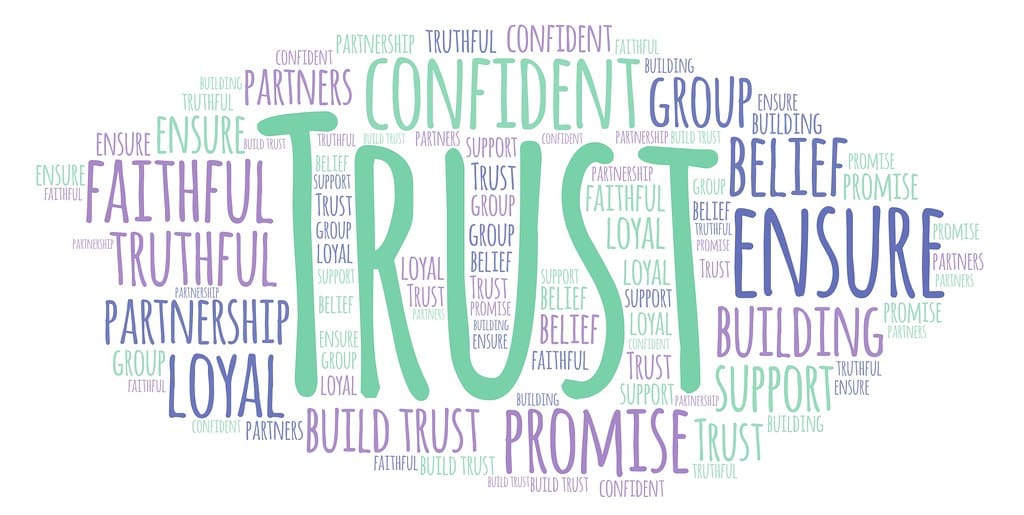

Trust is one of the highest-leverage variables in business performance, and one of the least systematically managed. Companies that score high on internal trust measures outperform their peers on speed, innovation, and retention. Companies with low trust pay a tax on every decision: more approvals, more oversight, more time spent verifying what should be assumed. The cost shows up in how long things take, how much management bandwidth gets consumed, and how quickly capable people leave.
This guide covers why trust functions as a strategic asset, how it affects measurable business outcomes, and the specific behaviors that build or erode it.
In the intricate dance of commerce and industry, trust often remains an underappreciated asset. Yet, it forms the bedrock of customer loyalty, employee satisfaction, fruitful partnerships, and a sterling reputation. Trust transcends the realm of corporate values to emerge as a critical business asset, wielding significant influence over a company’s bottom line and its social media presence.
The Power of Trust
Trust serves as a potent catalyst for performance. In an environment where employees place their trust in leaders and peers, collaboration thrives, and productivity soars. Trust paves the way for open and honest communication, fostering superior problem-solving and effective decision-making. It nurtures loyalty, not just from customers, but also from employees and business partners. Trust mitigates risk in business relationships, both internal and external.
However, trust is not a static state. It demands time and consistent effort to cultivate, yet it can be eroded swiftly through dishonesty or actions that betray respect or integrity. Openness, honesty, and transparency are often cited as critical ingredients in the recipe for trust in a business context.

Trust and the Bottom Line
The level of trust within a company can impact a spectrum of factors, from employee turnover rates to customer satisfaction, all of which can directly influence a company’s profitability. The Edelman Trust Barometer, for instance, found that companies with higher trust levels tend to enjoy higher customer loyalty and a superior reputation.
Research by the Great Place to Work Institute reveals that companies scoring high on trust consistently outperform market indices in terms of annualized stock market returns. Interaction Associates’ Trust & Effectiveness Survey found that high-trust companies are 2.5 times more likely to be high performing revenue organizations than low-trust companies.
A study published in the Harvard Business Review found that people at high-trust companies report 50% higher productivity. Towers Watson’s Global Workforce Study showed that high-trust companies had a total return to shareholders that was 286% over three years.
The Cost of Violating Trust
However, when trust is violated, the consequences can be severe. Facebook’s privacy concerns, Wells Fargo’s fake accounts scandal, and the Boeing 737 Max crashes are all examples of trust violations that led to billions in fines, significant damage to the companies’ reputations, and a loss of customer and employee trust.
Managers can also violate trust with employees through unfair treatment, lack of transparency, overworking employees, not keeping promises, and inconsistency between words and actions. These violations can lead to decreased employee engagement, lower productivity, higher turnover, and potential legal action.
Building Trust in Business and Social Media
So how can companies and managers work to build trust? Here are a few tips:
- Be Transparent: Share information openly and honestly. This includes both good news and bad news.
- Keep Promises: If you make a promise, keep it. This builds credibility and shows that you respect others.
- Treat People Fairly: This includes not just treating people with respect, but also making sure that rewards and recognition are distributed fairly.
- Communicate Regularly: Regular communication helps to prevent misunderstandings and shows that you value others’ input.
- Show Empathy: Understand and acknowledge the feelings and perspectives of others. This shows that you value them as individuals, not just as employees or customers.
As we navigate the final bend of this exploration, it becomes clear that trust is not just a nice-to-have in business. It’s a must-have. It’s an unseen force that can drive business success or lead to its downfall. By understanding the value of trust and working to build and maintain it, leaders are better equipped to lead their organizations to prosperity and success.
Frequently asked questions
Why does trust matter in business?
High-trust organizations move faster and spend less energy on internal friction. When people trust their colleagues and leadership, they share information more openly, take more initiative, and spend less time managing defensively. Research finds employees at high-trust companies report significantly less stress, higher productivity, and more engagement than those at low-trust organizations.
How do leaders build trust with their teams?
Trust is built through consistency between words and actions over time. The most reliable levers are keeping commitments, being transparent about decisions even when the news is difficult, acknowledging mistakes rather than deflecting them, and treating people fairly and consistently regardless of organizational pressure.
What behaviors destroy trust in organizations?
The fastest trust destroyers are inconsistency between stated values and actual behavior, confidentiality violations, taking credit for others work, and leaders who behave differently when stakes are high versus low. Micromanagement is also a significant trust signal: it communicates that the manager does not believe the team is capable, which tends to become self-fulfilling.
Can lost trust be rebuilt?
Yes, but it takes longer than it took to build and requires sustained behavioral change rather than apologies or commitments alone. Acknowledge specifically what happened, make concrete behavioral changes, and give people enough time and consistent evidence to update their assessment.