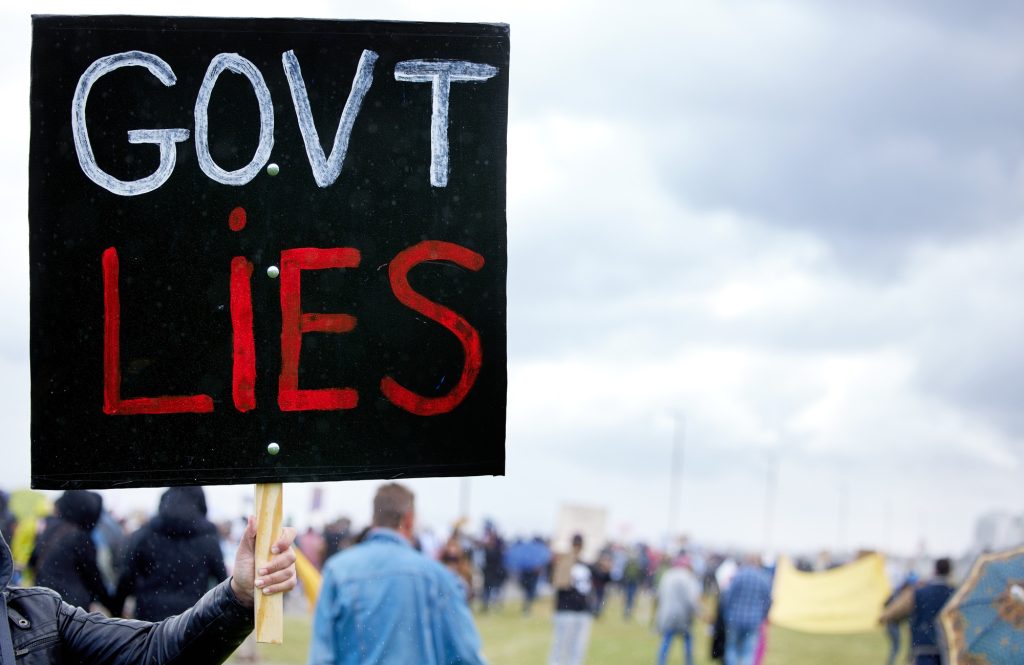

There’s a lot of noise right now as the current administration takes a sledgehammer to various government institutions and programs, many of which were created or expanded through executive orders. Agencies like USAID and potentially even the Department of Education are on the chopping block. The rationale for this stems from excessive spending, mismanagement, a web of bureaucracy, and a general lack of results by a sampling of what are believed to be key measures, often leading to concerns over government corruption.
For many, this purge makes sense. There is undeniably a massive web of inefficiency and corruption that has been woven over decades, and a cleanup is long overdue. But while I support the principle of cutting waste and holding these institutions accountable, I’m also wary of the potential for ongoing government corruption. If history and big tech have taught us anything, it’s that when you move too fast, you break things. And right now, I’m not quite sure what’s about to break.
The Bipartisan Nature of the Mess
One of the things that frustrates me most in these conversations is the selective outrage. There’s no denying that corruption has existed within these institutions, but let’s not pretend that it was built and sustained by just one party. Both sides played a role in constructing this bureaucratic behemoth, yet today, only one side is taking a victory lap for “fixing” the very monster they helped create marred by government corruption.
Understanding that it is Congress that controls spending, let’s look at who’s controlled the purse strings over the past 30 years:
House of Representatives:
- Republicans controlled the House for 20 years (1995–2007, 2011–2019, 2023–2025).
- Democrats controlled the House for 10 years (2007–2011, 2019–2023).
Senate:
- Republicans controlled the Senate for 18 years (1995–2007, 2015–2021).
- Democrats controlled the Senate for 12 years (2007–2015, 2021–2025).
These numbers show that both parties have had their turn at the wheel. Both parties have overseen the budgets, the spending, and the expansion of these institutions. And yet, the narrative being spun suggests that only one side was responsible for the mess while the other side heroically steps in to clean it up. That’s not reality when addressing government corruption.
The truth is, no one willingly dismantles a system that benefits them. So when I see only certain figures being implicated while others skate by seemingly untouched, I can’t help but wonder; where are the rest of the stories? Who else is hiding in the shadows, waiting for the media cycle to move on?
The Convenient Timing of Pardons and Investigations
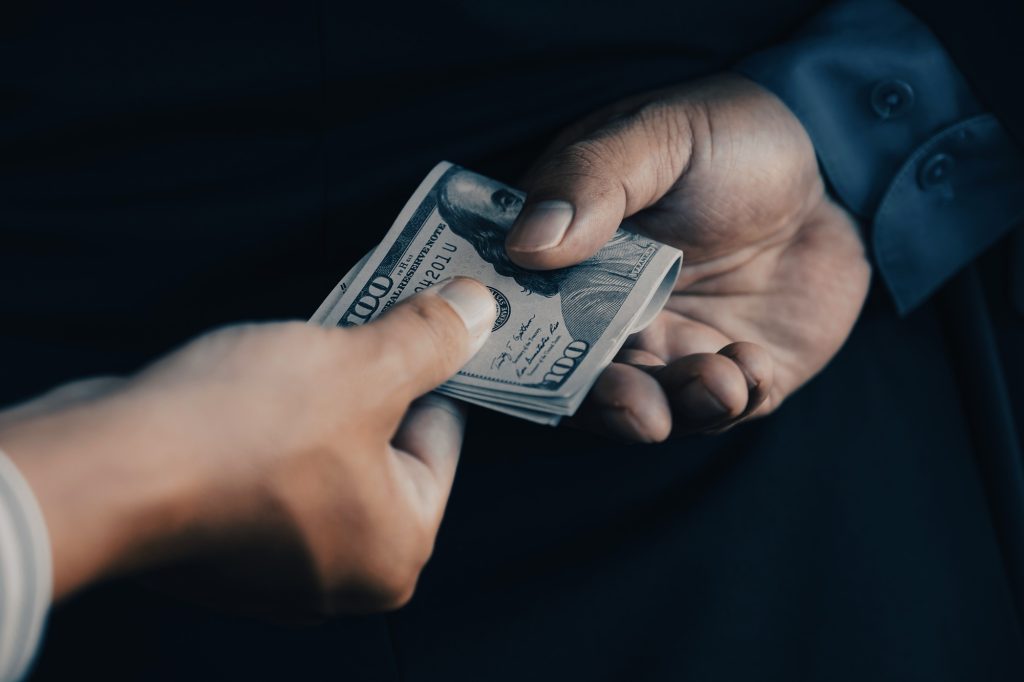
Another red flag in all of this is the way corruption is handled; who gets investigated, who gets exposed, and who conveniently gets a free pass. The Biden family’s financial dealings had been rumored for some time and more recently become under scrutiny, with reports surfacing of consulting businesses raking in millions without any clear deliverables. Yet, just as things start heating up, blanket pardons are issued, ensuring that any lingering questions never receive real answers.
Is this coincidence? In my opinion, not likely.
And this isn’t just about one family or one administration. This is how the game has always been played; both sides protecting their own while feeding the public a curated version of the truth. I think the frustrating part for me is that many still buy into the illusion that corruption is a one-party problem when in reality, it’s government corruption that’s a systemic issue that transcends political affiliation.
The $100-Billion Question: Where Did the Money Go?
One of the primary justifications for dismantling these agencies is financial mismanagement. Billions of taxpayer dollars have been funneled into programs and organizations with little oversight, and evidence suggests that much of that money never reached its intended recipients.
But here’s a question, who exactly ran these organizations, and who was on their payroll? Why were they hired and whom are they tied to? Was government corruption involved in these scenarios?
We don’t have all the answers yet, but I think it’s naive to assume that the corruption only benefited one side of the aisle. People don’t steal in isolation. They build networks, they share the spoils, and they ensure mutual survival. That’s why I suspect that as investigations continue, we’re going to see names emerge that some people never expected to be involved in government corruption. And when that happens, a lot of people who are currently celebrating will have to reconcile with the fact that some of their “heroes” were complicit.
Necessary Disruption or Reckless Gamble?
I have my fair share of criticism for Trump, particularly when it comes to his approach. His methods are chaotic, his rhetoric is divisive, and his leadership style often feels like a wrecking ball rather than a controlled demolition. But as much as I don’t like many of his tactics, maybe what he is doing is exactly what needs to happen to help expose this system which both parties have said for years is broken.
Unlike career politicians who rely on donor money and insider connections to survive, Trump operates differently. He puts his personal wealth and reputation at risk to burn bridges on both sides without regard to losing his livelihood. It’s not a typical move for someone who has amassed so much. His level of financial independence makes him uniquely positioned to take on the establishment in ways that others wouldn’t dare.
That said, there’s a fine line between strategic disruption and reckless destruction. Right now, we’re watching institutions get gutted, alliances get severed, and long-standing systems get uprooted. And while some of that may be necessary, I worry about what gets caught in the crossfire. Because once you tear something down, you need to have a plan for what comes next. Otherwise, you’re left with chaos due to widespread government corruption.
Cautious Optimism, With an Emphasis on Caution
So where does that leave us? Frankly, I’m in a state of cautious observation. I’m neither fully optimistic nor entirely pessimistic; I’m just watching, waiting, and hoping that the right lessons are learned from all of this.
On one hand, this could be the reckoning we’ve needed for decades. A long-overdue exposé of the corruption, waste, and inefficiency that has plagued our government. But on the other hand, if we’re not careful, this could spiral into a period of instability that leaves us worse off than before.
At the end of the day, what matters most is accountability on all sides. If this is truly about rooting out corruption, then let’s go all the way. Let’s not settle for a half-truth where only certain figures are sacrificed while others escape scrutiny. If we really want to fix this system, we need to be willing to follow the money no matter where it leads, even if it means exposing people we once trusted and revealing widespread government corruption.