
SBA loans do not come directly from the federal government. The Small Business Administration guarantees a portion of the loan, which means it promises to repay the lender if the borrower defaults, but the actual money comes from an approved private lender, typically a bank or credit union. Understanding that structure, and what lenders actually evaluate, is where most small business owners get tripped up before they ever submit an application.
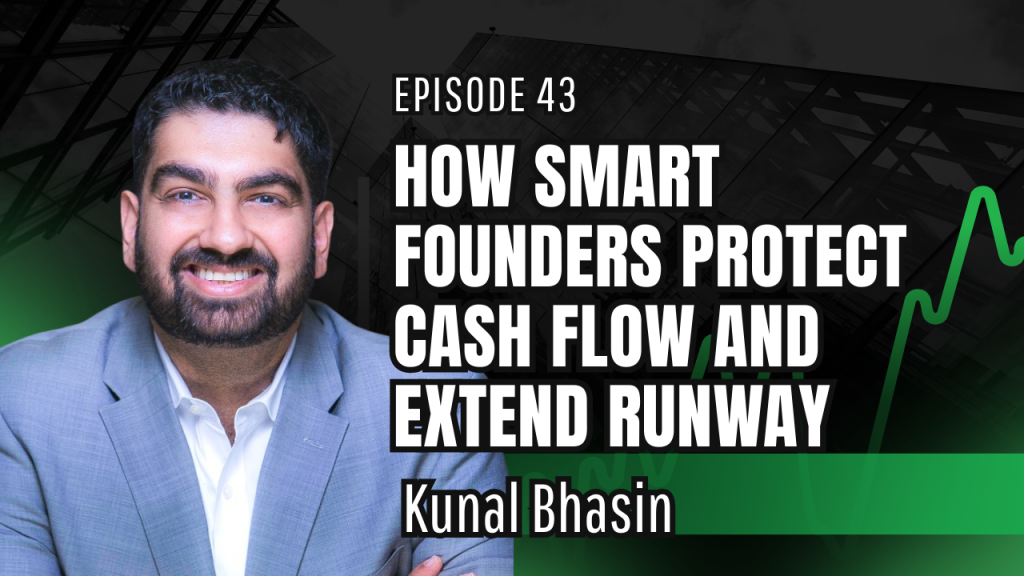
This episode of DissedMedia: A Startup Story breaks down SBA loan requirements, what the approval process really looks like, and the mistakes founders make that kill otherwise approvable applications.
For many founders, the phrase SBA loan guarantee feels confusing, especially when trying to understand SBA loan requirements and how approval actually works. Does the money come from the government? Do you apply directly through the SBA? And what role does the bank really play? These misunderstandings cause many small business owners to walk away from funding they could qualify for.

In a recent conversation, Kunal Bhasin clarified one of the biggest misconceptions about SBA financing: you are not borrowing from the SBA. You are borrowing from a bank, and the SBA loan guarantee is what makes the deal possible.
Here is what that really means and why it matters.
The SBA Loan Guarantee Is Not Direct Lending
The SBA does not lend money directly to most small businesses. Instead, it provides a guarantee to banks.
If a loan meets SBA loan requirements and receives approval, the federal government agrees to cover up to 80 percent of the bank’s loss if the borrower defaults .
That is the core of the SBA loan guarantee structure.
Instead of carrying 100 percent of the risk, the bank is exposed to roughly 20 percent. Because the SBA loan guarantee reduces risk, lenders can:
- Offer more competitive interest rates
- Approve businesses that may not qualify conventionally
- Extend longer repayment terms
- Fund acquisitions, equipment, or working capital that might otherwise be declined
In short, the SBA loan guarantee exists to encourage banks to lend more aggressively to small businesses that meet SBA loan requirements.
Why SBA Loan Requirements Matter More Than You Think
Many founders assume SBA loan requirements are stricter simply because the government is involved. In reality, the guarantee often expands access to capital.
Without the SBA loan guarantee, many loans would never be issued.
Banks operate within internal risk thresholds. Even profitable businesses can be declined under conventional underwriting standards. When a loan meets SBA loan requirements and qualifies for the federal guarantee, the lender’s downside shrinks dramatically.
That is what makes approval possible in situations where a traditional bank loan would not work.
“I Got Declined by the SBA” Is Usually Incorrect
One of the biggest misconceptions Kunal addressed is this:
“I already got declined by the SBA.”
In most cases, that is not accurate .
You were not declined by the SBA itself. You were declined by a specific lender that participates in the SBA program.
That distinction is critical.
Even though the SBA loan guarantee covers up to 80 percent, the bank is still responsible for underwriting the remaining 20 percent exposure. Each lender has:
- Different portfolio concentration limits
- Different industry preferences
- Different internal credit models
- Different interpretations of SBA loan requirements
For example, a bank may decline a transportation business simply because they have already funded too many loans in that sector that month .
Another SBA lender may review the same file and approve it.
Meeting SBA loan requirements does not guarantee universal approval across all banks. It guarantees eligibility for the program structure, not automatic funding.
Preferred Lenders and the SBA Loan Guarantee Process
Not all SBA lenders operate the same way.
Some are designated as preferred lenders, meaning they have delegated authority to process SBA loans internally. Working with experienced SBA lenders who understand the guarantee structure can significantly speed up the process.
Preferred lenders can:
- Move applications faster
- Handle documentation more efficiently
- Navigate SBA loan requirements more confidently
- Provide clearer underwriting feedback
Because the SBA loan is structured through the bank, choosing the right lender can dramatically affect your experience and approval outcome.
What Happens If You Default?
Understanding the SBA loan guarantee also means understanding what happens in default.
If the borrower defaults and the loan met SBA loan requirements, the SBA covers up to 80 percent of the lender’s loss .
The bank absorbs the remaining portion.
From a lender’s perspective, that risk-sharing model makes many deals viable that would otherwise fall outside policy limits.
From a borrower’s perspective, it creates access to capital that simply would not exist without the guarantee framework.
The Strategic Takeaway for Small Business Owners
If you are pursuing funding, acquisitions, working capital, or expansion, here is what you should remember:
- The SBA loan guarantee supports the bank, not the borrower directly.
- Meeting SBA loan requirements makes you eligible for the guarantee, not automatically approved.
- A denial from one SBA lender does not mean you are ineligible.
- Bank risk appetite and portfolio strategy matter.
- Choosing the right lender can materially impact approval speed and outcome.
The SBA loan guarantee exists to reduce risk and increase lending. But understanding how it works, and how SBA loan requirements are interpreted by individual banks, is what separates funded founders from frustrated applicants.
If you are considering SBA financing, the better question is not simply “Do I meet SBA loan requirements?”
It is “Am I working with a lender who knows how to structure the SBA loan guarantee correctly?”
Podbean
YouTube
Frequently asked questions
What is an SBA loan guarantee?
The SBA guarantees a percentage of a loan made by an approved private lender, reducing the lender risk. The SBA itself does not lend money directly to small businesses.
What do lenders look at when evaluating SBA loan applications?
Lenders typically evaluate credit score, time in business, annual revenue, collateral, and the borrower ability to repay. SBA loans generally require at least two years in business and a credit score above 640, though requirements vary by lender and loan type.
What are the most common reasons SBA loan applications get rejected?
Common rejection reasons include insufficient time in business, poor personal credit, inadequate cash flow to support repayment, incomplete documentation, and applying for the wrong loan type for the business situation.
How long does SBA loan approval take?
Standard SBA 7(a) loans typically take 60 to 90 days from application to funding. SBA Express loans can close faster, sometimes within 30 days, in exchange for a lower guarantee percentage.