
Key Takeaways
- Bobby Klinck emphasizes the importance of written agreements for small business legal protection, preventing disputes and misunderstandings.
- He warns that common legal mistakes include verbal partnerships and using unlicensed images, which can be costly.
- Entrepreneurs must understand copyright law; assumptions about fair use and the ‘7-second rule’ often lead to legal trouble.
- Plainly Legal helps small businesses access crucial legal resources, offering tools like a legal audit and an agreement generator.
- Bobby advocates for serving first and selling second, highlighting that providing value attracts business opportunities.
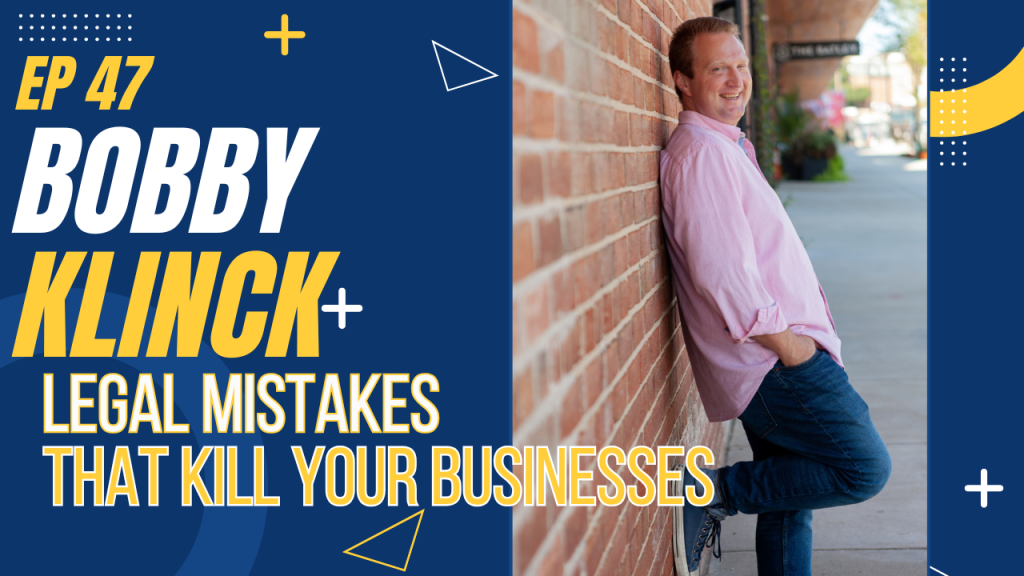
Most entrepreneurs treat small business legal protection the way they treat going to the dentist. They know they should do it, they keep putting it off, and by the time they finally show up, something is already broken. In Episode 47 of DissedMedia: A Startup Story, Harvard attorney and Plainly Legal founder Bobby Klinck breaks down the legal mistakes that quietly destroy businesses, why business contracts are your single strongest defense, and what copyright law for entrepreneurs actually means in the real world. If you are building something worth protecting, this conversation is one you cannot afford to skip.
Who Is Bobby Klinck?
Bobby Klinck is not your typical lawyer. He is a Harvard Law graduate with over 20 years of legal experience, a former federal prosecutor in Fort Worth, Texas, and a former associate at one of Washington D.C.’s most prestigious law firms. One of his early mentors there was a man he called Neil at the time. That man is now Supreme Court Justice Neil Gorsuch.
After years in big law and federal prosecution, Bobby pivoted to building his own practice and eventually created Plainly Legal, an AI-powered legal platform designed to give small business owners and online entrepreneurs access to the kind of legal infrastructure that only large companies have traditionally been able to afford.
Bobby has seen the full spectrum of legal protection failures. He has watched partnerships dissolve, friendships end, and businesses collapse over issues that a single written agreement could have prevented.

The Partnership Mistake That Cost Bobby Everything
Before Bobby became the go-to voice on protecting entrepreneurs legally, he made the classic mistake himself.
He joined a small D.C. law firm as a partner without a written agreement spelling out how he would earn equity in the firm. For years, he delivered. He took on patent litigation cases he had never handled before and won. He went up against one of the five largest law firms in the country in a case involving the Chicago Mercantile Exchange and held his own. He brought real, measurable value to the firm.
But when the time came to formalize his stake, there was nothing in writing to point to. Perspectives had shifted. Memories had drifted. A colleague who cared enough to fly through Hurricane Sandy to attend Bobby’s wedding had not spoken to him since 2014.
“If you don’t work these things out at the beginning, it is almost impossible to work it out later,” Bobby said. “Everyone’s perspective changes over time.”
The lesson is bigger than a bad business decision. It is about human nature. We all rewrite our own stories over time. We all become the hero of our own narrative. A written agreement does not mean you do not trust someone. It means you are protecting the relationship from the version of events that memory creates six months from now.
The #1 Rule of Small Business Legal Protection: Get It in Writing
Bobby is direct: the single most powerful thing any entrepreneur can do for small business legal protection is get their agreements in writing. Every relationship that matters to the business should have a written agreement. Every time money changes hands, something should be documented.
Business contracts do not have to be complicated or expensive. Bobby breaks it down into levels:
Best case: Custom business contracts drafted by a lawyer who understands your specific operations and legal exposure.
Good enough: Legal templates or software-generated agreements, like the ones Plainly Legal produces.
Bare minimum: A plain English document where both parties write out and agree to the key terms before any work begins.
The point is not legalese. The point is clarity. When a dispute arises, and at some point in some form it always does, you need something to point to. Without business contracts in place, you end up in a zero-sum negotiation where someone wins and someone feels like they got screwed. Neither outcome is good for the business or the relationship.
“Our memories are not as good as we think they are,” Bobby said. “We all tend to make ourselves more the hero in our story over time.”
Copyright Law for Entrepreneurs: The Traps You Do Not See Coming
If you are a content creator, podcaster, YouTuber, or online business owner, copyright law for entrepreneurs is not optional knowledge. Bobby outlined the most common traps that catch people off guard.
The Getty Images Letter
Getty Images owns the copyright to thousands of images circulating freely on the internet. If you have ever right-clicked and saved an image you found online and dropped it into your website or marketing materials, there is a real chance it belongs to Getty. They will find you. They will send a polite letter with a screenshot of exactly where you used the image and an invoice, often for $5,000 or more.
The fix is straightforward. Only use images from sources that grant you a royalty-free license. That does not mean the images are always free. It means you are paying a flat fee rather than a usage-based fee that can spiral out of control if something goes viral.
The 7-Second Music Myth
One of the most persistent myths in the content creator world is that you can use 7 seconds of a song without any legal consequences. Bobby was clear: there is no such rule in copyright law. It does not exist. If you use music you do not have a license to, platforms like YouTube will act, and they will not care about your subscriber count or your intent.
Fair Use Is Not a Safety Net
Many creators and entrepreneurs assume fair use is a reliable shield. Bobby disagrees strongly. Fair use is a legal defense, not a right. It is fact-specific, complicated, and there are lawyers who spend their entire careers doing nothing but litigating fair use cases. One of the key factors courts examine is whether the use is commercial in nature. If you are running a business, that factor works against you.
Copyright law for entrepreneurs comes down to one rule: if you are not sure whether something is licensed, assume it is not. The cost of getting it wrong is almost always higher than the cost of finding a licensed alternative.
The $60K Failure That Taught Bobby How Business Actually Works
In 2017, Bobby went all in on an online course business built around legal protection for online entrepreneurs. He hired a Facebook ads agency. He bought ClickFunnels coaching. He built a funnel, practiced his webinar, and invested $50,000 to $60,000 before a single sale.
Launch day: zero sales. The entire cart period: one sale. That customer asked for a refund on day 29 of a 30-day window.
But what Bobby did next is the real lesson.
In 2018, he stopped trying to sell and started trying to serve. He showed up in online communities and just helped people. He answered questions. He shared legal guidance with no strings attached. When GDPR hit and everyone was panicking, he created a free training while other lawyers were charging $95 to attend theirs.
That approach caught the attention of Amy Porterfield, one of the biggest names in the online course world. She invited him onto her podcast. She linked to his free GDPR training. His email list grew from 800 to 5,000 in a single week. The launch that followed generated over $70,000 in a single month.
“If I help enough people, the universe will take care of me,” Bobby said. “That is how I have built my business ever since.”
Legal Mistakes That Are More Common Than You Think
Bobby has spent years watching entrepreneurs come to him after the damage is already done, spending tens of thousands in legal fees on problems that a basic agreement could have prevented. Here are the legal mistakes he sees most often.
Verbal partnerships with no written terms. Two people start building something together with nothing in writing about ownership, responsibilities, or what happens if one person wants out. This is one of the most common and costly legal mistakes in the startup world.
No terms of service or privacy policy on a website. Even a basic online business has legal obligations around how it collects and handles data.
Using unlicensed images and music. As covered above, copyright law for entrepreneurs is not forgiving and ignorance is not a defense.
No written agreements with contractors or service providers. If money is changing hands and there is no documentation, you are one disagreement away from an expensive dispute.
Assuming “it’s fine” without actually knowing. The biggest legal mistakes Bobby sees are not the ones people make knowingly. They are the ones people make because they never stopped to ask whether there was a legal issue in the first place.
What Plainly Legal Does
After years of watching the same legal mistakes repeat themselves, Bobby built Plainly Legal, a platform designed specifically for knowledge entrepreneurs: coaches, course creators, consultants, membership owners, and digital product sellers.
The platform has three core features built around practical small business legal protection.
Legal Audit (Free)
You answer questions about your business, including your products, team structure, and existing contracts. Plainly Legal generates a prioritized legal task list. Most users go through it and find they have already handled more than they thought. The ones who have not now know exactly where to start.
Agreement Generator
Generate customized business contracts including terms of service, privacy policies, coaching contracts, course agreements, and more. Bobby’s users regularly take these generated agreements to their own lawyers for review, saving hours of billable time in the process.
AI-Powered Legal Q&A
A chat feature backed by a database of over 700 attorney-reviewed questions and answers. Every response comes with a confidence score so users know whether they are getting a validated answer or something generated from broader AI. Bobby has personally reviewed every answer in the database.
The long-term vision is bigger. Bobby wants Plainly Legal to eventually serve the role of an in-house counsel’s office for small businesses, the kind of comprehensive legal coverage that only large corporations currently have access to.
Key Takeaways for Entrepreneurs and Managers
Get business contracts in place before you need them. The best time to negotiate a partnership agreement is at the beginning, before the business is working and before it is not. It only gets harder later.
Copyright law for entrepreneurs is not optional. Use licensed images, use licensed music, and understand that fair use is not a reliable defense for commercial businesses.
The 7-second music rule is a myth. Do not risk your channel or your business on it.
Serve first, sell second. Bobby’s biggest business breakthrough came when he stopped leading with transactions and started leading with value.
Develop your legal spidey sense. You do not need to become a lawyer. You need to get to the point where you pause when something feels off and ask the right questions before moving forward.
Affordable small business legal protection exists. You do not have to choose between expensive attorneys and no protection at all.
Find Bobby and start your free legal audit at plainlylegal.com
Connect with Bobby on LinkedIn, Facebook, and Instagram: @bobbyklinck
Bobby’s books: Email Marketing That Doesn’t Suck and Patent Litigation Primer are available on Amazon.