
Key Takeaways
- Successful small business marketing strategy focuses on clear messaging that resonates with the target audience.
- Amber Gaige emphasizes the Four Cs: clear copy, consistent branding, revenue generation, and channel management.
- AI marketing tools for small business act as multipliers, enhancing reach and efficiency without replacing strategic thinking.
- SEO remains vital; businesses must adapt to changing metrics and integrate various channels for effective marketing.
- Collaboration within entrepreneurial communities fosters growth, contrary to competitive mindsets in corporate environments.
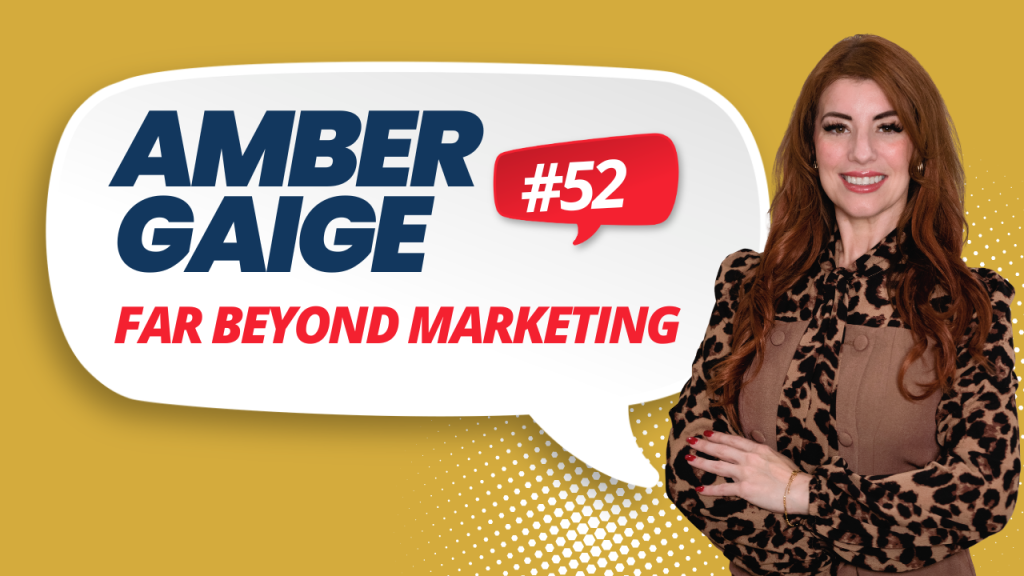
Most small business owners who have spent money on marketing that went nowhere share the same story. The ad ran, the post went live, the website got traffic, and nothing happened. No calls. No conversions. No meaningful results. If that story sounds familiar, this episode is built around the small business marketing strategy you have been missing. In Episode 52 of DissedMedia: A Startup Story, host Ben Olmos sits down with Amber Gaige, founder and chief marketing advisor at Far Beyond Marketing, to break down the marketing tips for entrepreneurs that actually move the needle, how AI marketing tools for small business are reshaping what lean teams can accomplish, and why her StoryBrand guide certification is at the foundation of everything her agency builds for clients. Amber is an international bestselling author, keynote speaker, and 20-year marketing strategist who has applied her craft across private equity portfolios, manufacturing companies, franchises, nonprofits, and solo entrepreneurs. She has seen what works and what burns budgets to the ground.
Amber Gaige has spent 20 years answering the question every frustrated business owner eventually asks, and her answer is consistent: the marketing is not broken. The message is.

Who Amber Gaige Is
Amber did not arrive at marketing through a traditional path. She grew up working in a family business, doing filing and answering phones at eight years old, and was homeschooled through high school. She started her own company while still working in the family business after university, scaled it over five years, and sold it to private equity. That experience gave her something most marketing advisors do not have: a firsthand understanding of what it feels like to build and operate a business before ever advising on one.
After the sale, she transitioned into the private equity world itself, applying localized marketing tactics across national subsidiaries and learning which levers actually move numbers at scale. From there she moved into a dual role as Chief Marketing Officer and Chief Information Officer at a manufacturing company with 90 subsidiaries across 10 states, overseeing everything from regional campaign performance to building a custom CRM for the company’s hub-and-spoke licensee network.
Today she runs Far Beyond Marketing with a team of eight, serving entrepreneurs, franchisors, and franchisees with a full suite of agency services powered by AI marketing tools for small business and enterprise clients alike. She also holds one of only a few hundred StoryBrand guide certifications in the world, trained directly by Donald Miller.
You Are Probably Talking to the Wrong Customer
One of the sharpest observations Amber makes in this conversation is one that sounds simple until you sit with it. She tells clients all the time that they are trying to capture dog lovers with cat lover language.
Most businesses assume their audience understands what they are saying. They use internal language, industry jargon, and product-centric messaging that means everything to the seller and very little to the buyer. Amber’s website teardown service, which audits a business’s website for $25, regularly reveals the same problem: visitors cannot tell what the company actually does within the first 2.5 seconds. And 2.5 seconds is precisely how long a website visitor will give a page before leaving.
When you consider that a single paid traffic click can cost $50 to $100, the math on a confusing homepage becomes devastating very quickly. Knowing your audience and speaking their language is not just one of many marketing tips for entrepreneurs. It is the foundation that every other tactic has to be built on.
The Four Cs of Effective Marketing
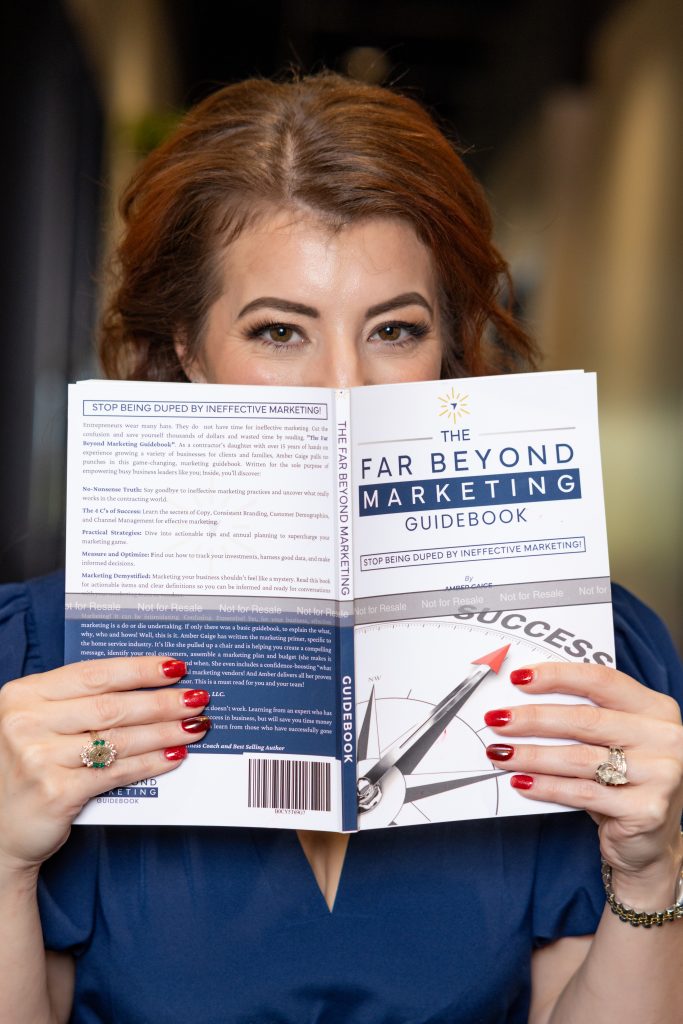
Amber’s book, written as a guidebook for busy entrepreneurs who are tired of walking into marketing meetings underprepared, is built around a framework she calls the Four Cs of effective marketing. It is a practical small business marketing strategy distilled into four pillars that are actionable, measurable, and free of the kind of abstract advice that sounds good in a presentation but does not translate into real growth.
The first C is clear, consistent copy. As a certified StoryBrand guide, Amber incorporates the StoryBrand framework into every website, brand guide, and email she produces for clients. The framework is rooted in the same storytelling structure used by blockbuster films, from Pixar to Dove to Dollar Shave Club. When you apply it to your business messaging, you cut through the noise by speaking to what your customer is actually trying to accomplish rather than what you are trying to sell.
The second C is consistent branding. This is about putting the right message in front of the right customer at the right time, anchored by a clearly defined ideal client profile. Without it, even well-written copy lands in front of the wrong audience.
The third C is consistent revenue generation. Marketing is not a one-time campaign. It is a sustained practice built on trial, data, and iteration. There is no magic bullet, and Amber is direct about that. Businesses that expect a single effort to 10x their results are setting themselves up for disappointment.
The fourth C is channel management. Once you have customers, the most cost-effective growth strategy is upselling and deepening relationships with the people who already trust you. It costs significantly more to acquire a new customer than to grow an existing one.
SEO Is Not Dead. The Rules Changed.
A significant portion of this conversation touches on search engine optimization, a topic that generates more confusion than almost any other area of marketing. Some agency owners are openly declaring SEO is dead. Amber pushes back on that firmly, and her reasoning is one of the clearest explanations of the current landscape available to any small business owner trying to figure out why their content is not showing up.
SEO is not dead. The metrics that influence search results have changed, and they will continue to change. Video is no longer optional. Social media is no longer optional. And neither is a coherent, active web presence that ties together a website, a Google Business Profile, a blog, and social channels into a single integrated small business marketing strategy.
Ranking on AI-driven search tools like ChatGPT, Gemini, or Claude requires the same fundamentals. The algorithm surfaces the most authoritative, consistent, and comprehensive sources. Businesses that understand how to direct AI toward their content are the ones leading the next wave of organic discovery.
Ben speaks to this from experience. DissedMedia started with zero followers and zero web presence roughly two and a half years ago. Through consistent daily content, keyword strategy, backlinking, and a strategic shift toward video, the show’s YouTube channel grew from around 300 subscribers to over 7,000, with a goal of reaching 100,000 by the end of 2026. The engine that drove that growth was not luck. It was discipline applied to data.
AI Marketing Tools for Small Business Are Not a Replacement. They Are a Multiplier.
Both Ben and Amber are deeply embedded in AI-powered tools, and both share a nuanced view of what AI can and cannot do. Amber’s agency is explicitly AI-backed. The AI marketing tools for small business her team uses every day allow them to increase capacity, fill knowledge gaps, empower client education, and extend the reach of her eight-person team far beyond what would otherwise be possible. She has even built an AI persona of herself called Amber Unlimited, available through a monthly subscription, that gives clients access to her frameworks and thinking at a price point below one-on-one advisory work.
But neither Ben nor Amber has any illusions about what AI actually is at this stage. Ben describes it as a smart intern who is not yet wise. Wisdom comes from experience, from trial and error, from absorbing feedback over time and developing judgment. AI can accelerate tactical work. It cannot replace the strategic thinking that comes from years of doing the hard things.
The practical implication for any small business owner exploring these tools is this: to be a great AI editor, you first have to be a great writer. You have to have done the foundational work before you can evaluate whether what the tool generates is any good. Businesses that skip straight to AI without developing that underlying craft will produce mediocre content at scale, which is not a competitive advantage.
Marketing Is Not a Layer Cake You Order by the Slice
Amber uses an analogy that lands hard in this conversation. She describes marketing as a seven-layer cake. You can have just the icing. It will taste sweet for a moment. But it will not sustain you, and it will not hold together. You need all seven layers.
The version of this that kills small business marketing budgets most often is what she calls a la carte marketing: doing only social media, or only SEO, or only paid ads, and expecting standalone results. A single channel, no matter how well executed, will not compound the way an integrated system does. One of the most consistent marketing tips for entrepreneurs Amber returns to throughout this conversation is that channel isolation is one of the most expensive mistakes a growing business can make.
This is also why she has no interest in clients who refuse to commit to a multi-channel approach. If someone insists they only want to do TikTok, that client is not for Far Beyond Marketing. Not every client is a fit, and she is direct about it: either there is a shared vision or there is not.
The Power of Saying No
One of the more counterintuitive moments in this conversation is when Amber talks about turning clients away. For a small agency with eight people, walking away from revenue might seem like a risky move. Amber sees it differently. Every no makes room for a yes. Among the most underrated marketing tips for entrepreneurs she shares, this one stands out: know who your client is, and be willing to walk away from who they are not. Far Beyond Marketing is not built on short-term transactional relationships. It is built on partnerships with brands that are committed to growth. When clients win, the agency wins. That alignment is not possible with a client who is not willing to be collaborative, show up to the meetings, and trust the process over time.
What Is Coming Next: High Buyer Intent Targeting
The most forward-looking part of this conversation is about a technology Amber is currently testing with a core group of clients called high buyer intent targeting. The concept addresses one of the most persistent problems in digital advertising: you can reach people who match your demographic profile, but you cannot know how close they actually are to making a purchase.
Far Beyond Marketing is incorporating a technology that identifies, within privacy law parameters, the names, addresses, and email addresses of people who have been actively searching specific keywords within a defined geographic area in the last four days. Once that group is identified, the agency builds targeted ad campaigns, LinkedIn outreach, and email sequences around those high-intent buyers, compressing the buying journey timeline significantly.
Amber calls this the Limitless Lead program, and it is particularly well-suited for businesses selling higher-ticket products or services where the cost-per-acquisition justifies the investment. For any entrepreneur looking to sharpen their small business marketing strategy beyond traditional demographic targeting, this is worth paying close attention to.
The Entrepreneurial Community Is Not Your Competition
One of the themes that runs through this entire conversation is the difference between the competitive mindset that dominates corporate environments and the collaborative mindset that drives entrepreneurial communities. Ben draws on his experience in both the consumer goods industry and the media business to make this point. In the wine industry, winemakers try each other’s products and support each other’s growth. They understand that the rising tide lifts all boats and that consumer variety actually expands the overall market.
That same ethos is what DissedMedia is built on. The mission, helping managers, leaders, and entrepreneurs get better at what they do, only works if the conversation is honest, generous, and oriented toward the success of the listener. It is the same reason Amber, a StoryBrand guide with 20 years of experience and a bestselling book to her name, chose to sit across from the microphone and give this conversation everything she had.
How to Connect with Amber Gaige
Website: farbeyondmarketing.com
LinkedIn: Amber Gaige
Amber’s book is available for entrepreneurs who want a practical, weekend-friendly guide to walking into any marketing conversation fully prepared and never getting duped by bad marketing again.
About the Show
DissedMedia: A Startup Story follows the real-time build of DissedMedia Corporation and The Daily Pitch, featuring candid conversations with founders, operators, and experts on what it actually takes to start, grow, and sustain a business.