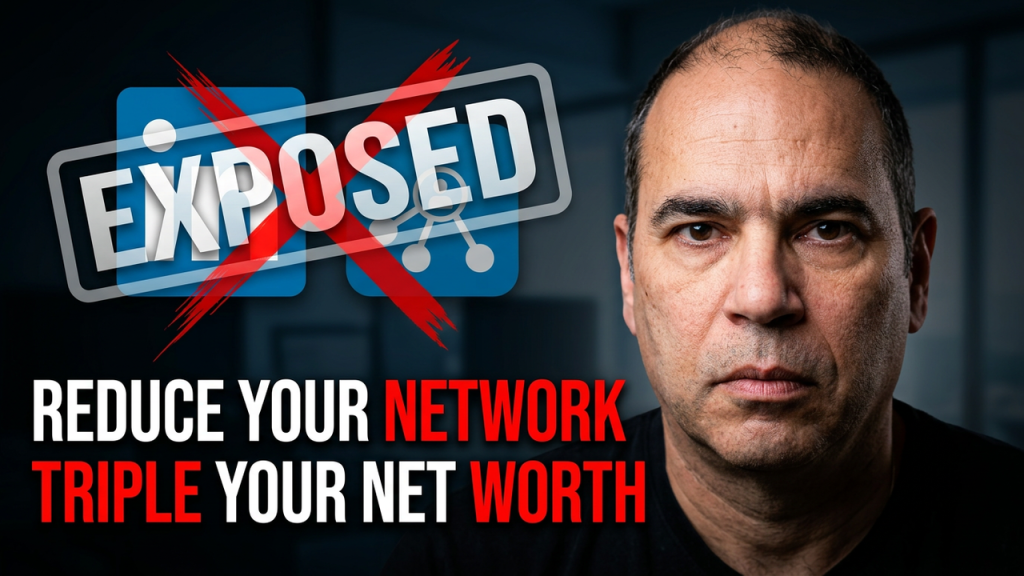

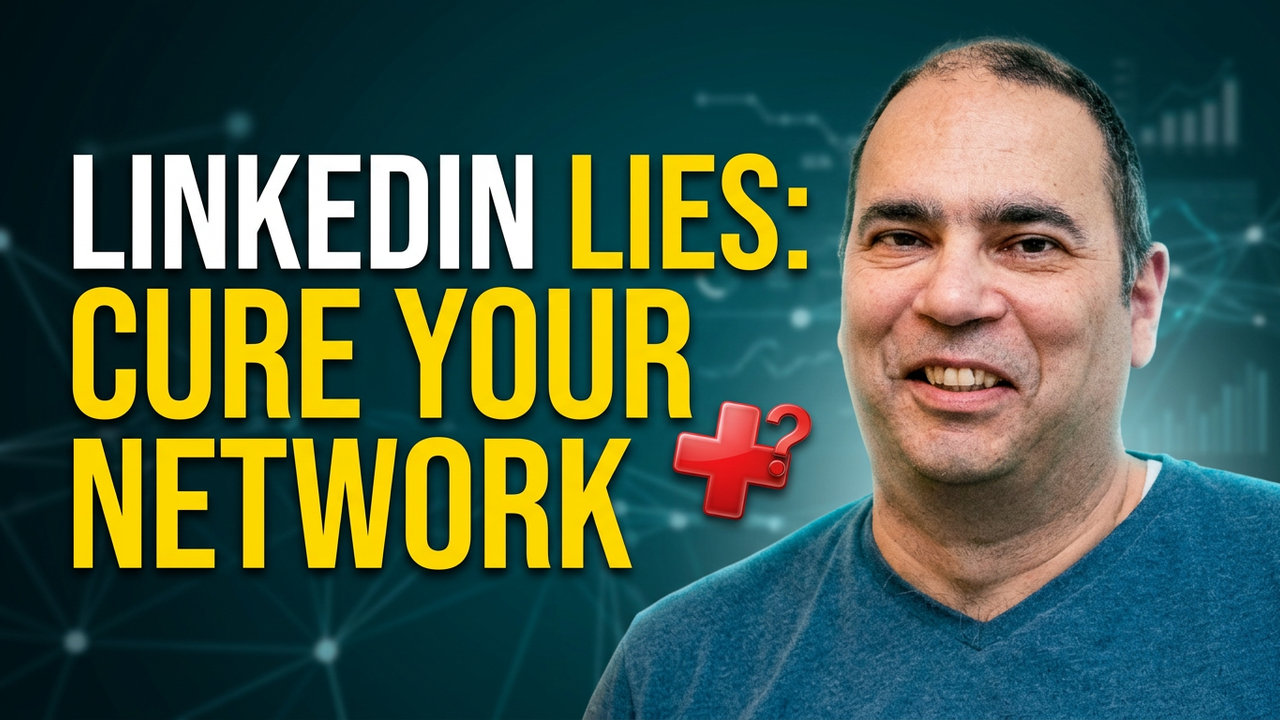
How to network on LinkedIn effectively comes down to trading size for trust. Rather than collecting as many connections as the platform allows, the entrepreneurs who actually convert LinkedIn into revenue tend to keep their networks small enough that every name still means something. That is the case Daniel Alfon makes on the DissedMedia podcast, and it runs against nearly everything conventional wisdom teaches about the platform. Alfon has used LinkedIn since February 2004, long enough to have tested most of what does not work, and his method centers upon quality connections that generate referrals rather than a large following that generates noise.
Alfon joined DissedMedia: A Startup Story to unpack that method with host Ben Olmos, who has spent years building an audience of entrepreneurs on the same platform Alfon has studied for more than two decades. Their conversation moves through the metrics that actually predict revenue and the real math behind LinkedIn exposure, then works toward why a personal profile will nearly always outperform a company page for generating leads. It is a useful corrective for anyone who has wondered whether adding another thousand connections is worth the time it takes to manage them.

More LinkedIn Connections Can Quietly Hurt Your Business
Alfon opens with a question that reframes the entire conversation: would you rather be the most connected person on LinkedIn or the best connected? Being the most connected, he explains, means chasing exposure through sheer volume, tens of thousands of followers who may never convert into a client relationship because they do not know you well enough to act on a referral. Being the best connected means keeping a smaller circle, often around two hundred people, small enough that a birthday or a job change is still something you would notice and respond to personally.
Alfon spent years optimizing for the first kind of growth before he noticed that his bank account was not moving with his connection count. He was, in his own words, in love with vanity metrics that never translated into revenue, and once he trimmed his network down to the people he actually knew, his business started growing again. Ben related a similar story from an earlier guest, audiobook publisher Tina Dietz, who found that a large volume of social posts and likes had produced exactly zero business leads. Both guests arrived at the same lesson independently: LinkedIn connections are not a proxy for LinkedIn revenue, and treating the two as the same thing may be the costliest habit an entrepreneur can pick up on the platform.
How to Network on LinkedIn Without Becoming Another Pitch Slapper
How to network on LinkedIn well starts with a search, not a message. Alfon’s method begins with LinkedIn’s advanced search, which lets you filter by title, company, industry, and location to identify the exact person you would like to reach, then filter again so only the results who share a mutual connection with you remain. From there, the move is to leave the platform entirely: message the mutual connection directly, then ease into whether they know the target well enough to make an introduction.
That single step, moving the conversation off LinkedIn and into a real exchange with someone who already trusts you, is what separates a warm lead from the automated connection requests that pitch a product the moment someone accepts. Ben raised this exact frustration during the conversation, describing the flood of invitations he receives from people he has never met, most of them followed within minutes by a sales message. Alfon’s approach sidesteps that pattern entirely, and it lines up with what other DissedMedia guests have argued about earning attention before asking for anything. Patrick van der Burght’s conversation on ethical persuasion made a related case, that most of a buying decision happens before the pitch ever starts, which is part of why Alfon treats the pitch itself as almost beside the point.
The Real Math Behind LinkedIn Exposure and Trust
The math Alfon walks through is worth sitting with. If roughly two percent of a LinkedIn audience sees any given post, someone with forty thousand followers might reach eight hundred people with a single share, a real number worth building a content strategy around. Someone with five thousand connections, however, is only reaching about one hundred people at that same two percent rate, not enough exposure to justify the hours spent building and maintaining a network that size.
Alfon’s argument is that most entrepreneurs get stuck in this middle zone, too large to know everyone personally and too small to generate meaningful reach, which he considers the worst possible combination for actually converting a network into revenue. His advice is to pick a lane on purpose, either scale toward genuine exposure in the tens of thousands or stay intentionally small with a couple hundred people who know you well enough to vouch for you, because trying to have both at once tends to produce neither.
Referrals Versus Reach: Choosing the Right LinkedIn Strategy
Which of those two lanes makes sense may depend entirely on what you sell. Alfon draws a clear line between businesses that need exposure and businesses that need trust. If you sell a commodity or a fast-moving consumer good, quantity and advertising can carry real weight, and a large following is a legitimate asset worth building deliberately. If you run a service-based business, however, referrals tend to outperform reach by a wide margin, because a referred prospect arrives already trusting the judgment of whoever sent them your way, and that trust tends to show up as a warmer conversation and a buyer who is less sensitive to price.
Alfon put it plainly: to be referred, you cannot have thousands of loose connections, you need to actually know your tribe, which for most people caps out somewhere around two hundred names. It is a useful filter for deciding where to spend LinkedIn time in the first place, since chasing reach when your business model depends on trust is, by Alfon’s account, a mismatch that quietly limits how much of that network ever becomes revenue.
Your Personal LinkedIn Profile Will Outperform Your Company Page
One point Alfon returned to repeatedly is that a personal profile will almost always out-earn a company page on LinkedIn. Ben’s own numbers made the case for him: DissedMedia’s business page carries a single-digit follower count, while his personal profile carries thousands, and nearly every meaningful connection or lead he has generated through LinkedIn traces back to his own name rather than the company he built.
Alfon explained why that pattern holds so consistently. LinkedIn users default to connecting with an individual rather than following a page, and outside of a small number of people evaluating a company as a potential employer, business pages tend to sit largely unchecked. His advice for founders is to route their content and voice through their personal profile first, treating the company page as something to glance at every few months rather than a primary channel; whatever authority or reach they build will live on their own name rather than their brand’s.
Turn Your LinkedIn Profile Into a Website, Not a Resume
Alfon also pushed back on a habit most LinkedIn users fall into without noticing, which is treating the platform like an online resume rather than a landing page. LinkedIn began as a place to chronicle work history, and that origin still shapes how most people fill out their profile, but Alfon argues the more useful frame is two simple questions: who is your ideal reader, and what action do you want that person to take once they find you. For a founder, the answer to the second question is almost always the same, which is to go to the website rather than stay on LinkedIn.
Alfon’s reasoning is practical rather than sentimental. LinkedIn is, in his phrase, rented space, a platform that could change its rules or vanish entirely, and building a business on top of that uncertainty is riskier than it looks. The safer move is to use LinkedIn purely for discovery, then engineer every profile element so the next obvious step is a click toward your own website or your own way of staying in touch, since that is the only infrastructure a founder actually controls. It is a theme DissedMedia has explored before in a piece on building a personal brand that drives real influence, and Alfon’s version of the advice fits neatly alongside it: LinkedIn should function as a corridor toward your own platform, never as the destination itself.
The Networking Advantage Most Entrepreneurs Over 40 Already Have
Much of Alfon’s audience sits in the forty-plus range, entrepreneurs who spent a decade or two inside a traditional career before starting something of their own, and he sees a specific blind spot in that group. Corporate refugees, as he calls them, often assume a new venture requires a networking strategy built entirely from scratch, and in doing so they tend to disregard the real-life network they already have: former colleagues, classmates, clients, and managers who know them as a person rather than as a stranger with a pitch.
That existing trust, once someone recognizes it, tends to be hard to unsee, and Alfon describes it as genuinely freeing for founders who had been treating LinkedIn as a cold start. He also pushed back gently on the idea that a founder needs to construct a new persona for the platform. Younger users, he noted, seem more comfortable being multi-faceted in public, showing several sides of a career at once, while an older audience still tends to respond best to a single clear label. Either way, his advice stays the same, which is to describe your work plainly in the About section rather than trying to become someone new simply because the platform is called LinkedIn.
Is LinkedIn Premium Worth Paying For?
On the subject of LinkedIn Premium, Alfon’s advice is to slow down rather than avoid it altogether. Most users, he estimates, touch less than ten percent of what the free version of LinkedIn already offers, which means paying for an upgrade before understanding the limits of the free tier is money spent without a real comparison point. He gave one concrete example: LinkedIn markets profile-view visibility as a Premium perk, but changing a single privacy setting to make your own profile public will already surface several names of recent visitors at no cost.
His rule of thumb is to invest time first, run into an actual wall the free platform cannot get you past, and only then consider whether Premium solves that specific problem. For someone who lives inside LinkedIn constantly, he said, the upgrade can make sense; for everyone else, it tends to be a purchase made out of habit rather than need, which is really the same lesson Alfon applies to how to network on LinkedIn as a whole: invest time before you invest money.
Frequently Asked Questions
These are the questions people ask most often about how to network on LinkedIn after hearing Alfon’s approach.
How many connections should I have on LinkedIn?
There is no universal number, but Daniel Alfon’s experience points toward roughly two hundred as the ceiling most people can actually maintain as real relationships. Beyond that range, connections tend to become names you recognize without knowing, which limits how many of them will ever turn into a referral or a warm introduction.
Is it better to post on LinkedIn every day?
Not necessarily. Alfon argues that posting frequency matters far less than most advice suggests, and that the stronger lever is building a small number of trusted relationships you can reach out to directly rather than broadcasting content and hoping the algorithm rewards volume.
Should I use my personal LinkedIn profile or my company page for business?
Alfon and Ben both recommend the personal profile. LinkedIn users default to connecting with individuals rather than following company pages, so a founder’s own name will typically generate far more engagement and leads than a business page ever will.
Is LinkedIn Premium worth it for small business owners?
Only after you have tested the limits of the free platform. Alfon suggests investing time before money, since several of the features people assume require Premium, such as seeing who visited your profile, are partially available for free once you adjust your privacy settings.
Alfon’s full conversation with Ben covers considerably more ground than a single article can hold, including how networking shifts in the age of AI and why he still considers LinkedIn nothing more than a tool in service of a much larger skill. The full episode, with Daniel Alfon on how to network on LinkedIn without losing the relationships that actually grow a business, is below.