


Real estate lead generation has stayed broken for decades, and most people inside the industry have simply learned to live with the leak. On a recent episode of DissedMedia: A Startup Story, host Ben Olmos sat down with Sheldon Wolf, a real estate and finance veteran of more than thirty years who spent the last several of them building Intellitary, an AI platform designed around a single, uncomfortable observation: the average real estate website converts only two to three percent of its visitors into a real lead, and Wolf believes that number is seemingly the ceiling the entire industry has quietly accepted as normal.
Wolf calls his answer to that problem the Un-Brokerage, and it is built to feed brokerages rather than compete with them. Where a lot of proptech companies position themselves as disruptors out to replace agents, Wolf spent much of the conversation making the opposite case, arguing that brokerages remain essential and that Intellitary exists to make them more profitable, not obsolete.

What the Un-Brokerage Model Actually Does
Wolf has watched the brokerage landscape shift since 1989, back when an entire office shared a single computer, and he has developed a specific theory about where the biggest players have gone wrong. Many of the large, cloud-based brokerages built their growth strategy around recruiting as many agents as possible while cutting fees to almost nothing, betting that sheer volume of agents would eventually turn losses into profit. Wolf argues the math never works that way, since a brokerage that loses money on every agent does not fix the problem by adding more agents; it fixes the problem by increasing the number of transactions each existing agent can actually close, which is the exact gap Intellitary was built to fill.
He describes those large brokerages as being on the right track but the wrong train, chasing scale through recruitment when the real lever has always been transaction volume. Intellitary does not recruit agents at all. Instead, it positions itself the way a hotel brand often operates, rarely owning the physical property yet responsible for getting the guest to the check-in desk. In Wolf’s telling, Intellitary plays that same role in real estate, harvesting high-intent customers and handing them directly to brokerage partners who then carry the transaction through to close, collecting a fee only when that partnership actually produces a deal.

An AI Concierge Named After a Chihuahua
The technology doing the actual work is an AI concierge named Chloe, built after Wolf’s own dog, and her job is to replicate the screening instincts Wolf sharpened across a career where he says he rarely lost a serious customer. Chloe greets every visitor, asks the questions a sharp agent would ask face to face, and moves the conversation from a website chat window into a phone call within minutes. Her very first question, how soon someone plans to move, functions as a filter, since Wolf has no interest in sending agents to chase a buyer who is a year or more away from being ready.
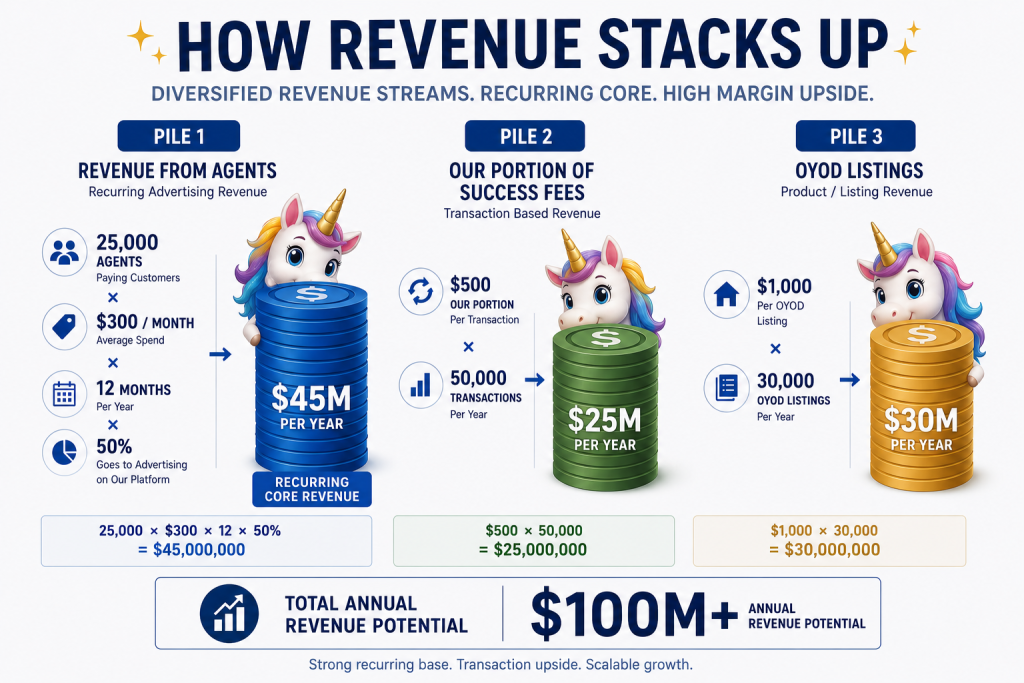
Once a lead clears that bar, Chloe hot-transfers the call to a subscribed agent, a process Wolf compares directly to Uber dispatching a driver who already knows the rider’s destination before the car arrives. He reports engagement rates between sixty and eighty percent among visitors who talk to Chloe, a figure that towers over the two to three percent most real estate sites see, and he credits that gap to a simple difference in advertising budget: the average agent spends around three hundred dollars a month on marketing, while Intellitary can afford to spend closer to a million.
Built Backwards From Investor Returns
Wolf describes wearing two hats throughout the company’s construction, one as the founder building the technology and the other as the investor deciding whether the business made sense to fund in the first place. Rather than build a product and hope a business model would eventually follow, he designed Intellitary in reverse, starting from what an investor would need to see and working backward toward the customer experience. He self-funded the company well past its seed stage without taking a dollar from outside investors, and he now describes himself as ready to bring in strategic partners who can help take the platform national.
The revenue model reflects that same backward design. Brokerages pay nothing upfront to work with Intellitary, and the company earns money through agent subscriptions, then hands a portion back to the brokerage on every closed transaction, often paying more per deal than the brokerage collects from its own agents. Wolf frames the pitch to brokerages bluntly: there is no national brokerage that would turn down an extra fifty thousand transactions in year one, so the only real question becomes which brokerage partners with Intellitary first.
Trust, Bias, and the Human Question
Olmos pressed Wolf on whether customers resist talking to an AI concierge instead of a person, and Wolf did not dismiss the concern outright. He acknowledged that some buyers and sellers may still prefer a human voice on the other end of the call, and that preference is real today even if the underlying data suggests otherwise. However, he argued that an AI has no commission riding on the outcome of any single conversation, so it has nothing to gain by rushing a buyer toward a decision or downplaying a property’s flaws, an incentive problem that has quietly shaped real estate advice for as long as commissions have existed.
Wolf is careful to note that this is not a criticism of agents broadly, since he considers many of them excellent at putting a client’s interest ahead of their own. His point is narrower: as commission checks grow larger, the incentive to nudge a buyer toward a faster yes grows with them, and an AI concierge simply does not carry that particular bias into the conversation.
Where Real Estate Technology Is Headed Next
Wolf spends most of his time thinking five to ten years past the present moment, since he believes companies built to solve today’s problems are often obsolete before they finish shipping. He centers his long-term thinking on what he calls invisible problems, the shifts in consumer behavior that have not yet shown up in anyone’s quarterly numbers but will define the next decade of real estate technology, from AI-assisted purchase agreements to a generation of buyers who research schools, crime data, and resale values entirely on their own before they ever call an agent.
That same industry pattern, in his view, applies to the 90/10 rule quietly governing agent income across the country, where roughly ten percent of agents earn ninety percent of the commissions while the rest struggle to close even three transactions a year. Wolf built Intellitary to monetize that overlooked ninety percent, arguing that the real fix for a stalled agent career was never better marketing skills or more hustle; it was simply more qualified customers arriving at a rate the agent could actually convert.
Watch the Full Episode
Wolf closed the conversation by pointing to a principle he returns to often, that whoever controls the customer relationship ultimately controls the future of the industry, which is exactly the position he built Intellitary to occupy. The full conversation with Sheldon Wolf is available on DissedMedia: A Startup Story, the show that helps managers, leaders, and entrepreneurs get better at what they do.
Learn more about Intellitary at intellitary.com.