


The most common AI implementation challenges tend to originate inside the business itself, in problems that were never clearly defined and in handoffs and decisions that nobody ever took ownership of, so when a company introduces AI into those conditions, the technology can accelerate the organization toward its existing bottlenecks far faster than leaders expect. The practical remedy, according to fractional CIO Rob Broadhead, begins with business process improvement, which means defining the real problem along with its exceptions and settling who owns each handoff before any tool is selected.
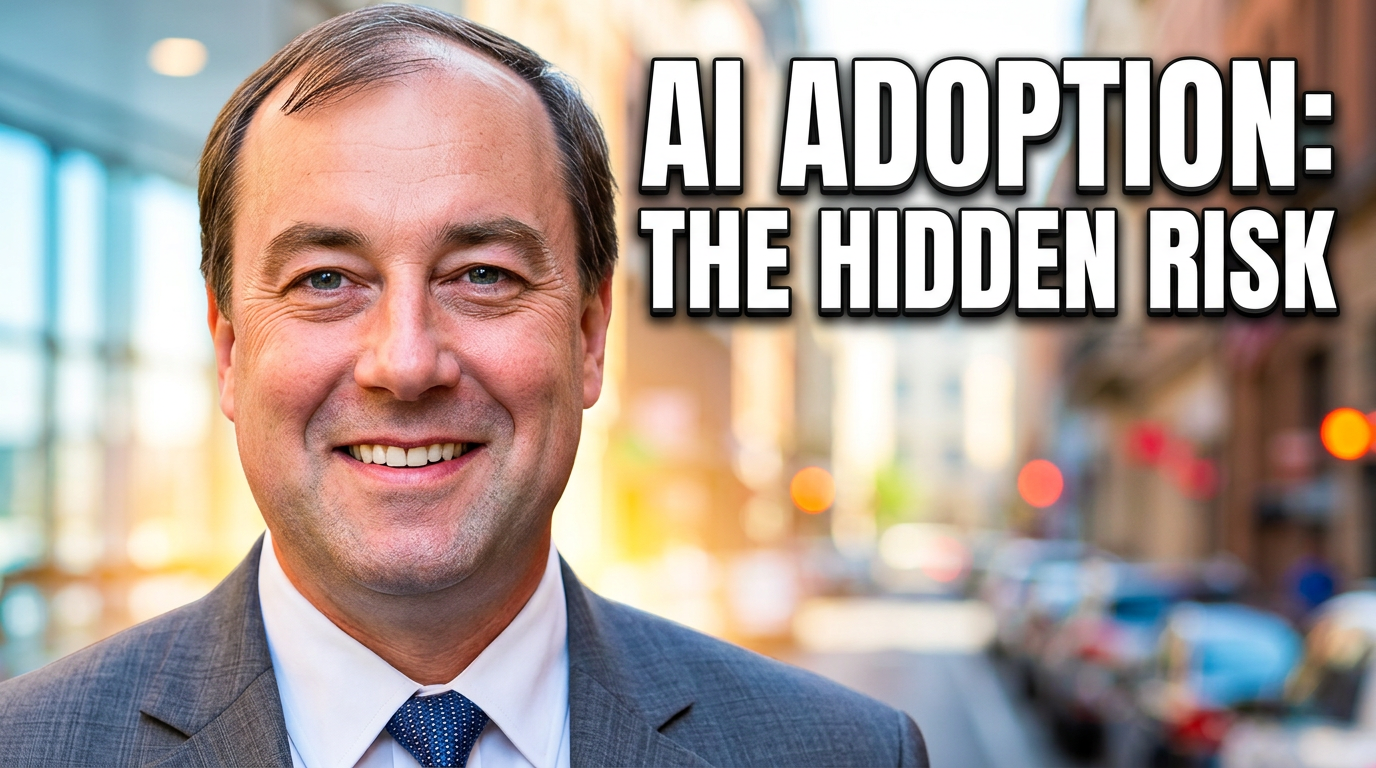
Rob Broadhead is the founder of RB Consulting, and across more than 30 years of work with organizations ranging from startups to Fortune 50 companies, he has watched a repeating pattern unfold in which leadership assumes a new technology will fix whatever is broken and teams jump in before the groundwork is ready. When the cracks appear, those projects are often remembered as failed technology rollouts, even though the technology seemingly did what it was built to do, and the regret that follows can make leaders hesitant to try again. In this episode of DissedMedia: A Startup Story, Rob sat down with host Ben Olmos to talk through what he has learned about avoiding those mistakes, and the conversation may be one of the more useful listens for any founder or executive who is currently planning an AI rollout.
What Causes AI Implementation Challenges in Growing Companies
Rob frames AI as an amplifier, a tool that will accelerate an organization whether its leaders intend it to or not, which means the more useful question centers upon which parts of the business deserve to be amplified. Some parts of every company are built to handle speed, while others, particularly the weaker processes that were never designed for volume, can buckle once work begins moving faster through them. Ben opened the conversation with a lesson from an earlier manager who, during a round of process improvement rollouts, told him that software tends to reveal the breakdowns already present in a process, and Rob’s experience seemingly confirms the same dynamic with AI. Many AI implementation challenges, in this view, are process challenges that stayed invisible until something forced the work to move quickly enough to expose them. Leaders who understand this can make adjustments to the weak points before launch, which tends to give the whole system a far better chance of running smoothly on the other side of the rollout. For readers who want a deeper look at repairing operations ahead of growth, Kati Peterman’s discussion of fixing business operations before you try to scale covers much of the same ground from an operations perspective.
Defining the Problem Before Building the Solution
Most people, Rob noted, want to jump straight to the end, since they believe they already know both the problem and the solution; however, the discovery work that feels tedious is usually where a project is won or lost. His starting point with any new client is to ask what problem is actually being solved, and he pushes past high-level goals such as increasing sales or moving invoices through the system faster by asking what success looks like and which exceptions tend to occur along the way. He pointed to what practitioners call the happy path, the version of a process in which the data is clean and every step executes in order, and he observed that real businesses are built far more around their exceptions than around that ideal flow, which seemingly disappears the moment a process meets the real world. His comparison to warning labels on consumer products is a useful one, since every warning label exists because someone, somewhere, did the thing the label now warns against, and a well-built solution can anticipate those exceptions before they turn into problems. Ben, who holds a Six Sigma Black Belt, added that he has served on teams that spent a couple of weeks defining a single problem, a timeline that may sound excessive to some leaders but that can keep a team from correcting for symptoms whose actual cause sits further upstream in the process.
How AI Accelerates a Business Toward Its Bottlenecks
Because AI allows teams to iterate and move quickly, Rob explained, it effectively moves an organization more quickly toward its problems, shining a light on the true bottlenecks and sometimes revealing that the slowdowns leaders had worried about were serving a purpose all along. He offered the example of an invoicing process that runs a little slowly because a finance manager has to sign off on each item, a pace he compared to the way the U.S. Senate is designed to move more deliberately than the House so that decisions receive careful thought. When AI pushes more volume through that approval step, the manager’s judgment gets pressed and sign-offs can turn into rubber stamps, allowing problems to slip through at a speed the organization was never built to absorb. Rob also noted that people do not scale the way systems do, since new hires need training and the right skills, so any process that depends on a person touching every cycle will eventually cap how large the business can grow. The same logic applies to the quiet fixes employees make every day; when a worker patches an exception by hand and the issue never reaches the wider organization, nobody feels the pain, and AI, which has no ethics or judgment of its own, can blow straight through a blank sales amount that a person would likely have caught.
Using the Five Whys to Get Past Surface Requests
Terminology is one of the most frequent blind spots Rob encounters, and his favorite example is the client who announces a need for a CRM without a clear sense of what a CRM is supposed to do for them. Asking an AI tool to build a CRM from that starting point may produce something with little practical value, so Rob pushes on the assumption by asking why the client needs it and what the finished result should look like, then asking again with each new answer. He described this as essentially the five whys, a root cause technique in which each response prompts another question until the thread has been pulled far enough to reveal the problem that needs solving. The payoff, in his experience, is a definition that reflects the needs of the departments and people who will live with the solution, giving each group something close to a vote in the outcome, so the finished product serves the whole organization along with the executive who commissioned it.
Earning Trust From the People Who Hold the Process Knowledge
Consultants brought in by leadership often run into employees who guard their knowledge closely, occasionally because they believe leadership misunderstands their work, or because they want to protect their role until retirement. Rob’s approach is to treat each person as someone who cares about their job, and he asks the same questions of a CEO as he does of a mail room clerk, starting with the worst part of their day and the biggest challenge they face. Once people feel that he is there to help, he has found that they tend to share more, and being an outside contractor can make those conversations easier since he sits outside the internal politics of the company. Those interviews frequently surface the shadow spreadsheets, and increasingly the shadow AI systems, that employees build when the organization has not given them the right tools, and it is believed that this hidden work is often where the most important process knowledge lives. As people see that the goal is to improve their day, Rob noted, the resistance tends to soften, and the executive picture of how the company operates can be corrected with what is happening at the ground level.
Quick Wins When Leadership Wants Results Fast
Some clients have little patience for extended discovery, and Rob has found that the scope in those cases is usually too big, since the client arrives wanting to solve one enormous problem all at once. His answer is to find something smaller that can be defined quickly and delivered as a quick win, often a pain point such as a demanding customer who needs an issue resolved right away. He compared this to triage in a hospital emergency room, where the staff first finds and closes the wound that is bleeding before turning to anything else, and he noted that organizations in a state of panic, where everything seems to be going wrong at once, can benefit from the same discipline of picking one problem and tightening the focus from there. The approach, which echoes the old advice about eating an elephant one bite at a time, can serve two goals at once, since it honors the need to define problems carefully while still giving leadership a visible result long before a three-week planning cycle would finish. Ben’s conversation with Kenneth Kollasch on how to scale a small business explores a similar balance between moving quickly and building the systems that make growth sustainable.
Keeping Your AI Strategy Portable Across Tools
Ben observed that many leaders still have significant gaps in their understanding of AI, with some having encountered it only through an assistant built into their car and others picturing a runaway system from science fiction. Rob, who took AI classes in school decades ago and has since built his own AI-native operation, said that the executives he speaks with have shifted noticeably over the last few months, showing less fear and more curiosity about how the technology can solve specific problems. He believes AI may be the first technology that can help people learn to use it better, though he cautioned that it will sometimes recommend tools that have nothing to do with the business, so users need to keep it honest and check its work. His larger point centered upon vendor independence; much like a homeowner who buys into a single brand’s battery ecosystem for power tools, a company that keeps all of its context inside one AI platform can find itself stuck if that platform degrades or changes its pricing. The safer path, in Rob’s view, is for the business to own its context and the way it asks questions of these tools, so that any model can be plugged in or swapped out as the tools continue to leapfrog one another, a shift that can also lower costs as the heavily subsidized era of inexpensive AI plans seemingly comes to an end. Organizations that want a more formal structure for this kind of thinking can look to the NIST AI Risk Management Framework, a voluntary framework intended to help organizations incorporate trustworthiness into how they design and use AI, and Walt Thiessen’s conversation about fixing vibe coded apps that break at scale offers a related warning about building on AI without a durable foundation underneath.
How AI Is Reshaping Roles and Rehiring
A year ago, Ben noted, many workers were deeply concerned about job displacement, and while that concern has not disappeared, some companies have begun rehiring coders and marketers after discovering that AI output tends to mirror existing patterns, leaving ad copy that sounds alike and code that still benefits from a human who knows where to point the tool. Rob’s view is that human judgment remains necessary because AI has no ethics or feelings, and nearly every business decision carries some of that weight, so people will continue to be needed as judges of what AI produces. He expects the human position within many jobs to shift, much as the move from slide rules to spreadsheets reduced the number of people doing manual calculation, and he observed that companies hiring back are often filling different positions from the ones they cut, using the moment to evolve the organization. Readers interested in the workforce side of this story may also find value in Ben’s earlier conversation with Matt Rouse about whether AI will take your job.
Inside the Decision Bottleneck Scan
Ben asked Rob about his Decision Bottleneck Scan, a structured interview that grew out of years of conversations in which Rob noticed that certain questions tend to point toward bottlenecks regardless of the industry a company operates in. Walking a customer journey from beginning to end can reveal the obvious trouble spots, and the scan also looks for blind spots, such as an intake process that a team follows simply because it has always been done that way, an answer Rob treats as a red flag. That kind of answer can suggest that a long-tenured employee is quietly holding a process together, and once that person leaves, the process may begin to fall apart in ways nobody anticipated. Rob stressed that the scan works best when it gets an executive talking through problems in their own words, since leaders frequently reach their own aha moments once they put language to something they have not examined in a while, and that sounding-board effect can surface solutions they would not otherwise have considered.
When to Bring In Outside Help
For founders and business owners weighing their next step, Rob’s first piece of advice is to trust your gut, particularly when a large project is about to begin and the goals still feel unclear. He believes the clearest signal is a lack of clarity, and he suggested a simple self-check for any suspected bottleneck: identify who is waiting on it, then determine who has the authority to move it. If those answers are hard to name, it may be time to step back or bring in a second set of eyes before AI implementation challenges compound. Rob also noted that handoffs are where work most often gets fumbled, since every department can run at full speed while the gaps between them still create delays, and in many cases simply explaining a problem out loud to someone else can shine a surprising amount of light on it.

Connect With Rob Broadhead
Rob Broadhead and his team at RB Consulting can be reached through their website at rb-sns.com, and Rob can be emailed directly at rob@rb-sns.com. He is active on LinkedIn under his own name, and the RB Consulting company page publishes Inside the Process, a weekly fictionalized series drawn from real client conversations, along with weekday five-minute AI tips that focus upon using AI to dig into the business problems a company is trying to solve.
Frequently Asked Questions About AI Implementation Challenges
What are the most common AI implementation challenges for businesses?
The most common AI implementation challenges tend to involve problems that were never clearly defined and handoffs between teams that nobody clearly owns, since AI accelerates whatever processes already exist inside a company. Businesses that move forward before those issues are addressed can find that the technology pushes them toward their bottlenecks faster, which is one reason many experienced advisors recommend business process improvement work before a rollout begins.
How do you implement AI in a business?
A practical approach begins with defining the specific problem the business wants to solve, including what success looks like and which exceptions are likely to occur. Many advisors then suggest starting with a small, well-defined use case that can produce a quick win, while keeping company data and context independent of any single AI vendor and involving the employees who actually perform the work, so that the solution reflects how the process runs in practice.
What does a fractional CIO do?
A fractional CIO is an experienced technology executive who works with a company on a part-time or contract basis, providing strategic technology leadership without the cost of a full-time hire. On AI projects, a fractional CIO can help leaders assess their processes and choose tools that fit the business problem, often serving as a neutral voice that employees feel comfortable speaking with.
When should a founder hire outside help for an AI rollout?
Outside help may be worth considering when a large project lacks clarity or when leaders cannot name who owns a given bottleneck. An outside advisor can act as a sounding board for executives, and frontline employees are sometimes more willing to share hidden process knowledge with someone who sits outside the company’s internal system.
Watch the Full Episode
The complete conversation between Ben Olmos and Rob Broadhead is available below, covering the Decision Bottleneck Scan along with the signs that may tell a founder it is time to rethink an AI rollout.