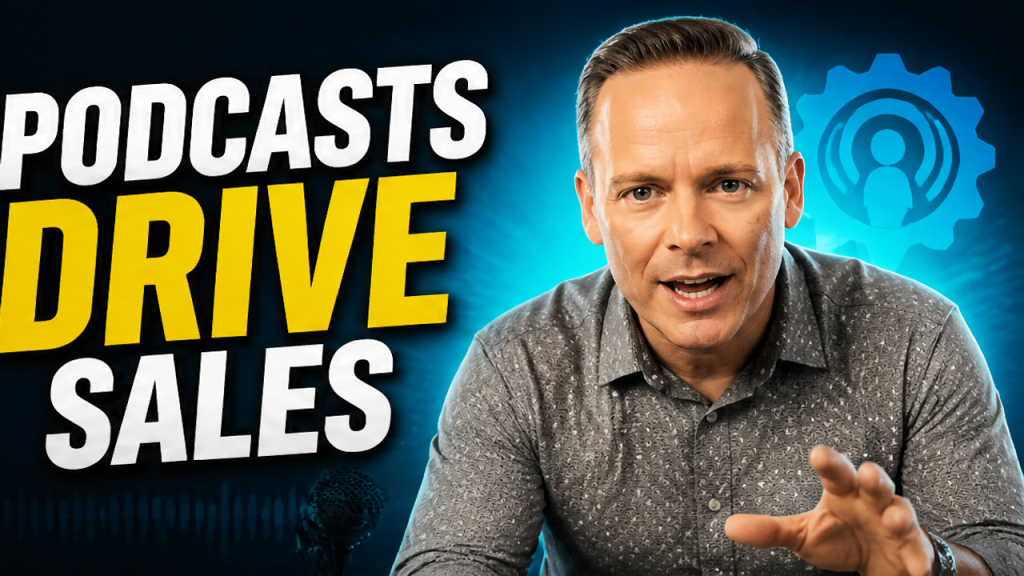

Learning how to get on podcasts has become considerably harder than it was five years ago, largely because the mechanics that determine whether a pitch gets read, whether a host says yes, and whether the appearance produces anything measurable remain almost entirely invisible from the guest’s side of the microphone. Josh Elledge, founder of PodVerified and host of The Thoughtful Entrepreneur, has spent more than fifteen years working on the other side of that glass, and in his conversation on Dissed Media: A Startup Story he laid out how the guesting world actually operates for the people receiving pitches rather than sending them.

How to Get on Podcasts When Hosts Are Drowning in Pitches
The volume problem is worse than most guests realize. Elledge receives somewhere between 400 and 500 spam pitches every month for The Thoughtful Entrepreneur, which means a well-intentioned founder writing a thoughtful note is competing against a wall of automated outreach that has already exhausted the host’s goodwill before the message arrives. He was careful to say that legitimate guesting agencies exist and do good work; however, a wave of amateurs practicing what he described as spray and pray behavior has degraded the channel for everyone, and the practical result is that many hosts now open their inbox with suspicion rather than curiosity. Anyone working out how to get on podcasts today has to start from that reality, since it changes how you write, how you target, and how much reception you can reasonably assume on the other end.
Podcast Guesting Needs a Business Plan Underneath It
Elledge specializes in one thing, which is the business plan sitting underneath either podcast hosting or podcast guesting, and his position centers upon a fairly unsentimental premise: if the work does not generate revenue, the person doing it will eventually stop, because household patience for an expensive hobby that consumes evenings and weekends tends to run out long before the audience arrives. He cited a statistic that may explain why so much guesting advice feels disconnected from outcomes, noting that north of 90% of all podcasts, including the independent shows people start as experiments, never reach episode twenty. The medium itself is not short of listeners, since Edison Research’s Infinite Dial 2026 put podcast consumption at an all-time high, with 80% of Americans age twelve and older having listened to or watched a podcast at least once. What tends to be short is a plan connecting the appearance to anything a business can bank.
Knowing Which Shows You Have Actually Earned
Elledge’s background in public relations, which began with training senior Navy officers on media handling when he was a twenty-year-old journalist, informs the second piece of his argument, which focuses upon honest self-assessment. He described what he calls lottery mentality, where someone emails the top hundred podcasts, pins their hopes on a reply, receives nothing, and concludes that public relations does not work. His counter is that those simply were not the right shows yet. In traditional media he would field the same request, usually phrased as a desire to appear on a national morning program, and the follow-up questions about prior national or major-market appearances would generally reveal that no track record existed at all. Anyone promising access at that point is going to ask for a substantial check, because earned media stays earned unless you are paying your way in. PodVerified exists to answer that question without the check, functioning something like a credit score for podcast guests: you receive a free score, you are told what caliber of show fits where you currently stand, and you are given the steps that would raise it.
The Assets That Quietly Decide Whether You Get Booked
Several things get checked before a host ever replies, and they are checked quickly. A visible press kit is the first, and Elledge’s framing is that its absence communicates a lack of seriousness in the same way a professional speaker without a speaking kit raises questions, since the speakers charging five figures per engagement all seem to have one. He was clear that the kit does not have to be exceptional, it simply has to exist, and PodVerified offers a free builder for people starting from nothing. Your LinkedIn profile is the second, and it needs to speak to producers and media rather than to an audience of already-converted customers, because the person deciding whether to book you is reading it with entirely different questions in mind. The third is your website, which he can evaluate within a few seconds. If a listener hears you, likes you, goes looking, and finds your presence buried on an About Us page underneath corporate language, the parasocial relationship the episode created has nowhere to land, and that visitor leaves. As we discussed in our conversation with Stephanie Sylvestre about AI augmenting rather than replacing humans, the trust a real person builds is the asset the technology is meant to extend, and a website that hides that person works against itself.
Where the Guesting Strategy Usually Falls Apart
Across roughly 2,500 interviews, Elledge says the most common closing ask is either a call or a newsletter signup, and both rank among the lowest performing calls to action a guest can offer. The problem is the timing of the ask rather than the value of the offer. He also named the gated lead magnet, where a genuinely useful guide sits behind a name and email field, and pointed out that the qualified people you most want tend to be the ones least willing to trade contact information for something they have not yet evaluated. He extended the same critique to the free first chapter of a book, which happens to be the call to action closing this very podcast, and Ben took the note on air rather than editing it out. Renaming a sales call as a discovery call does not change what the listener hears, since everyone in business understands the shape of the request.
Getting the Listener Into Your Own Environment
What Elledge offers instead centers upon a simple observation about listener behavior, which is that something like ninety percent of the audience is doing something else while they listen, whether driving, walking a dog, working out, or washing dishes, and none of those people are going to click on the sound of your voice. Given that, the goal of the appearance becomes moving the listener off the podcast and into an environment you control, which means your own website rather than a social platform where distraction is the entire business model. Once they arrive, the clock becomes the metric that matters, and he is a strong advocate for ungated short-form video sitting alongside whatever you are giving away, so the visitor can watch you explain the thing instead of reading about it. Conversion rates rise in concert with minutes of attention, and his rule of thumb is blunt enough to be useful: twenty minutes on your website and the deal is effectively closed.
Generosity as a Growth Model
Underneath the tactics sits an argument about how businesses grow, and Elledge stated it plainly in his closing remarks. The founder who loves the actual work, whether that is leadership consulting or search optimization or running operations, is usually told at some point that the price of doing what they love is doing a pile of marketing they hate, and he rejects that premise outright, having grown two seven-figure companies without ever spending a dollar on advertising. His explanation for why the familiar lead generation playbook has stopped producing is that everybody adopted it, which drove response rates toward zero and left the channel exhausted; the remaining opportunity may therefore sit where the marketing crowd does not go, which in his framing means considerably more generosity than feels comfortable. That reading tracks with what Wes Towers told us about AI disruption in digital marketing, where the tactics that scale fastest are also the ones that commoditize fastest. Anyone still working out how to get on podcasts consistently may find that serving audiences compounds in ways a purchased placement never does.
Frequently Asked Questions
Do podcast guests get paid?
Almost never on interview shows, since the exchange is exposure and relationship rather than a fee, and a guest asking to be paid will generally end the conversation. Paid placement exists in the market; however, it sits outside earned media and comes with a substantial check attached.
How do I know if I am ready to pitch a top podcast?
Look at your media history honestly. If you have no prior appearances, the larger shows are seemingly out of reach for now, and a free PodVerified score will tell you which tier fits your current standing along with what would raise it.
How do I find podcasts to be a guest on?
Start at the tier your track record supports rather than at the top of the charts, and study the shows whose audience overlaps with the people you already serve, since relevance to the host’s listeners is what gets a pitch read.
How should I prepare for a podcast interview as a guest?
Treat it as a learned skill in the way an actor treats a screen test, because answering a question correctly and answering it well are two different disciplines once business goals are attached to the appearance.
What should replace a book-a-call call to action?
Send the listener to your own website with something ungated they can consume immediately, ideally short-form video, and let time on site do the work a booking link cannot do while someone is driving.