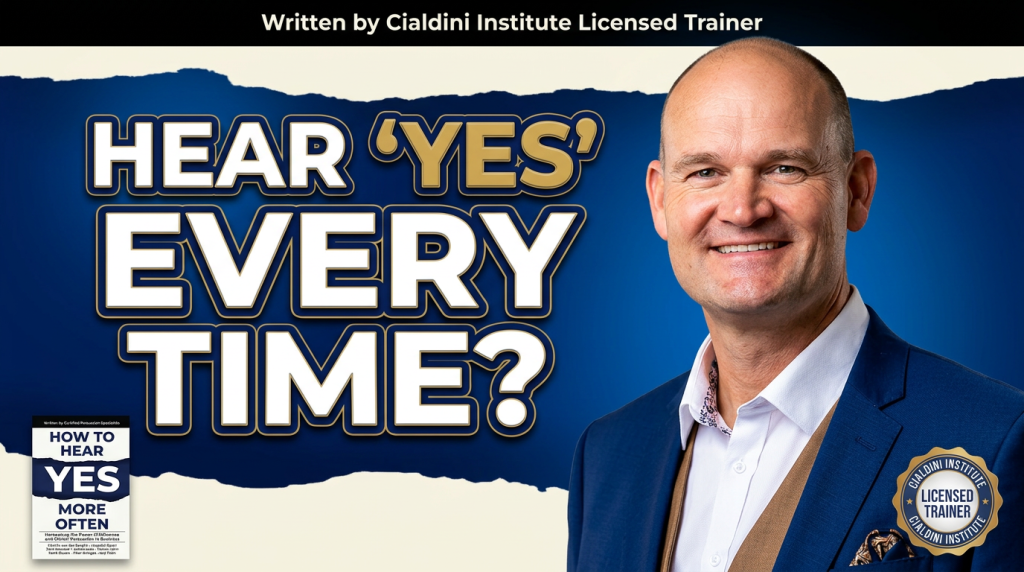

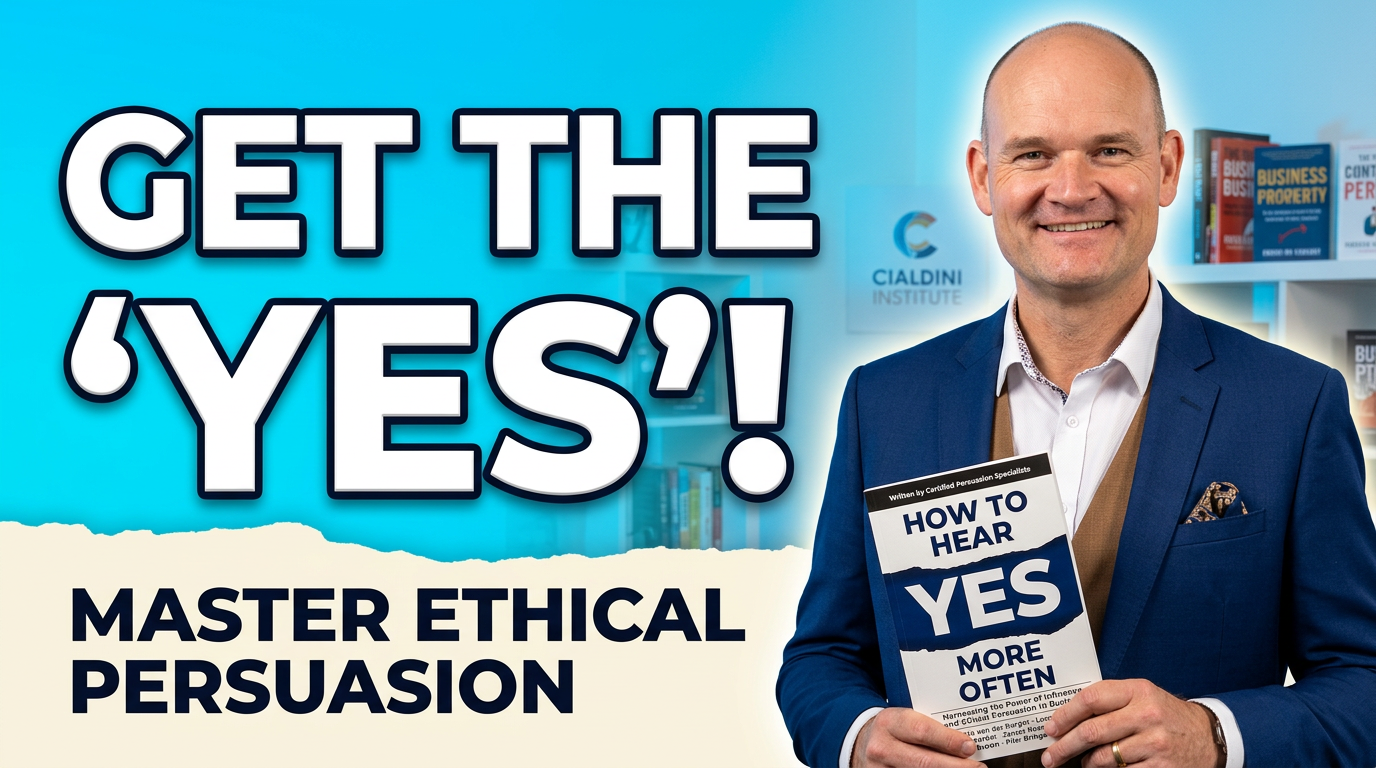
Ethical persuasion starts from a premise that unsettles anyone who has ever built a careful pitch, which is that the decision may already be made by the time the argument arrives. Patrick van der Burght has spent two decades working on that problem, and as one of a small number of practitioners personally trained and licensed by Dr. Robert Cialdini, along with founding membership in the Cialdini Institute, he brings a research base rather than a set of opinions to the question of why people say yes. He joined me on DissedMedia: A Startup Story to walk through how decisions actually get made, and what a business gives away every day by not knowing.
The 95 percent problem sitting underneath your pitch
Daniel Kahneman won the 2002 Nobel Prize in economics for work that dismantled a comfortable assumption in older economic theory, the one holding that people are rational creatures who reason their way toward decisions using logic available on request. His model splits thinking into two systems, where System 1 runs fast, unconsciously, and cheaply on shortcuts that have served us well enough before, while System 2 works slowly and consciously, engaging mainly when a red flag forces it to. Roughly 90 to 95 percent of our decisions get resolved by the first system, and Patrick’s argument centers upon what that ratio does to a business that has never heard it.
When you sit down to plan how to persuade people toward your idea, you are running System 2 at full power, and the material System 2 produces tends to require System 2 in the other person to process it; your audience seemingly has neither the time nor the appetite for that work, so a carefully assembled case lands on the part of the brain in charge of about five percent of the outcome. What follows may be the most useful reframe in the whole conversation, since Patrick would argue that a large share of what gets recorded as rejection was never a no at all. It was indecision, manufactured by an argument that added weight instead of clarity, leaving the person on the other side more uncertain than when you started and quietly backing away from a proposal that would probably have served them well.
What is ethical persuasion, and how is it different from manipulation?
Ethical persuasion surfaces truthful information already present in a situation so that the other person’s own values can carry them to a decision, where manipulation distorts or invents that information to extract compliance. Patrick points out that persuasion by definition should be ethical, since the language already gives us a separate word for the dishonest version, and he leads with the qualifier only because so many people hear the word and picture an arm being twisted. The distinction pays commercially as well as morally, however, because a decision that forms inside the other person survives your absence, while compliance produced by pressure reverts the moment you leave the room. Dishonest use can generate short-term numbers followed by long-term damage, as clients rarely return to arrangements where they came out badly, and Dr. Cialdini has documented hidden organizational costs that land on employees asked to work that way.
The channel you pick moves the odds before you speak
Before the content of an argument matters, the medium carries weight of its own, and Patrick ranks face-to-face contact as the most persuasive channel available to you, with video call next, then phone, then text and email at the bottom of the list. The practical implication is unusually cheap, since most of those options require nothing more than staying at your desk; moving a persuasive conversation off email and onto a video call raises your chances without altering a single word of what you plan to say. There may also be an opening in the current climate, because after years of remote-first habits, an invitation to meet somewhere for coffee reads as more of an occasion than it would have a decade ago.
Why a gated e-book fails to activate reciprocity
Reciprocity describes our tendency to return the same type of behavior first given to us, and in the context of compliance it means we cooperate more willingly with people we feel we owe something to. Patrick draws a firm line at the exchange, though, because when a download requires a name and an email address, the book becomes a reward for meeting a condition, the recipient’s emotional ledger stays balanced, and nothing is owed. That may still be a perfectly serviceable lead generator, and he says as much plainly; the reciprocity engine you believed you were starting simply never turned over.
The version that works begins from a different internal question, which asks how you can genuinely help this person in this situation, with information, advice, or attention counting as readily as anything physical. His favorite illustration comes from the supermarket sample tray, where sales rise even among shoppers who disliked the cheese, since what gets reciprocated is the behavior rather than the cheese itself.
The seven principles of persuasion, in brief
Patrick describes the principles as categories of shortcut information you can surface, which makes them a search checklist rather than a script. They hold across languages and cultures, which may explain why work first published in 1984 still turns up on lists of timeless reads for entrepreneurs.
- Reciprocity. We cooperate more willingly with people we feel we owe something to.
- Liking. We favor people who are like us, who like us, and who show that they do.
- Unity. We extend favorability and forgiveness to people who are of us, sharing an identity rather than a similarity.
- Social proof. We follow the actions of others, especially when they are numerous, similar to us, and we are uncertain.
- Authority. We follow those with genuine knowledge, which makes surfacing your credentials socially, usually through an introduction by someone else, a real skill.
- Consistency. We feel internal pressure to stay true to our own past actions, and the pull belongs to the other person rather than to you.
- Scarcity. We value what is rare or time-limited, which is also the principle most abused online.
Two studies from the conversation show the size of the effect. In email negotiations of difficult contracts run between Northwestern and Stanford, roughly 30 percent of deals ended in deadlock until negotiators were asked to share some background about themselves first, at which point deadlocks fell to 6 percent. In a home insulation study, telling people they would lose a dollar a day by staying uninsulated moved 150 percent more of them than telling people they would save the same dollar, which suggests most of us are pitching the weaker half of an identical fact.
What review score is actually the most persuasive?
Research Patrick cites places the optimal average review score somewhere between 4.2 and 4.7 stars. Above that band credibility begins to erode, since a near-perfect score invites the suspicion that unfavorable reviews were quietly removed, and below 4.2 the score stays believable while losing the pull needed to win the business. Detail carries as much weight as the number, because a two-word review gives a reader nothing to verify and forfeits most of its persuasive value in the process.
How long does it take to learn ethical persuasion?
Understanding the principles takes an afternoon, and Patrick is direct that application skill takes formal training and practice on top of that. The pattern he describes involves learning to read a situation, weigh your relationship with the audience, decide which principles fit, and then find the truthful detail already sitting there waiting to be raised. One of his colleagues, Steve Martin, worked with a London real estate office where a single truthful sentence added to the receptionist’s script lifted appointments by 20 percent and signed contracts by 15.5 percent, which gives a fair sense of what surfacing the right information at the right moment can be worth.
About Patrick van der Burght

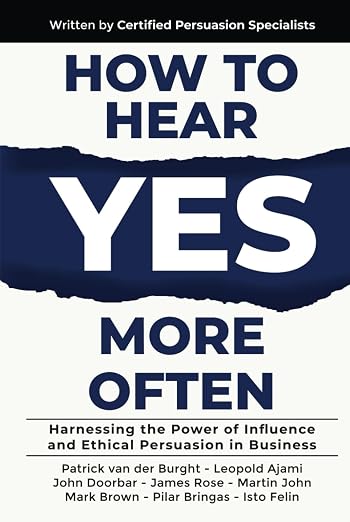
Patrick is a founding member of the Cialdini Institute, author of How to Hear Yes More Often, and host of the podcast Ethical Persuasion Unlocked, which opens with an introduction recorded by Dr. Cialdini himself. He is based in Australia, delivers keynotes and workshops in person and online, and runs a community project donating his time to schools and universities so that people between roughly 15 and 25 meet this material before they enter the workforce. His site at ethicalpersuasion.com.au carries a downloadable e-book that asks for no email address, a seven-day email challenge, and 35 days of access to his Continuity Program.
Listen to the full conversation
The complete episode runs about an hour and covers considerably more than fits here, including how Patrick reached Dr. Cialdini with a cold email in the early days of the internet and why authority remains his favorite principle. Watch it on YouTube, browse the rest of the DissedMedia: A Startup Story archive, or read more of our sales and marketing coverage.
If this way of thinking about how people actually decide is useful to you, the first chapter of 10 Topics to Help Managers, Leaders & Entrepreneurs Get Better at What You Do is free at benolmos.com. Podcasters and content creators building an operation around a show can take a look at rostr.studio, and more from the studio lives at dissedmedia.com.