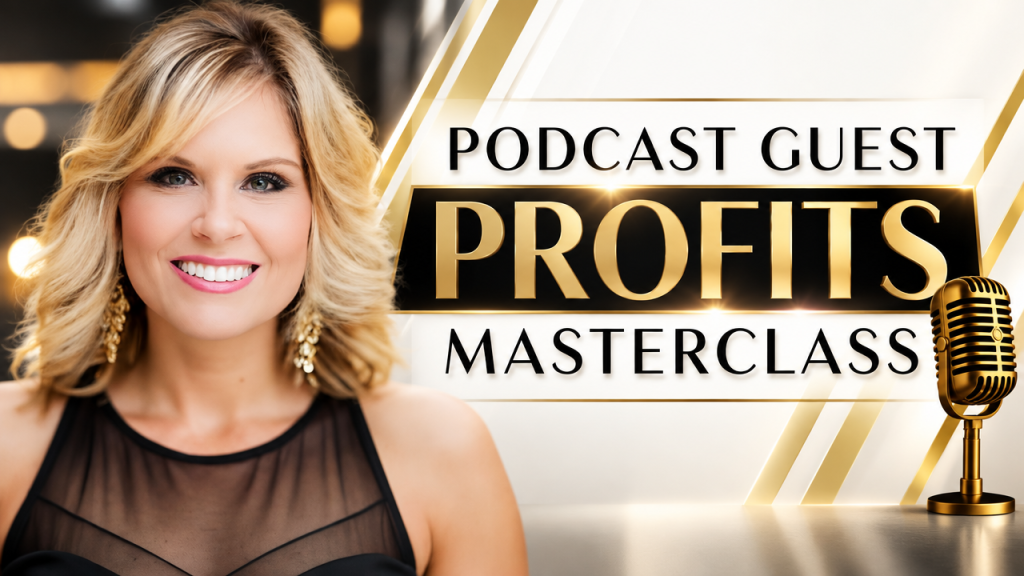

How to monetize a podcast, at least the way Lady Jen Du Plessis has done it across five shows and nearly sixteen years, centers upon the relationship formed during a recording and the follow-through that continues long after it ends, since the revenue seldom arrives through sponsorship or download-based advertising and instead arrives through the partnerships and client relationships that a host or a guest cultivates out of each conversation. Jen holds every one of her shows to a six-figure standard, and she monitors that figure deliberately, treating any show that falls short as a signal that she may be booking the wrong guests.
She joined Ben Olmos on episode 99 of DissedMedia: A Startup Story, and what followed was close to a working seminar on the business mechanics sitting underneath a medium that a great many founders still treat as a hobby with a microphone attached.
How to Monetize a Podcast Through the Conversations You Already Have
Jen frames the current market through the gold rush of the 1800s, when everyone flocked to the streams and sifted while very few struck anything worth carrying home, and she sees that same pattern repeating across a landscape of roughly two and a half million indexed shows, where the sheer volume of new entrants may obscure how few of them have any plan at all for the money. Her own answer to how to monetize a podcast began sixteen years ago with Mortgage Lending Mastery, a show she launched as a more efficient way to answer the questions people kept asking when they wanted to pick her brain, and the format has since expanded into Success to Significance and Business on the Vine, each one emerging from a transformation in her own life.
The mechanism she describes sits closer to networking than to broadcasting, since the exchange of questions and answers between a host and a guest resembles what happens at a cocktail party without the traffic, the parking garage, and the drive home afterward; however, a networking event produces nothing at all when someone collects a stack of cards and lets them sit in a drawer, and a podcast behaves in exactly the same way. She looks at every guest as a potential business partner, someone she may collaborate with or build something alongside down the road, and it is believed that this lens, more than any production decision, is what converts an hour of conversation into an asset.

Why Download Counts Mislead the Hosts Who Watch Them
Among the more sobering figures Jen puts on the table is her claim that half of all indexed podcasts peak at roughly 27 downloads within seven days of release, which means the number most hosts refresh compulsively may be the least informative number available to them. She argues that the name of a show, the episode count, and the download figure all sit on the surface, while the relationship behind the album cover is where the value actually accumulates, and she illustrates the point by noting how often people decline an invitation to Mortgage Lending Mastery because they assume a show about mortgages has nothing to offer a social media strategist, when the audience is in fact a room full of entrepreneurs.
Ben pushed back gently with his own experience, acknowledging that he watched download counts obsessively in the early days of DissedMedia and has since shifted his attention toward the connections a conversation produces, which tracks with the broader arc of the show across three years and roughly a hundred episodes. That shift, from vanity measurement toward relationship measurement, may be the single most practical change a founder can make while figuring out how to monetize a podcast, because it changes which guests get booked and which follow-ups get made.
The Guest Is the Prize, and the Vetting Reflects That
Jen describes the guest as the gift that supplies the highlights and the sound bites a host uses to market the show, which is why she applies what she calls a discernment technique before accepting or extending any invitation, and why she is comfortable saying no. She told a story from an event in Los Angeles where a woman rushed at her across a hotel bar, pointing and announcing that she needed to be on the show, and Jen leaned around her husband and replied that given the approach, an appearance seemed unlikely, though she thanked her for asking. She is known as the velvet hammer, and the nickname appears to be earned.
The same standard governs her inbox, where canned pitch emails get deleted without being read, a policy she concedes may have cost her a genuinely good guest and possibly a six-figure partnership, yet one she maintains because the alternative dilutes the reputation she has spent four decades building. Ben runs a parallel process, checking a prospective guest’s LinkedIn and YouTube presence before committing, and treating a thin footprint as a not-right-now rather than a permanent refusal.

Story Frameworks and the Discipline of Speaking in Sound Bites
Through her podcast guest training, Jen works with people on the mistakes that quietly ruin an appearance, beginning with the run-on story, which she caught herself committing during this very episode and flagged aloud for the audience. The remedy she teaches starts with building a story inventory, then selecting the story that actually aligns with the topic at hand, since a story about cookies attached to a conversation about oranges leaves a listener hunting for the connection that was never there. She provides four to five frameworks rather than a single template, on the theory that a guest should model an approach and then modify it until it fits, and the one she reaches for most often she calls I, you, they, point, quote.
She also treats every recording as raw material, uploading each appearance afterward and pulling out the phrases, the new language, and the concepts that emerged in the moment, which solves the familiar problem of knowing you said something good without being able to reconstruct what it was. Her stated goal as a guest is to be memorable and repeatable, leaving a listener with something they can adapt rather than an impression of a person who has everything together, and she warns against the guest who posts once and then ghosts, along with the one she describes as a show up, throw up, and hope up appearance.
The Armor Underneath the Title
The title people ask her about three or four times a week has a longer story behind it than most listeners expect. Jen grew up as the only only-child among 36 first cousins, carrying a difficult childhood she has since written about, and she built what she calls layers of armor to keep the shame and the judgment at a distance, which produced an overachiever who now runs five podcasts and can explain precisely why. The turn came when she was asked to speak about that armor and discovered that asking for help, which she had long mistaken for weakness, was the thing that let her operate from something other than scarcity.
What followed was a long run of philanthropic work, starting with a charity she founded called the Fur Baby Food Bank, on the reasoning that a family arriving for food assistance should not have to surrender the dog, and extending into work with veterans managing PTSD and with anti-trafficking efforts alongside Mitzi Perdue. That record eventually produced a phone call from Prince Rafael of the House of Cappadocia, who invited her to be knighted into the Order of Constantine the Great and St. Helen, an order established in 360 AD, and later into the Royal Military Order of the Knights of St. Charles, where she is the first American member. She serves as a dame commander and an elevated dame, which explains the DC that appears behind her name.
Designing a Network on Purpose
Jen returns often to a distinction she draws between the creatures that take from a network and the spider that designs one, and her own web appears to have been constructed deliberately, one introduction at a time. Performing in the top 200 producers in an industry of roughly a million people earned her early stages, and those stages introduced her to people who introduced her to others, a chain she calls the great retrace that eventually carried her to City Summit and City Gala, where she met James Dentley, Brian Smith of UGG, and Jeff Hoffman of booking.com and priceline.com. Several of them became the founding guests of her second show, which is the move that separates her from the person who asks only for a photograph.
She has shared stages with Tony Robbins and Darren Hardy, sat on a leadership panel with George W. Bush, and joined Les Brown’s speaking faculty after he sent his son to find her when she walked off stage. During this episode she mentioned a fresh example, having secured an introduction to BNI founder Ivan Misner that same morning simply by listening for a clue during a pod swap and asking the host to connect them. Her summary of the whole mechanism is blunt enough to be useful, since if you do not ask, you are not going to get.
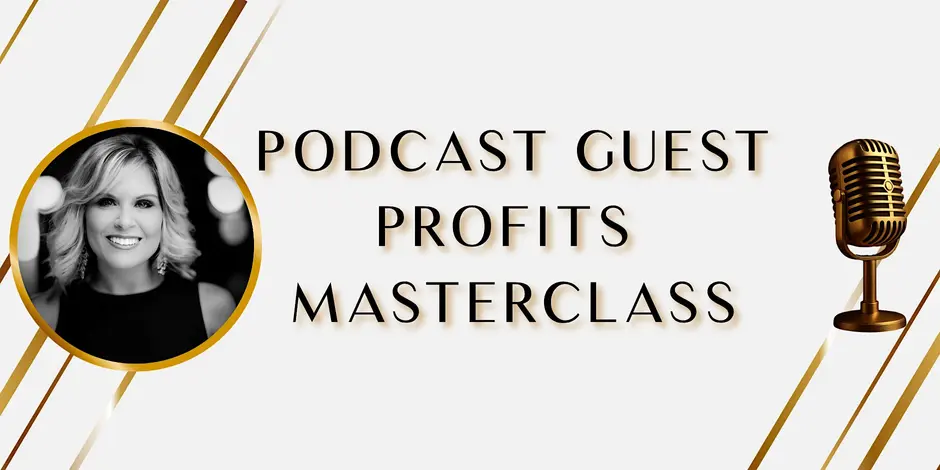
What This Means for Founders Asking How to Monetize a Podcast
Taken together, the practical answer to how to monetize a podcast that emerges from this conversation has very little to do with equipment, publishing cadence, or the advertising market, and it centers upon a discipline that costs nothing except attention: decide before the recording what the relationship is meant to become, and then do the work afterward that most people skip. Jen tracks revenue per show because the number tells her whether her booking judgment is sound, and a host who tracks nothing has no way to correct course.
Founders who want to go deeper on the revenue side may find the conversation with Adam Torres on podcast monetization in episode 81 a useful companion, since it approaches the same question from the media-company side. Those who are working the guest angle rather than hosting one may prefer Josh Elledge on how to get on podcasts, and anyone thinking about the client-acquisition layer can look at authority marketing through podcasting.
Connect With Lady Jen Du Plessis
Jen can be found at jenduplessis.com, and she invites direct contact at mentormeladyjen@gmail.com, an address she maintains specifically so that she can track who reaches out and what comes of it. Her shows are available at Mortgage Lending Mastery, Success to Significance, and Business on the Vine. Her books include Tell Me I Can’t and Impact: Inspiring Motivational Powerful Acronyms for Cognitive Thinking, Volume Three. On social platforms she appears as Lady Jen Du Plessis, with LinkedIn the one exception, where she is listed as Jen Du Plessis.
Frequently Asked Questions
How do you monetize a podcast without sponsors?
Sponsorship is only one path, and for a show with a modest audience it is rarely the most productive one. The approach Jen uses treats each episode as a qualified business conversation, where the guest may become a partner, a client, or a referral source, and the revenue arrives through those relationships over the following months. That is how to monetize a podcast when the download numbers are too small to interest an advertiser, and it is the reason she has never used a paid booking service.
How many downloads does a podcast need to make money?
Fewer than most people assume, if the revenue model runs through relationships. Jen points out that half of all indexed podcasts peak near 27 downloads in their first seven days, which would disqualify nearly everyone under an advertising model, yet each of her shows clears six figures. The audience size determines what advertisers will pay; it does not determine what a well-chosen guest is worth.
Is it better to host a podcast or be a guest on other shows?
Guesting is the faster and cheaper way to get visibility, since someone else carries the production burden while you supply the expertise, and Jen considers it one of the least expensive forms of PR available. Hosting gives you the asset and the invitation power, which is what opened the doors to the relationships she describes. Many founders end up doing both, using guest appearances to build reach while a show of their own builds proximity.
How do you become a better podcast guest?
Start by tightening your stories so they land in a minute rather than five, and make sure the story you tell actually connects to the topic the host raised. Prepare a small inventory of stories with a framework behind each one, listen back to your own appearances to identify the phrases worth reusing, and follow up with the host afterward rather than posting the episode once and disappearing.