
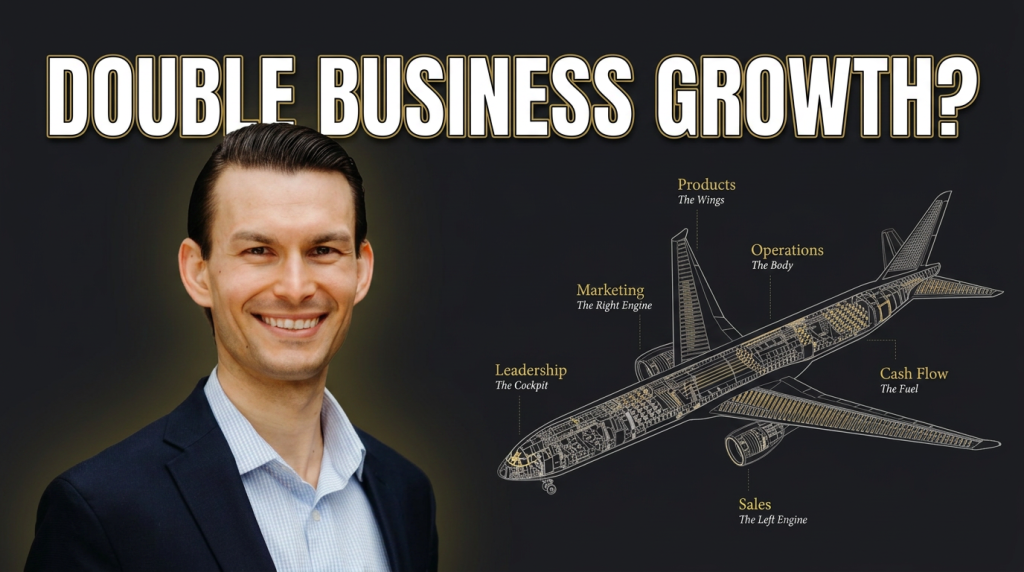

Scaling a small business asks for something different than starting one, and Kenneth Kollasch, a third-generation entrepreneur, certified business coach, and pastor who spent fourteen years building systems inside a franchise that has run for more than a century, has spent the last several years turning that difference into a repeatable process. The short answer to how to scale a small business is that it requires trust, disciplined communication, processes that do not depend on any one person’s memory, and a cash flow strategy sturdy enough to fund a deliberate season of momentum, and Kollasch built his entire coaching practice, the Small Business Flight Plan, around installing exactly those four things over a twelve month period. Business owners who try to scale by simply working harder inside the same systems that got them started tend to hit a ceiling fast, because what got a business to its current size is rarely what carries it to the next one.
Kollasch’s path into this work started far from a boardroom. He was pursuing professional soccer before his grandfather, who had built a career in radio and television as an immigrant entrepreneur, convinced him to stay stateside, and it was ballroom dancing, competed at a national level with his wife, that pulled him into business for the first time. That experience led his family into franchise ownership, and from 2010 to 2024 Kollasch climbed through a dance studio franchise that had been operating for one hundred and fourteen years, absorbing the kind of operational discipline that only shows up in a business old enough to have already made every mistake once. He now works with small business owners across every sector, applying what a global franchise had already figured out about hiring, culture, and growth to businesses that are still building those systems from scratch.

How to Scale a Small Business Without Losing What Makes It Work
The tension every growing owner eventually feels is that scaling can look, from the outside, like trading the personal touch that built the business for a set of processes that make it feel corporate. Kollasch pushes back on that framing gently but directly. Learning how to scale a small business, in his experience, comes down to installing predictability around the right decisions so that a business builds momentum instead of chaos, and momentum, he argues, is a small business’s best friend. He describes watching a single dance studio expand into two locations across two different states and cross 1.9 million dollars in revenue through the disruption of the pandemic, not because the team worked harder in a vacuum, but because the underlying systems for hiring, culture, and client experience had already been professionalized before the growth arrived.
That word, professionalize, is deliberate. Kollasch’s tagline is that he helps small business owners professionalize their operation, and he chose that word over flashier alternatives because it captures something specific: the predictability and assurance that large, established companies create simply by having their systems figured out. A small business that professionalizes its hiring, its onboarding, its communication, and its financial discipline creates the same sense of reliability that draws people to apply at a Fortune 500 company rather than the shop down the street, and that reliability becomes a competitive advantage that is difficult for less organized competitors to copy.
Inside the Small Business Flight Plan
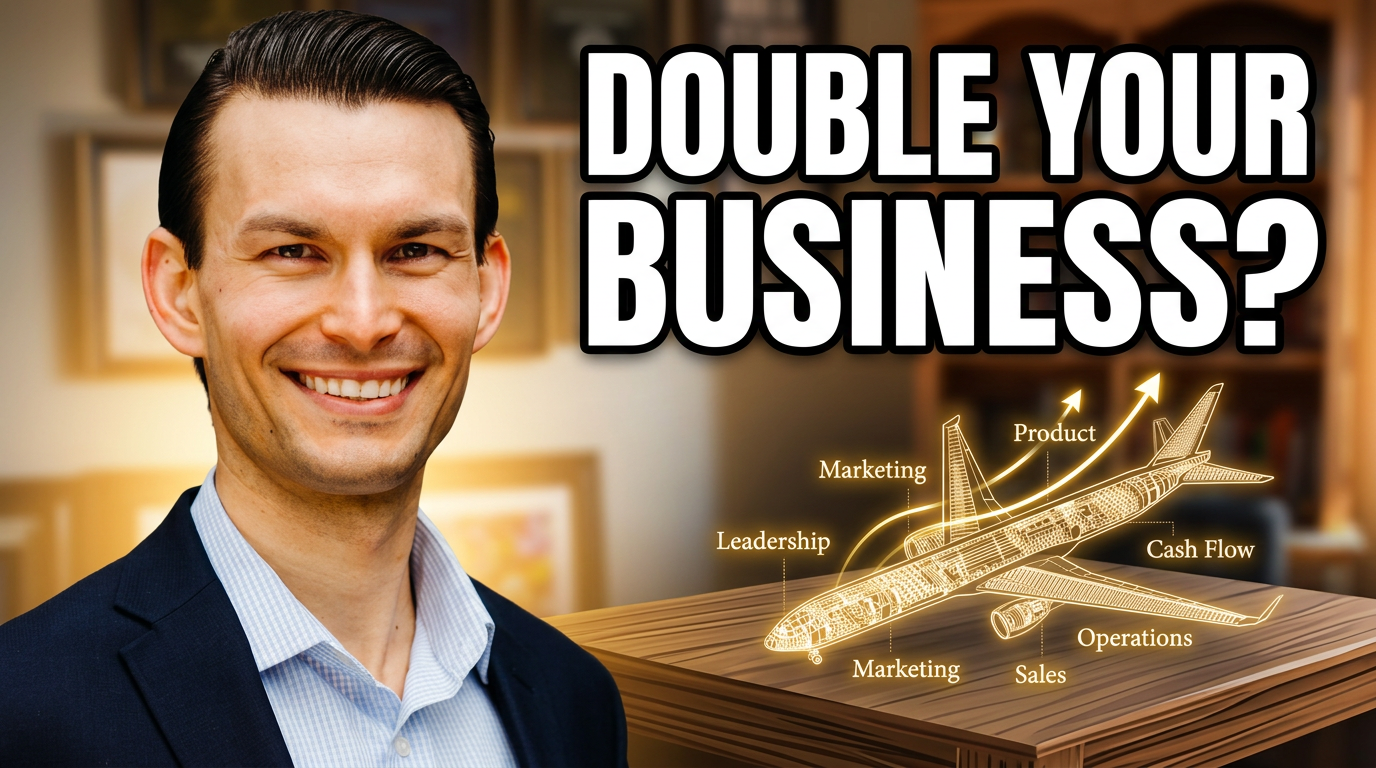
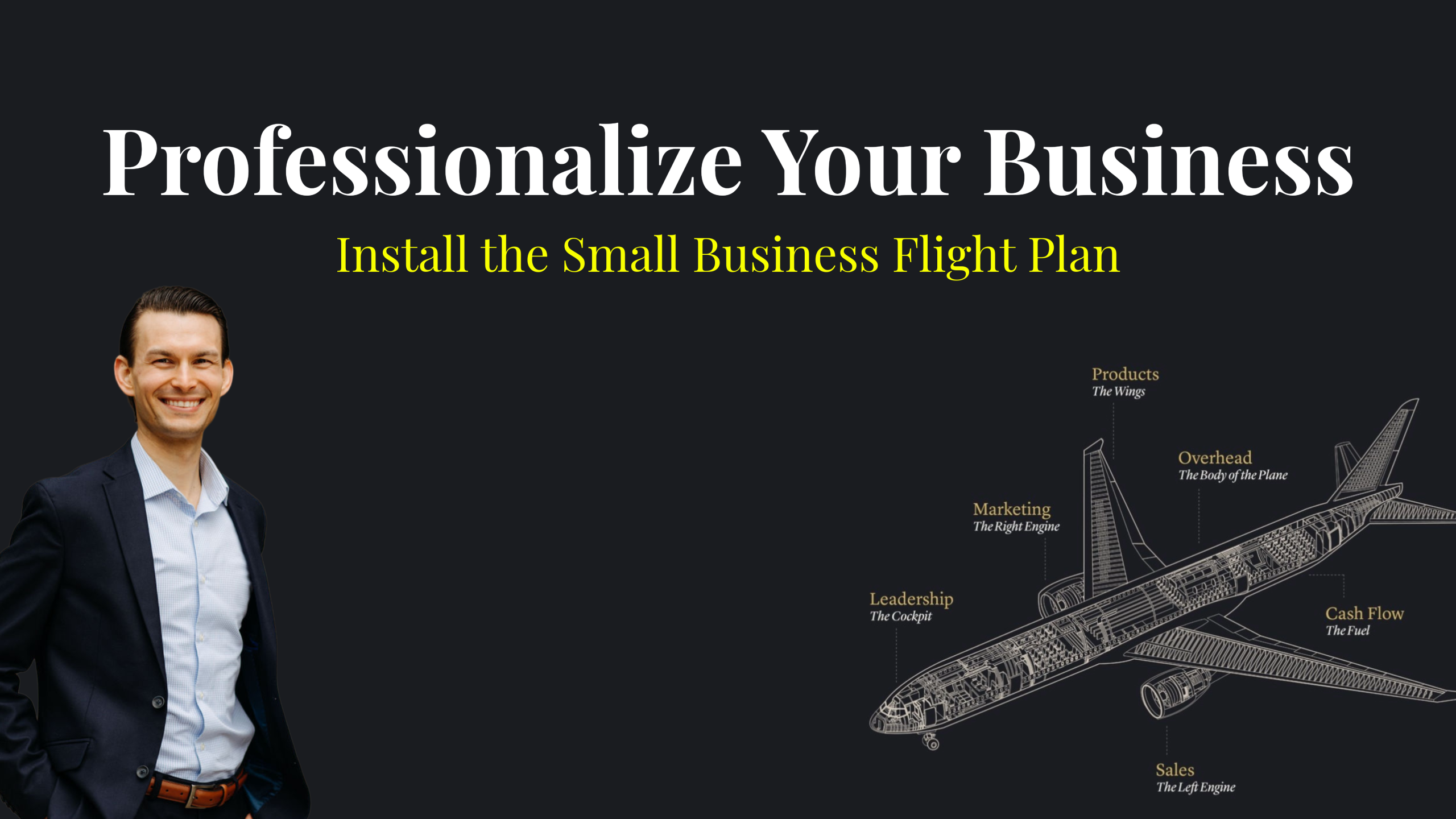
The Small Business Flight Plan is built around six areas that Kollasch installs with clients over twelve months of hands on coaching, meeting every other week. The first is leadership, covering vision, mission, and culture. The second is marketing, with a goal of doubling lead flow. The third is sales, aimed at doubling conversion rates through the full funnel, from show rate to close rate. The fourth is product offering and management systems, designed to move an owner out of constant reactive mode and into work that gets ahead of problems before they surface. The fifth is cash flow, managed in a way that eventually funds investments outside the business itself, so the owner runs the company because they enjoy it rather than because they need it to produce a specific number every month. The sixth, running underneath all of it, is the deliberate sequencing of scaling, stabilizing, and sustaining before scaling again, because a business cannot sprint indefinitely without a season to consolidate what it just built.
Why Staff Retention Is Where Many Scaling Plans Quietly Break
One of the clearest examples Kollasch offers from his own franchise experience involves staff retention, which he says is often overlooked by owners who assume growth problems are exclusively about marketing or sales. When he joined the dance franchise, average staff retention sat between twelve and sixteen months, which is difficult in a business where training a new instructor takes real time and investment. By the time he left in 2024, that number had climbed to six years, and the shift did not come from a single dramatic change. It came from rebuilding the hiring process and, more specifically, from what Kollasch calls the progression process, the ongoing conversation with staff about where their role was heading and what it meant for their own life outside the business. For a related look at how small businesses are addressing generational shifts in hiring and training, this piece on workforce development for small business hiring and retention covers similar ground from a different angle.
Kollasch is careful to note that this was not primarily a management failure in the traditional sense, even though the old cliche about employees quitting managers rather than jobs holds some truth. Instead, the deeper issue was that a newer generation of staff needed more one on one investment and a clearer sense of where their work was leading, not just a paycheck and a schedule. Left unaddressed, tangible problems like unclear progression paths eventually surface as soft problems, friction between staff, quiet resentment, and the sense that leadership does not understand what employees need, and Kollasch argues that most soft skill breakdowns in a growing business trace back to a tangible, practical issue that was left unresolved for too long.
Leadership, Product Offering, and the Two Bottlenecks Kollasch Sees Most Often
Across the small business owners he coaches, Kollasch says two bottlenecks show up almost universally. The first sits in leadership, specifically whether an owner operates from a growth mindset or a fixed one focused on protecting what already exists. Expanding into anything new, whether that is a management system, insurance for employees, or a retirement plan, carries real risk for a business that does not yet have the brand recognition or financial cushion of a larger company, and it is easy to find a discouraging story online about why a given decision will not work. This is part of why coaching and community matter so much to Kollasch’s clients, because navigating that risk with guidance tends to counteract the fixed mindset that otherwise keeps owners protecting a smaller version of the business than they are capable of building. Readers who want a broader look at how leadership style affects growth speed may find this piece on agile leadership for small business decision making useful as a companion read.
The second bottleneck involves how an owner perceives their own offer, specifically their willingness to deliver more value than they receive in payment before that generosity is reciprocated. This is hardest for owners still under the first few hundred thousand dollars in revenue, when nearly all of the financial risk sits on their own shoulders and every employee or client relationship feels high stakes. Even though the ability to give before gaining a return is often the surest path to better staff and better clients, Kollasch has found it is one of the hardest instincts for an owner in true startup mode to access, simply because the margin for error feels so thin.
The Four Core Fundamentals: Trust, Communication, Process, and Cash Flow
Underneath the six step framework sits a simpler idea that Kollasch and Ben discussed at length during the conversation: every business runs on four core fundamentals, trust, communication, processes, and routines, and cash flow discipline that ties the other three together. Trust and communication are symbiotic, since communicating openly builds trust and a foundation of trust makes honest communication easier, while the absence of either tends to compound the other’s damage. Processes and routines matter because everything that enters a business needs somewhere predictable to go, and a business without that predictability spends its energy reacting to whatever is loudest rather than building toward what matters. Businesses that have these fundamentals in place before a problem shows up tend to solve it faster and with less collateral damage than businesses trying to build trust and communication for the first time in the middle of a crisis. For owners specifically wrestling with the cash flow side of that equation, this related piece on small business cash flow clarity in volatile markets goes deeper into that particular fundamental.
According to the Small Business Administration’s Office of Advocacy, only about 49 percent of new employer businesses survive to their fifth year, and cash flow problems are consistently cited among the most common reasons businesses fail before they ever get the chance to scale, which is part of why Kollasch treats cash flow discipline as inseparable from the leadership and process work rather than a separate financial exercise handled later. A business that has not built the fundamentals to survive its early years rarely has the stability required to scale at all, let alone double.
What Doubling a Business in Twelve to Twenty-Four Months Actually Requires
Anyone looking for a step by step answer to how to scale a small business inside a defined window should understand that Kollasch is direct about the fact that the Small Business Flight Plan is intensive rather than easy, built around unlimited access for twelve months with clients meeting every other week. He points to two requirements that matter more than any single tactic. The first is a willingness to be fully receptive to coaching, including copying what has already worked elsewhere with some personalization rather than reinventing every wheel from scratch. The second, and often harder, is a willingness to move faster than an owner has been moving, since a business’s capacity to double requires a burst of real momentum for a defined season, followed by stabilization before the next push. Owners who accept that some of the work will require moving before they fully understand why tend to enjoy the process considerably more than owners who resist it, even though Kollasch is quick to note that both groups get the result eventually if they stay in the process.
The broader theme running through the conversation, and one Kollasch returned to more than once, is that nothing escapes the law of cause and effect. Every result a business is currently experiencing, whether that result is growth, stagnation, or decline, has a cause behind it, and the businesses that scale successfully tend to be the ones willing to look honestly at what caused their current results rather than avoiding that reckoning. Personal responsibility, in Kollasch’s view, is simply part of what it means to own a business, since the freedom to control one’s own time and money comes paired with the responsibility for the outcomes that freedom produces.
Frequently Asked Questions
How long does it take to scale a small business?
Under Kollasch’s Small Business Flight Plan, most clients work through a twelve month coaching engagement, though he notes that the actual doubling of revenue sometimes takes closer to twenty four months depending on the starting point and the industry. Scaling tends to happen in bursts of momentum followed by a season of stabilization rather than as one continuous sprint.
What is the Small Business Flight Plan?
The Small Business Flight Plan is Kenneth Kollasch’s coaching framework, built around six areas: leadership, marketing, sales, product offering and management systems, cash flow, and the sequencing of scaling, stabilizing, and sustaining growth over time. It is delivered through twelve months of hands on coaching with clients meeting every other week.
Why do small businesses struggle with staff retention as they grow?
Staff retention problems often come from unclear progression paths rather than poor management alone. Employees, particularly newer generations entering the workforce, tend to disengage when they cannot see where their role is heading or how it connects to their own goals outside of work, and that disconnect eventually surfaces as culture and communication problems if it is left unaddressed.
How do I know if my small business is ready to scale?
Anyone researching how to scale a small business should start by checking whether it has established the four core fundamentals of trust, communication, repeatable processes, and disciplined cash flow, since these create the stability needed to absorb the risk that comes with growth. Businesses that try to scale without these fundamentals in place tend to experience growth as chaos rather than progress.