
AI restaurant recommendations may finally be ready to settle the question that most couples and groups of friends circle for far too long every week, which is where to eat, and David Leibner has spent the better part of three decades positioned to answer it. After roughly ten years working in bars and kitchens and about twenty more building software for the hospitality industry, David is now launching Stupid Good, a consumer platform he describes as the Spotify of where to eat and drink, one that pairs curated local lists with an AI concierge that can learn what each diner enjoys over time.
David joined DissedMedia: A Startup Story to walk host Ben Olmos through that journey, which is somewhat unusual in that it runs from B2B software into a consumer product, a jump that many developers who serve businesses never attempt. Their conversation moves from the gift card platform that now sits on thousands of restaurant websites to the shelved chatbot that preceded Stupid Good, and then works toward a revenue model that keeps paid placements off the platform entirely; for anyone who has lost an evening to a map search for chicken, it may be a useful look at how the problem is being rebuilt from the ground up.

Twenty Years of Building Software for Hospitality Operators
David’s path began well outside of technology; after leaving college he moved to Boulder, Colorado, where he bartended, cooked on the line, sold encyclopedias door to door, and brewed beer, eventually moving into management and partnering in a few restaurants. He loved the industry, including its downsides by his own account; however, as he approached ten years in the business he came to believe he was not built to run brick-and-mortar operations for the next fifty years of his life, and software offered a way to stay inside hospitality while applying what he had learned as an operator.
That operator background may be his most useful asset, since someone who has worked nearly every position in a bar or restaurant can often tell which tools an owner will actually adopt and which ones only look good in a demo. David framed the owner’s real hurdle as one of effort and result, noting that most operators can afford a few hundred dollars a month for a SaaS product, while far fewer have the bandwidth to implement it well enough to see a return, and he has built around that reality for roughly twenty years.
How GiftLocal Rethought the Restaurant Gift Card
The most visible product of that thinking is GiftLocal, which now serves as the gift card button on thousands of restaurant websites across hundreds of cities, in much the same way that reservation platforms power the booking button on those same pages. The insight behind it seems obvious in hindsight; plastic gift cards were sold only inside the business during operating hours, which meant that anyone who learned about a friend’s birthday that morning, perhaps from a social media reminder, had to call the restaurant or show up in person and then mail a card across the country.
Operators, David noted, often told him their customers only wanted plastic cards, and his response was that customers asked for plastic because it was the only option anyone had ever offered them. He pointed to Las Vegas as an example, where large resorts were content selling gift cards to guests already on property, when the people most likely to buy them were the relatives back home who had not made the trip; for David, much of the work was a matter of helping owners see a market that had been in front of them the entire time.
How AI Restaurant Recommendations Replace the Static List
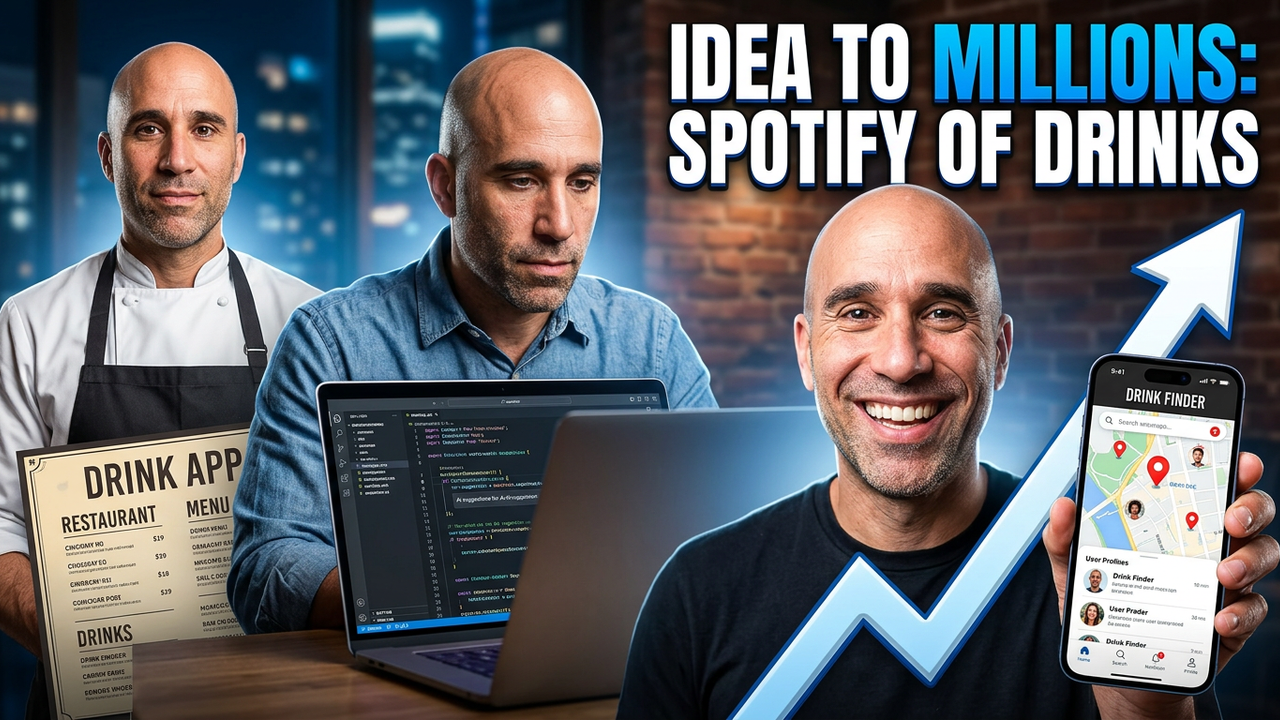
Stupid Good borrows openly from Spotify, Netflix, Airbnb, and DoorDash, each of which organizes a large library into browsable rows and then learns from how a person uses it. David’s argument centers upon the observation that nearly every major category of consumer discovery has adopted this approach except where to eat and drink, where diners still move between review sites and critic guides that cannot know whether it is Tuesday at noon or Friday at midnight, or whether a child at the table has a peanut allergy.
He compared the experience to approaching a hotel concierge desk where one concierge flips through a binder of plastic inserts while the other asks thoughtful questions about cuisine and ambiance, and it is fairly easy to see which one most travelers would prefer to talk to. AI restaurant recommendations, in his view, can play that second role at scale by reading reviews and social posts every day and learning each user’s preferences over time, whereas a published best-of list may already be out of date within weeks as restaurants close and chefs move on. He was also candid that the stakes run higher than they do in music, since a skipped song costs nothing, while a disappointing birthday dinner can cost several hundred dollars and an evening that cannot be recovered.
Foodie Bot and the Long Road to Product Market Fit
The idea itself grew out of a habit David has kept for years, building Google Maps lists for cities around the world and sending them to friends who text him before trips to Barcelona or Lisbon asking where they should eat and drink. His first attempt at turning that habit into a product came roughly seven years ago with a decision-tree chatbot called Foodie Bot, which friends found exhausting after one of them counted forty-one questions answered before reaching a single suggestion.
The concept was set aside and revisited more than once as the underlying technology fell short of what users seemed to want, until about a year and a half ago, when a friend who runs a large company and had been deploying AI throughout his own organization encouraged David to try again. That friend eventually stepped back into an advisory role; however, his guidance shaped the platform, particularly his view that any solution which left AI out was likely a mistake and that the roadmap should anticipate what the technology would be capable of six months or a year from now.
A Freemium Model Built Around Community
When Ben asked about the revenue model, David described an approach that may seem counterintuitive for a venture-minded startup, making roughly ninety percent of the platform free and available without registration so that the community can grow large enough for the AI to learn from millions of users building “eat lists” and itineraries. The paid tier, which David expects to price at about ten dollars a month, covers the more expensive capabilities of the personal concierge, such as remembering a spouse’s food allergy or a preference for sitting at the bar.
The company is also offering ten thousand founding members a lifetime subscription for a one-time fee, which David likened to a Kickstarter for people who believe in the idea and which he believes can carry the business to a profitable footing. Businesses cannot pay to appear on any Stupid Good list; the only lists they can ask to join are happy hour and pop-up listings, and even those are offered at no cost, since David sees both as places where restaurants currently have very few ways to reach diners from outside the neighborhood.
What Restaurant Trend Data Could Mean for Beverage Brands
Ben, whose own background spans consumer goods and the wine industry, raised a long-standing gap for suppliers, who know a great deal about what sells through retail while knowing far less about what happens inside restaurants once a case is delivered. David believes the aggregated search trends Stupid Good collects may help close part of that gap, offered as industry-level intelligence rather than information about individual users, and he shared a conversation in which he suggested to a spirits brand that building an honest Negroni list in every city might sell more Campari than a conventional advertising campaign.
Operators may benefit as well, since patterns such as diners ordering more spritzes and small plates, perhaps influenced by lower-ABV preferences and the growth of GLP-1 medications, could help a chef rebalance a menu to recover a little margin in a business where payroll and food costs already squeeze nearly every dollar. It is believed that this kind of data has been difficult for independent restaurants to access at all, which may make it one of the more practical outcomes of the platform for the industry as a whole.
A Birthday Loyalty Program for Local Restaurants
David also intends to build what he hopes will become the largest birthday loyalty program in the country, giving independent restaurants and neighborhood favorites a tool that has largely belonged to multi-unit chains with the marketing infrastructure to run one. He described a birthday gift as the one time each year a business can give something away without discounting its brand, and a single free pizza on someone’s birthday can easily turn into a table of six ordering wine and several more pizzas.
The lists themselves are assembled by hundreds of AI agents that read articles and listen to podcasts and social posts, with no star ratings involved, and although businesses can claim their pages for free to update descriptions and images, they cannot change whether they appear or how the platform regards them. Stupid Good is launching first as a web app that behaves much like a mobile app, with a native version expected roughly three months later once early feedback has been incorporated.
Frequently Asked Questions
These are the questions people ask most often about Stupid Good and how AI restaurant recommendations work on the platform.
What is Stupid Good?
Stupid Good is a restaurant and bar discovery platform founded by David Leibner that pairs curated local lists with an AI concierge, organized much like Spotify so that it can learn a user’s tastes over time. It is available on the web at stupidgood.ai, with a mobile app expected to follow.
How do AI restaurant recommendations work on Stupid Good?
AI agents review articles, podcasts, and social posts daily, then score venues using algorithms the company refined over several months. The concierge learns from the places a user saves or passes on, and paid users can share details such as allergies or seating preferences so that suggestions fit the occasion.
Can restaurants pay to be listed on Stupid Good?
Restaurants cannot pay for placement on any list. They can claim their page for free to update photos and descriptions, and they can request inclusion on happy hour and pop-up lists at no cost.
How much does Stupid Good cost?
Most of the platform is free and does not require registration. David expects the paid concierge tier to cost about ten dollars a month, and a limited number of founding members can purchase lifetime access for a one-time fee.
David’s full conversation with Ben covers considerably more ground than a single article can hold, including his plans for end-of-year dining recaps and the ability to text the concierge directly for a shareable list of favorite spots in a city. The full episode with David Leibner on building Stupid Good and the future of AI restaurant recommendations is below, and you can try the platform at stupidgood.ai.
More at dissedmedia.com, rostr.studio, and benolmos.com.