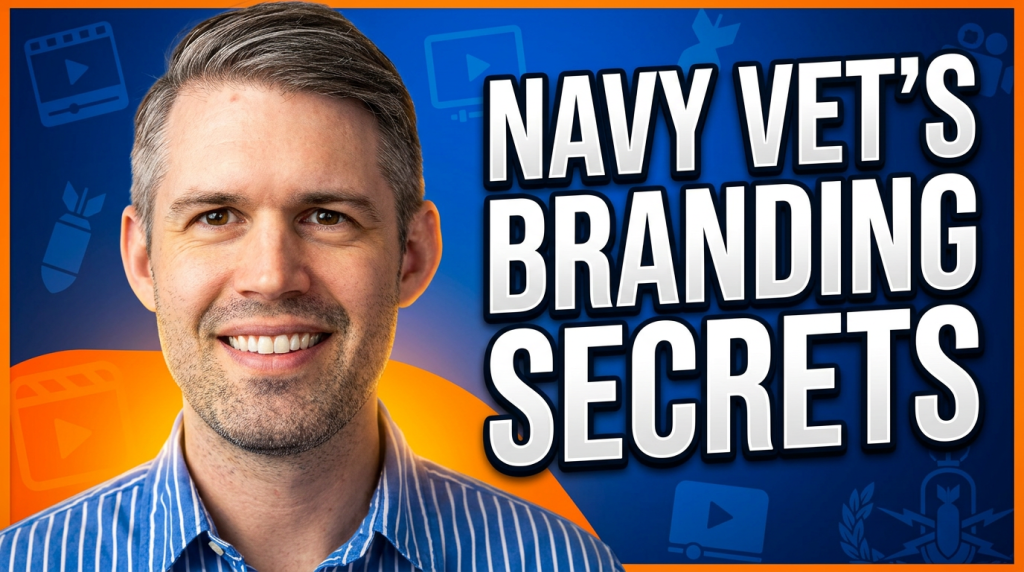

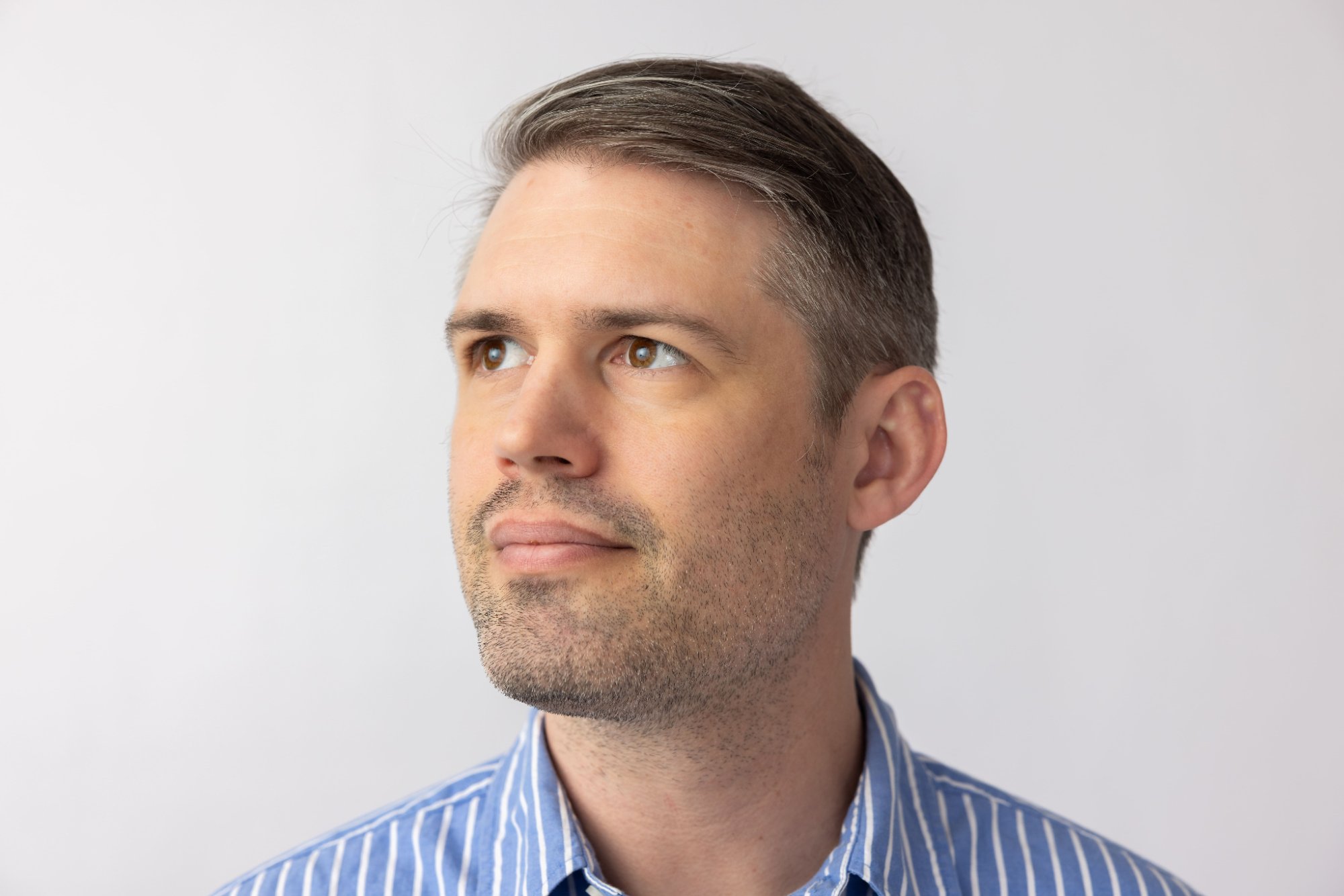
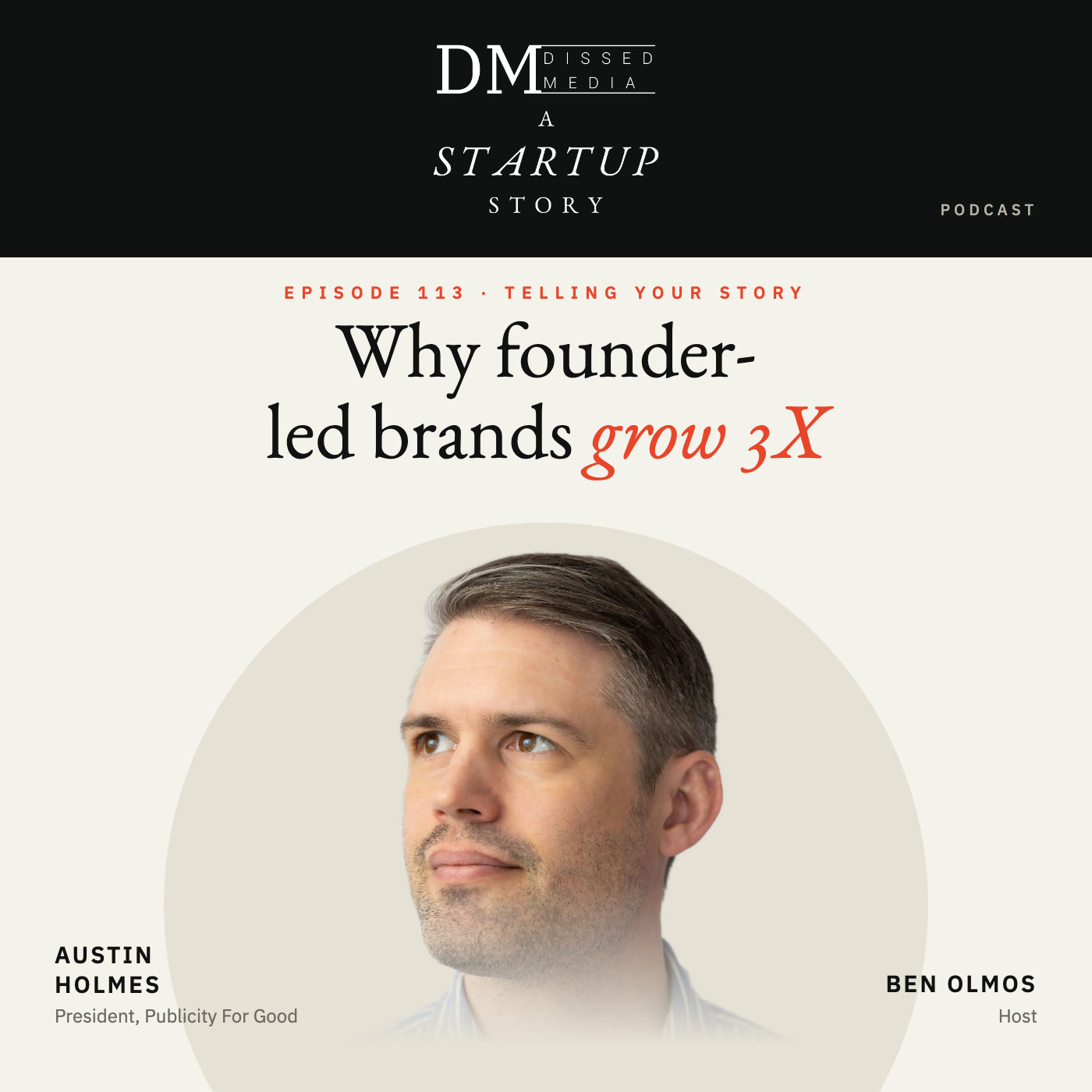
Founder-led content has become one of the more dependable ways for a small company to earn attention, largely because audiences tend to trust a person far more readily than they trust a logo. Few people have spent more time studying the mechanics of that trust than Austin Holmes, president of the PR agency Publicity for Good. Holmes began his career in the Navy Explosive Ordnance Disposal community, where staying clear and calm under pressure is part of the job. He has since carried that discipline into public relations, where his agency now helps purpose-driven brands put their message in front of the people who need to hear it. In episode 113 of DissedMedia: A Startup Story, he joined host Ben Olmos to talk about personal branding for entrepreneurs and PR for small business, along with the reasons a founder’s own history may be the most valuable piece of media a company owns.
What Bomb Disposal Teaches Founders About Risk
Most conversations about entrepreneurship celebrate the risk taker, and while Holmes readily admits that the average business owner is one, he tends to view the work of running a company as an exercise in avoiding mistakes. He says he learned that lesson in a threat environment where tactics were constantly adapting and attention to surroundings could make the difference between success and failure. He joked that everyone imagines bomb disposal as cutting the right wire. In practice the work requires an understanding of circuitry and voltage levels, in much the same way that “just go build a business” skips over the many technical details that determine whether a company survives. The pressure surrounding that kind of work functions like noise, and Holmes believes that a large part of leadership centers upon keeping that noise from consuming the people around you while still executing at a high level. Olmos described it as calculated risk, and Holmes agreed that the goal is to put time and resources behind things that are likely to work.
Holmes also borrowed a lesson from his training that he applies to consumer behavior and purchasing decisions, which is that people tend to think the same way, so the lesson drilled into him was to avoid the obvious and easy path. He compared the harder route to walking a minefield with no guarantee of reward. The encouraging part, he noted, is how rare it is to find an industry where nobody has made it through before. He describes himself as a lifelong student who has been studying other people’s mistakes since he started in business around the age of 19, so that he can find the path through the minefield before he has to walk it. Study has its limits, however, and he is quick to add that a founder who delays too long has a zero percent chance of getting across.
The Storytelling Advantage of a Purpose-Driven Brand
The name Publicity for Good says a great deal about the clients Holmes prefers to work with, and when Olmos asked how a purpose-driven brand shapes its messaging, referencing the emphasis on purpose over profit in Dan Pink’s book Drive, Holmes called purpose a secret advantage that is not especially secret. Stories driven by a purpose are the ones society pays attention to, and he pointed to Frodo’s quest to save the Shire as an example of a storyline so familiar that audiences already know how to follow it. The arc moves through the challenge and how it was overcome, followed by whatever came out of it. When a founder or a product carries that kind of story, the PR team has an easier job because the narrative arrives already framed. Extracting it can take real digging, and his team goes through its client roster every week looking for the stories that can connect to what is happening in the world.
Holmes was candid that some brands adopt a cause only for the publicity, and in his experience that tends to surface quickly. He defines authenticity as sharing a story that carries real meaning, and he has yet to meet a founder without one, since nine times out of ten the founder story is linked to the business anyway, either through an experience that led them down the path or simply through the desire to build something remarkable. His personal view is that making money is great and building a business is its own passion project, and if a company can also do some good in the world along the way, there seems to be little reason not to.
Getting Reluctant Founders to Tell Their Story
Olmos observed that the most successful founders he has interviewed rarely want to talk about themselves, preferring to talk about their company and their people, and he asked whether the best stories are also the hardest to pull out. Holmes said there is a balance, since some founders are outspoken and ready to share everything while others hold back. He counts himself in the second group, explaining that it took him several years to get past a reluctance to share that the military had drilled into him. The reframe that helped him was recognizing that telling his story has very little to do with him. When a founder stays quiet, they may be shortchanging their team members and the customers who could benefit from the product, because a company cannot help people who do not know it exists.
How Founder-Led Content Outperforms Faceless Brands
Because Olmos approaches his own business through numbers, he asked whether Holmes has been able to measure the difference founder-led content makes. Holmes said his agency’s own data is limited. Still, the pattern he sees across social and sales numbers is consistent: as content moves from generic to branded, whether the brand is a human being or a swoosh, the branded version tends to perform better. He believes generic, knowledge-only offerings such as faceless coaching programs may be among the first casualties of AI, since the information itself is now available in seconds. People continue to sign up in large numbers for personality-led programs because they want a specific person to help them, with Tony Robbins being perhaps the clearest example.
Holmes shared the figures he has seen across his own client work. He said personality-driven businesses his agency has worked with have tripled in a year, while a product-led brand might consider 25 percent growth an excellent year, assuming the logistics side can keep up. He views Alex Hormozi as an almost textbook case study. Holmes and his wife Heather happened to sit next to Hormozi at an event years before recognizing him on YouTube, and Holmes has followed Hormozi’s progression since around 2019 as the content side was built alongside the acquisitions side. He also pointed to Steven Bartlett of The Diary of a CEO, who by Holmes’s account spent roughly three years at about 20,000 followers before his growth took off, which Holmes treats as a lesson in consistency and in the analytical, test-heavy approach Bartlett’s team now applies. Holmes added that a personal brand can live entirely offline as well, since plenty of influential people build their presence through relationships and in-person rooms, and what matters most is reaching the right audience for the outcome you want.
Choosing the Right Opportunity Vehicle
A concept Holmes says he picked up from Hormozi, who attributes it to Warren Buffett, is the idea of opportunity vehicles. He admits he thinks about it almost every day: given your skills and what is happening in the world, which vehicle should you be in? He traced Hormozi’s path from a single gym to multiple gyms, then to training and licensing for gyms and later into other investments. To Holmes, it is an example of moving up through levels over a career. On AI, Holmes suggested that the largest sums of money are flowing well above the businesses that simply use the tools, into the model providers and the infrastructure, along with the financing behind it, even though those tiers demand resources and relationships most founders do not yet have. For someone starting out, he sees a franchise as a reasonable first vehicle because much of the risk has already been worked out. He also mentioned Brandon Dawson, who scaled a hearing aid business into a systems-driven model and now teaches other owners to build systems, as an example of how much perspective a founder can gain simply by being in those rooms.
Holmes also made the case for boring businesses, observing that the wealthiest people at the events and groups he attends often own air conditioning companies or construction outfits, along with the occasional medical device firm, businesses that rarely look flashy. These companies can be a safer bet for founders whose goal is generational wealth. Olmos noted that private equity has been buying up exactly these kinds of companies as aging owners find their children uninterested in taking over. Holmes, who says he recently wrote an article in the same print issue of Entrepreneur that featured Codie Sanchez, explained that PE firms see room to add value by modernizing operations, including whether a mom-and-pop business can be found through AI search. He shared a cautionary story about a friend in home services who turned down a solid offer, only to watch the buyers acquire his competitors and then his supply houses. The friend eventually sold for a fraction of the original number, and Holmes offered the story as a reminder that a founder who is not using every tool available, media included, may be leaving an opening for someone else.
PR for Small Business When the Gatekeepers Change
Olmos asked how the agency’s newer service, Signal Raptor, gives smaller teams access to a level of PR that used to require an expensive retainer. Holmes began by pushing back gently on the idea that gatekeeping has disappeared, explaining that a handful of companies once ran everything under a shared set of rules. While there are now many more ways to get a story in front of an audience, the higher-level opportunities still have gatekeepers, only different ones. A good story remains the starting point, and he believes a one-person shop can actually move faster than a large organization because it does not have to route every decision through layers of communication. Signal Raptor grew out of his agency’s frustration at hearing great stories on the phone every day from people without the resources to share them, combined with his strong disagreement with the way many voices were shut down over the past several years. He sees it as an opportunity vehicle shift for the business, moving from the five to ten clients a person can serve on the agency side toward helping thousands of founders lead with the story of their purpose. For founders thinking about how they communicate as they grow, our earlier conversation on startup communications with Joshua Altman covers related ground.
Both men have run into platform restrictions firsthand. Olmos recalled his Facebook page being shut down during COVID for discussing the topic on a livestream podcast, and he described how promoting episodes about finance or anything touching on elections can still get his ads throttled. Holmes said his agency lost a business account of roughly 5,000 followers on one platform simply for mentioning a client who had been flagged, which wiped out years of deliberate work overnight. He believes founders need to account for that possibility in their risk strategy. Olmos framed the answer as controlling your narrative, since telling your own story is the only real opportunity a founder has to shape how the public sees the brand. Holmes agreed, adding that his family’s motto is simply to do the right thing, while acknowledging that business can be a battlefield. He would like to see a thousand $100 million businesses built by leaders who push good business to the forefront, since he believes a broad base of independent companies carries more influence than a few concentrated ones.
Making Podcast Guesting Pay Off
When the conversation turned to podcast guesting, Holmes said everything starts with knowing what you want out of it. Some clients want to be on shows for different reasons and others resist the idea even though his team knows it will serve their broader strategy. His own show exists to give back to the next generation of veterans who are leaving the service and wondering whether entrepreneurship is for them, which he describes as practicing what he preaches. Whether a founder is building a show to attract clients or guesting on other people’s shows, he stresses making sure the audience is the right one, pointing to School of Hard Knocks as a brand that clearly knows its avatar, and then deciding what value you will create for that audience. Repetition is part of building trust, so it is fine to appear on many shows and repeat yourself. Clear messaging matters too, and he likes to describe this as selling the vacation, using a client’s scented car mat as an example of how the same product can sound forgettable or irresistible depending on how the story is framed. Our guide on how to get on podcasts with Josh Elledge and our piece on authority marketing through podcasting go deeper on the booking side of this strategy.
Holmes compares PR directly to sales, noting that with a few word changes, a media pitch could pass for a cold email. He encourages founders to structure their stories so that different personality types can find something in them, whether that means hard numbers for the analytical listener or a relational angle for someone who connects through people. He uses the DISC framework to think about this and believes founders often speak only to the dominant and influential types that tend to fill entrepreneurial circles, which may leave a large share of listeners behind. His closing advice on the subject was to get help, whether that means learning from free YouTube content and AI tools when the budget is tight or paying an expert to buy back your time once it is not.
The PESO Model as a Starting Framework
Before sharing how to reach him, Holmes offered one more framework, the PESO model of paid, earned, shared, and owned media, which much of the communications industry uses to organize its work; Holmes refers to it with social in place of shared. In his framing, paid media can be very effective at roughly a dollar in and two dollars out. Earned media asks for a dollar in again and again before it can return something like thirty, and social asks mostly for time until a possible hockey stick moment for those who stick with it. Owned media, such as the awards a company wins, stays with the business indefinitely. His recommendation is to choose the channel that aligns with your skills and your story, along with the audience you are trying to reach, and to start there. Founders who want help on the earned media side can find Holmes at publicityforgood.com, and smaller teams can explore the more accessible option at signalraptor.com.
Frequently Asked Questions About Founder-Led Content
What is founder-led content?
Founder-led content is marketing and media in which the company’s founder serves as the face and voice of the brand, sharing the story behind the business and the experiences that shaped it, so that audiences can connect with the real person behind the company.
Does founder-led content work for small businesses?
It can work especially well for small businesses, because a founder’s story often costs nothing to tell and tends to earn more trust than generic branded content. Austin Holmes says personality-driven businesses his agency has worked with have tripled in a year, compared with roughly 25 percent being a strong year for product-led brands, although results will vary by industry and consistency.
What is the PESO model in public relations?
The PESO model groups communications into four categories: paid media such as ads, earned media such as press coverage and podcast appearances, shared media such as social posts, and owned media such as a company’s website and the awards it wins. Holmes recommends picking the channel that fits your skills and story as well as your audience before trying to cover all four.
How should a founder prepare for a podcast interview?
Holmes suggests starting with a clear goal for the appearance and choosing shows whose audience matches the people you want to reach, then preparing talking points that frame your story in terms of the value it creates for listeners. He also encourages founders to accept that repeating the same core message across many shows is part of how trust gets built.
Watch the Full Episode
The full conversation with Austin Holmes covers his path from Navy bomb disposal to running a PR agency, along with his thinking on personal branding for entrepreneurs and the role founder-led content can play in growing a business.