
Side hustle ideas tend to arrive as lists of things other people are doing, which may be why so many of them never take hold; Bart Merrell, founder of The Side Hustle Samurai and author of Monetize Your Mindset, has built a career around a more personal starting point, a single question he asks whenever life hands him something, whether that something is good, bad or downright ugly: how can I monetize it? Bart says plainly that he asks the question far more often than he acts on it; however, the asking has become a reflex, and in Episode 111 of DissedMedia: A Startup Story he walked Ben Olmos through where that reflex has taken him, from a teenage DJ business through bungee towers in Japan, a dog training company and a music catalog on Spotify, all the way to an income stream that grew out of losing his lower leg.
Plan A Was the FBI
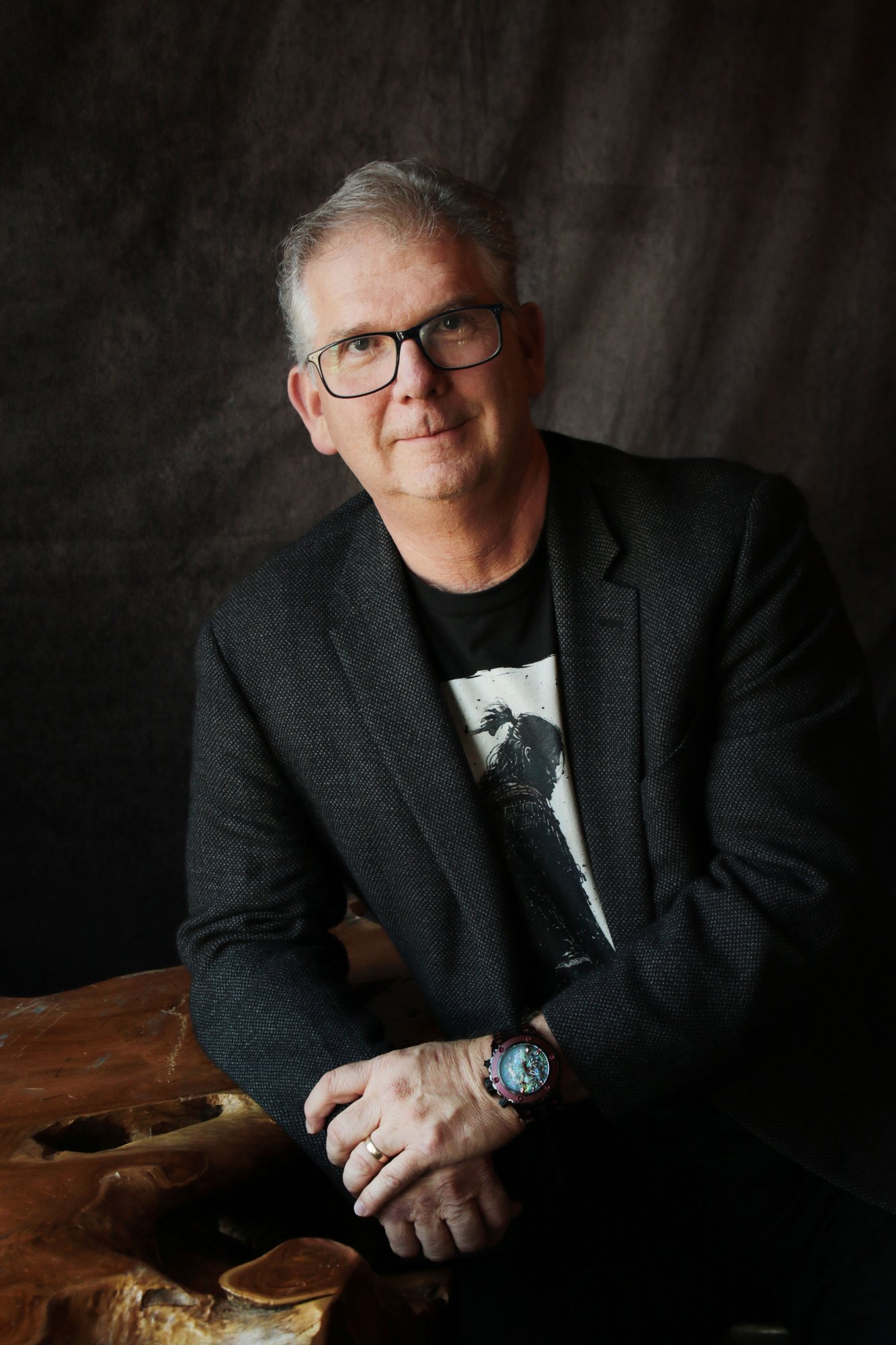
Bart’s dream, from about the age of 16, was to join the FBI and chase serial killers, and on the advice of a family friend who was an agent (along with his father), he studied accounting, which was said to be the easiest way through the bureau’s door. He found out quickly that he neither enjoyed accounting nor was especially good at it, so he treated it as a means to an end, and before his final quarter he went home to help on his father’s pig farm in southern New Mexico, partly to sharpen his Spanish because the FBI valued it. While he was there, with money in his pocket and nowhere to spend it, he followed friends in customs and border patrol, along with a few local police officers, into RK eye surgery, the procedure that came before LASIK; back at school, as the application process began, he learned that the surgery automatically disqualified him, since it was still considered experimental and the bureau did not want to invest heavily in an agent who might lose his sight.
He was, in his own word, devastated, because he had no interest in counting other people’s money, and he finished college working part time as a landscaper with no clear plan. A friend at a bungee tower manufacturer half jokingly asked whether he wanted to go back to Japan, where Bart had spent time and spoke the language fairly well, and Bart, a lifelong adrenaline junkie who had never actually bungee jumped, answered without joking that he did. Three months later he was on top of an eight-story tower in Japan pushing jumpers off the edge, and the following year he contracted with the Japanese company on five more towers and brought over the country’s first Sky Coaster, the giant swing found in amusement parks across the United States.
When Ben asked where that instinct came from, Bart credited his father, a pig farmer who seemingly always had his hands in several agricultural businesses at once and who taught mostly by example. At 15, in a small town where nobody was hiring teenage DJs, Bart rented the community center and hired an off-duty police officer for security, while his parents took money at the door and he spun the records, and he was soon clearing six or seven hundred dollars a night because no one else in town was putting on events; it is a story that may explain, better than any framework could, why he treats every setback as a question waiting for an answer.
The Unexpected One: Losing a Leg
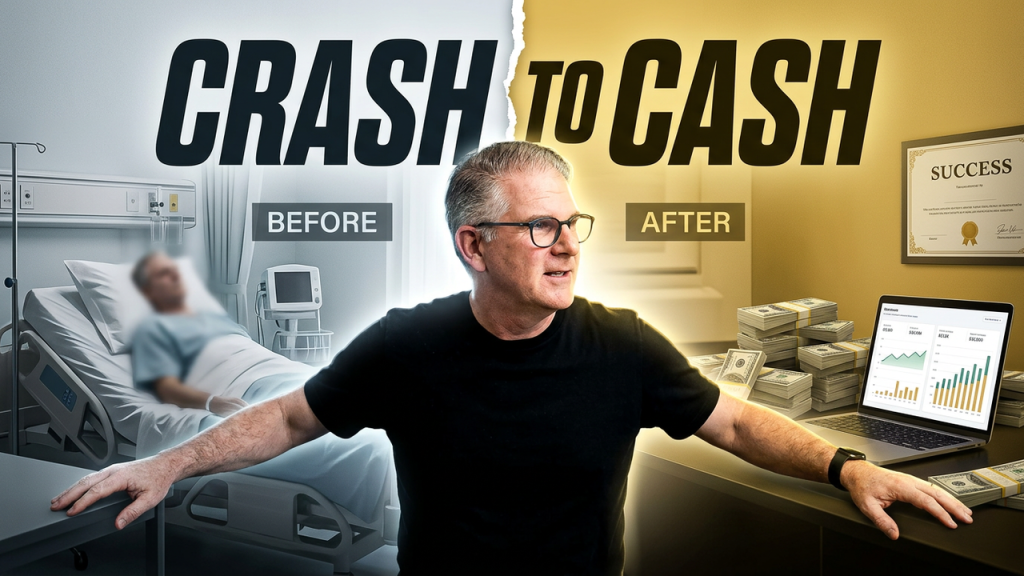
When Ben asked Bart about an opportunity he never saw coming, his answer was the amputation of his lower leg, which he learned would be necessary in about October of 2023. Once the shock wore off, and once he had worked through the questions anyone might ask about how much it would hurt, his mind went where it always goes; he did not like what was coming and could do nothing to stop it, so he started asking how it might be monetized, even though he had no idea what the answer would be beyond perhaps telling the story from a stage someday.
The answer arrived about six months after surgery, during an appointment with his prosthetist, Scott. Before choosing Scott, Bart had interviewed three other prosthetists, and one of them had offered something Scott did not: a person who had already been through it, someone a new patient could call to ask how bad the pain would get, or whether the bathroom and shower at home needed to change. Bart told Scott that he did not have a guy and that Bart would be his guy, and when Scott asked what he wanted, Bart said he had no interest in a real job and would rather be on retainer, with Scott sending him the phone numbers of new patients so he could call each one and help with whatever they needed.
Ben pointed out, with some amusement, that Bart had just described a medical appointment as an interview, and Bart agreed that this is simply how his mind works. His larger point, and perhaps the most useful one for anyone listening, is that he had already been asking the question before the surgery, so when the opening appeared in that exam room he recognized it; there is a good chance that someone who had never asked would have walked out of the same appointment with nothing more than a follow-up date.
Rex, and the High-Paying Job Trap
Bart’s dog training business began with Rex, a rescue Rottweiler who arrived at eight months old and ninety pounds, without any apparent understanding of the word no, and whose name was short for T. rex because of how mouthy he was; he never attacked Bart’s wife, but his rough play left her arms bruised, and Bart kept calling his friend Sean, a professional trainer, for advice. Around the fifth call, Sean told him that if he was not going to pay Sean to train the dog, he should enroll in Sean’s train-the-trainer program and learn to do it himself, so Bart paid for the course and spent two months there all day, every day, working hands-on with more than a hundred dogs. In his first year as a trainer he made close to $100,000, while his business partner, working very part time, brought in nearly $50,000, which put the new business at roughly $150,000 in its first year.
The timing turned out to be remarkable, since they started just before COVID, when people stuck at home bought dogs in large numbers and soon discovered that those dogs misbehaved. Bart worked 383 days in a row without a day off, and the streak ended only because he took about four weeks away for a knee replacement on his good leg; somewhere in that recovery he realized how much he liked having time to himself, and that he had built, in his words, a high-paying full-time job for a man who never wanted one. He restructured the business so that client dogs now arrive on the same day and go home on the same day, with a week to ten days off before the next group, and he still runs it today as a board-and-train service from his home, usually with two or three dogs at a time.
That experience shapes one of the more practical pieces of advice in the episode for anyone weighing side hustle ideas. Before starting one, Bart suggests asking whether you are about to create a high-paying job for yourself, or a business that demands more hands-on time than you actually want to give, and deciding honestly what you are willing to give up to get it. People often say they wish they were Bezos or Musk or Cuban or whichever billionaire happens to be in the news, and Bart’s response is to ask whether they would sleep on friends’ couches the way Mark Cuban did while building his first company; Ben added that Elon Musk has been known to sleep on the factory floor when he thinks it is necessary, which seems to make the same point from the other direction.
The Restaurant He Turned Down
Whenever Bart lands in Japan, the first place he goes is CoCo Ichibanya, the Japanese curry chain, and it is also the last place he eats before he leaves; the locations near the U.S. military bases are packed with Americans on Friday and Saturday nights, which convinced him the concept could work back home. A friend in Japan offered to fund the venture on terms most people would struggle to refuse, telling him (in Japanese, which Bart double-checked with other friends to be sure he had understood) that if they made money they would split it, and if they lost money, Bart should not worry about it. With what amounted to free money behind him, Bart came back to the States and did his homework, scouting locations and talking with restaurateurs, and he even turned his house into a test restaurant with five tables, serving guests and asking whether they liked the food and what they would pay for it.
The more he talked with people in the restaurant business, however, the clearer it became that a restaurant is hard work that rarely becomes hands-off until two or three years in, and Bart decided he would rather keep eating the curry than oversee making and serving it every day. He said no to free money on a venture that probably had a good chance of succeeding, because the trade it asked of him was one he did not want to make, and it may be one of the most useful stories in the whole conversation for anyone weighing an opportunity that looks good on paper.
Ben and Bart agreed that working hard is a separate question from working on something you chose. Bart admits he probably works more hours than the average nine-to-fiver, sometimes forcing himself to bed at two in the morning after a night of building with AI, once with a podcast booked for 7:30 the same morning, and when people ask about his hobbies he tends to answer that business is his hobby. Ben described the podcast and DissedMedia the same way, as the place his recreation budget goes instead of concerts or travel, with the added benefit that the cameras and software are business expenses; Bart, who studied accounting after all, added that a W-2 employee without a side business is very likely paying far more in taxes than necessary.
AI, Expertise and Monetize Your Mindset
A good part of the conversation centered upon AI, which many people seem to fear will take their jobs, and on the hunger for authenticity that tends to rise alongside it; Scott could easily have handed Bart’s fellow amputees a chatbot, and it would have answered their questions, though it would have lacked the human experience that made Bart’s calls valuable. Bart believes there has never been a better time to start something of your own, because anyone who learns to ask AI the right questions, without leaving it to fill gaps with assumptions, gains a capable business partner; in his view, the limiting factor in business used to be knowledge, and now that knowledge is at everyone’s fingertips, solopreneurs may build things they could not have built before. For those whose jobs AI has already taken or could take, his advice is direct, since he believes those jobs are not coming back, and he suggests digging into what you have lived through to find the one or two things, perhaps a few more, that you could turn into a stream of income.
Ben often reminds people that ten or fifteen years in an industry amounts to something like an MBA in applied knowledge, earned inside a company that is still in business and paying people, and Bart added that it is current knowledge too, which matters when the material in books ages so quickly. He shared a line from his friend Paul, the Positivity Psychologist, that to a first grader a third grader is an expert, to a third grader a sixth grader is, and so on up the line, meaning there is almost always someone a step behind you who could use what you know. Bart lives this himself in an unexpected place: he writes songs about his own experiences and has two AI alter egos, Mason Kane and Dana Call, who perform them through Suno, with about thirty songs on Spotify and four or five thousand streams so far. By his own math he would need something like ten million streams to make $30,000, so it is a small return; however, he was making the music for himself anyway, and putting it out there took very little extra effort.
The book itself began in a drug rehabilitation center, where Bart was volunteering to run a Toastmasters-style club that taught residents of a 90-day program to tell their stories. One woman, Jen, described how she believed her childhood was normal until she went to college and lived with roommates, because her family looked ordinary in public and the abuse and neglect happened only at home, and she had assumed every family worked the same way. Bart saw in her story a parallel to how people think about making money, since those who did not grow up around someone like his father may never see the opportunities he sees, and on the forty-minute drive home the phrase Monetize Your Mindset came to him; he bought the domain on GoDaddy that night without knowing what he would do with it. Around the same time he had seen an article, posted on Facebook by someone he swears was his sister (she denies it), about living on less than $28,000 a year, and his first reaction was that he would much rather read about making more. A speaking coach who later heard his story about acres of pig poop became the creative editor of the book, which Bart wrote page by page around 2016 and 2017, well before AI could have helped.
Financial Security for When Life Happens
For all the talk of monetizing, Bart is careful about what he is aiming for, and he describes his work as helping people create financial security by monetizing what they already know and do, so that they have resources in place for when life happens; he has no interest in promising anyone a path to becoming a millionaire. That focus came from a frightening call in the early 2000s, when his wife, who is Japanese and usually has her health checks done while visiting family in Japan, calmly told him that an initial test indicated cancer. His brother had died of cancer at 53, and Bart admits that his first thought was that he could lose his wife while his second, sadly, was that they could not afford it, because he could not simply drop everything and be at her side. The biopsy came back negative and the growth turned out to be precancerous, requiring surgery; however, the scare was the wake-up call that led him to build more streams of income, and when his leg was amputated years later, the financial worry was still present but far smaller, and he was back to training dogs in three and a half months against his own goal of four.
Ben shared that he has lived some version of this as well, both in the stretch of his life when buying groceries meant deciding what to put back, and a couple of years ago, when his father was dying of stage four stomach cancer and the people he worked with let him drive out to Colorado and work beside him for a couple of weeks without a second thought. People who have been caught without a safety net tend to plan differently afterward, and Ben pointed to Dave Ramsey and Ray Dalio, who both lost everything before building it back, as reminders that such moments reach people at every level.
Bart’s own picture of what money can do comes from a dinner theater he visited at 12 years old, where his uncle, who was in the show, told the family to order anything they wanted because it was on the house. Bart chose the prime rib, the most expensive item on the menu, over his conservative pig-farmer father’s objection, and he describes that night as both the start of a lifelong love of prime rib and his first experience of ordering from the left side of the menu, where the descriptions are, without looking at the prices on the right. He compares money to AI in that both are tools, and he points to Steve Jobs, whose wealth could not save his life once cancer arrived but did give him options for how he spent his final chapter; for Bart, that is the real value of having enough. Ben added that he often asks students and the people he coaches whether they want a job or a career, because doing meaningful work well tends to make you known as the person who does that thing, and that is often when opportunities to monetize start to appear, sometimes in places as unlikely as professional video gaming or the unboxing videos that some creators turn into real income.
Acres of Pig Poop
Bart closed with the story that first convinced his speaking coach he belonged on a stage. Many listeners will know Acres of Diamonds, the old parable of Ali Hafed, a Persian farmer who sold his land to search the world for diamonds and died broke and alone far from home, while the man who bought his farm found an uncut diamond in the brook where he watered his camel, and with it acres of diamonds in Ali Hafed’s own backyard. Bart’s family has its own version, which he calls Acres of Pig Poop, and it begins in the small southern New Mexico town where he grew up, a place with more pigs than people largely because of his father’s farm, which held something like 15,000 to 20,000 pigs at any time, including 2,000 sows producing about 2.5 litters a year at an average of 9.97 piglets per litter. All of that waste flowed into three man-made settling ponds, rotated year after year for decades.
In his mid-sixties, Bart’s father shut down the operation to go in search of his next acres of diamonds, and he died at 81 without finding them. Two years later the family sold the farm for $235,000, a fair price at the time, and about six months after the sale the new owners began leveling the old ponds, which had been dry on top for years; as a heavy grader crossed the middle of one, it broke through the crust and sank to its belly in black muck. The experts they called in offered, on the spot, $2,000 a ton for the material, which works out to a dollar a pound for 500 tons of old pig poop, and the farm the family had sold for $235,000 was suddenly worth more than a million dollars.
Bart’s question for everyone listening is where their own acres of diamonds might be, and whether they are on the verge of finding them or overlooking them the way Ali Hafed and his father did, perhaps because what is sitting right under their nose looks like a pile of pig poop. Ben admitted that, between this show and the new one DissedMedia has just launched, he is probably pulling up more lumps of coal than diamonds at the moment, and Bart, true to form, reminded him that coal is still worth something. Readers who want to take the idea further may find related pieces on the personality traits that turn a side hustle into full-time success and on building a low-overhead business as a solo founder useful companions.
Connect With Bart Merrell
Bart offers a free assessment called the $1K Blind Spot Assessment, a set of multiple choice questions that takes about 30 minutes and shows where you are doing well along with what may be sitting in your blind spot.
- Website: thesidehustlesamurai.com
- Free $1K Blind Spot Assessment: ai.bartmerrell.com/blindspot
- Monetize Your Mindset: thesidehustlesamurai.com/shop
- YouTube: @BartMerrell-SideHustleSamurai
- LinkedIn: Bart Merrell
- Instagram: @bartmerrell
- TikTok: @bart.merrell
- Facebook: bart.merrell
Frequently Asked Questions
How do you find side hustle ideas that fit you?
Bart Merrell suggests starting with what you already know and do, then asking of everything that crosses your path, good or bad, whether it could be monetized. Years of work experience, a hobby you would pursue anyway, or a hard thing you have lived through can each point toward an income stream someone else would value.
What should you consider before starting a side hustle?
Bart recommends asking whether the idea would create a high-paying job you do not want, or a business that needs more hands-on time than you are willing to give. Deciding honestly what you would give up to get it, the way he did when he turned down a fully funded restaurant, may save years of work on the wrong thing.
What is the Acres of Pig Poop story?
It is Bart’s family version of the Acres of Diamonds parable. His father closed the family pig farm and sold it for $235,000, and months later the new owners found that the old settling ponds held 500 tons of material experts would buy at $2,000 a ton, making the farm worth more than a million dollars.
Who is Bart Merrell?
Bart Merrell is the founder of The Side Hustle Samurai, a keynote speaker, a dog trainer and the author of Monetize Your Mindset. He helps people create financial security by identifying their ideal side hustle and monetizing what they already know and do.
Episode 111 is available now wherever you listen to podcasts. Watch the full conversation on the DissedMedia YouTube channel at @DissedMedia and subscribe to help us reach 100,000 subscribers by the end of 2026.
More at dissedmedia.com, rostr.studio, dailypitch.news, and benolmos.com.