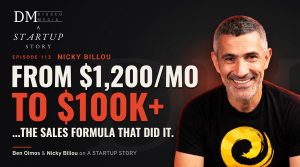

Learning how to sell without being pushy may be the single skill that separates a talented coach, consultant or creative who stays stuck from one who breaks through, and Nicky Billou has spent more than a decade helping people make that shift by reframing sales from a dirty word into a form of service. Nicky is co-founder of eCircle Academy, host of The Thought Leader Revolution and The Sovereign Man Podcast, and the organizer of business mastermind dinners in Toronto; as Ben Olmos noted in his introduction, he has written 11 books, two of which became New York Times bestsellers, and has worked with clients who added seven figures to their businesses. In Episode 112 of DissedMedia: A Startup Story, Nicky traced that work back to his father, and he made a case for selling that left Ben with a number he was not expecting to hear about his own business.

From Iran to the Free West
Nicky was 11 years old and living in Iran, as part of a Christian family, when the government of the Shah was overthrown and gun battles broke out in the streets near his home; one day a bottle filled with gasoline and topped with a burning rag crashed through the family’s living room window and landed next to his feet, and his father grabbed the Molotov cocktail, pulled out the burning wick and poured the gasoline away. That was the moment his parents decided Iran was no place to raise a Christian family, and they left behind everything and everyone they knew to bring Nicky and his two brothers to Canada. At 11 he had no wish to leave his home or his friends; however, as the years went on he came to see what his parents had sacrificed, and he chose to repay that gift by becoming an entrepreneur and helping other entrepreneurs, whom he describes as society’s great heroes because they dare to dream and make those dreams real.
His father, Napoleon, was in Nicky’s words the greatest man he ever knew, someone who would clear his calendar to call his friends until a person looking for work had a job, and who would sit with anyone starting a business to offer advice along with access to capital and clients. When people in the community needed a thousand, five thousand or ten thousand dollars to buy a house or a car, they went to Napoleon, and years later, when they came back to repay him, he would ask whether they really thought it had been a loan, telling them it had been a gift and that the way to repay it was to find someone as badly off as they had once been and give the money to them. Nicky credits his father’s faith for that generosity, along with the simple fact that he was successful enough to afford it, and he says he wanted to grow into exactly that kind of man; because he grew up in a business family, he found he could help people who were excellent at their craft and frightened of selling, often doubling or tripling their results, and in some cases improving them tenfold.
Narrow Your Focus: The Trainer Who Found His People
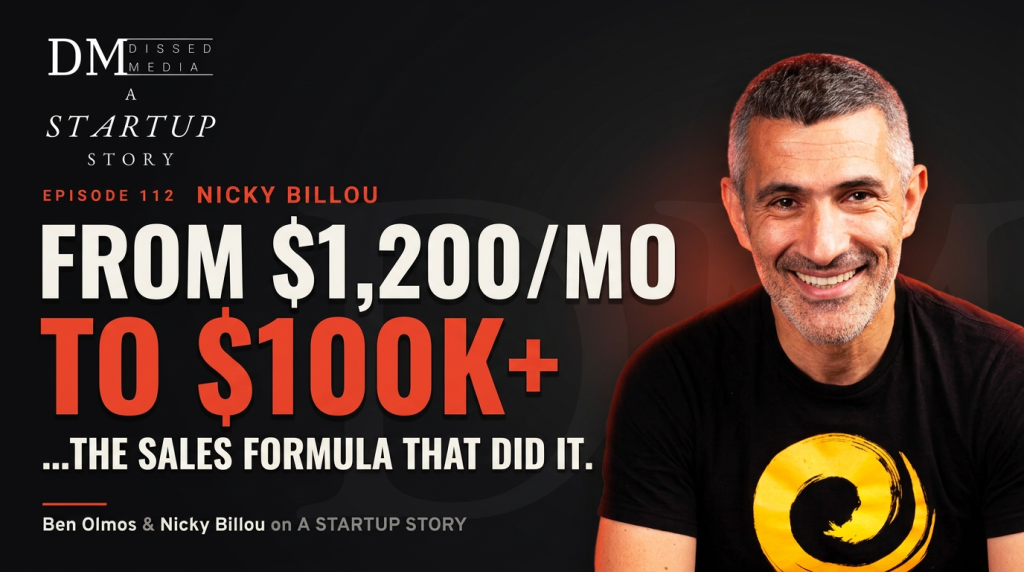
When Ben asked how Nicky decides whom to invest in, he answered with the story of Dan, a 25-year-old personal trainer in Toronto who had about seven clients at $25 a session and was making roughly $1,200 in a good month, which is very little in a city Nicky calls the New York of Canada. Dan believed a trainer could help anyone with any fitness goal, and Nicky told him that was exactly the problem, so Dan narrowed his focus to doctors, because his father was a doctor and doctors make a lot of money, and when that produced a client or two he narrowed it further to cardiologists, since they make even more, and landed none at all. The turn came when Dan began training a Paralympian who had lost a leg in a childhood accident and who went on to win medals, including gold, at major international competitions; Dan returned to Nicky, apologized for chasing the money, and said that what he really wanted was to help people with missing limbs.
Within six weeks, by Nicky’s account, Dan had signed up 400 clients through word of mouth alone, without ads or social media posting, and had gone from about $1,200 a month to more than $100,000 a month. Nicky’s explanation centers upon the message more than any tactic, since a person who has lost a limb may well feel resentful about the hand life has dealt them, and a trainer who effectively tells them that he sees them and will prove they are as capable as anyone else is offering something far more meaningful than a workout. Ben, who often reminds listeners that overnight success is rare and pointed to the idea Malcolm Gladwell popularized in Outliers, asked how long it had really taken, and Nicky admitted that Dan had been struggling for years before they met, was not very coachable at first, and went through about six months of no results at all before he finally followed the advice.
Who Gets on Nicky’s Calendar
Because his time is limited, Nicky screens everyone who wants to work with him through a booking link at eCircle Academy that pairs a calendar with an application form, and anyone who skips the form does not get the meeting, since in his view they have already shown they will not respect his process. For those who do fill it out, he looks for at least three years of experience in the world of business, a genuine wish to be helped from the kind of person who walks into a dealership ready to buy the car, and a description of the problem that strikes him as interesting and within his ability to solve; if all of that lines up, he keeps the appointment. He also meets people through his business mastermind dinners, a lower-cost entry point at $125 with the meal included, and when he enjoys the time he spends with someone there, he may offer a call afterward.
Dinners, Not Pitch Fests
Ben has written before about mastermind groups and how valuable a circle of fellow owners can be, and he raised a frustration many entrepreneurs seem to share, that some of these gatherings turn into sales sessions where attendees mostly hunt for leads. Nicky was clear that he has no problem with members doing business with each other; however, he does not tolerate pitching in the group’s WhatsApp chat, which exists for introductions, resources and wins, and anyone who wants a sales conversation is expected to call the other person or meet them one on one. The dinners themselves are built around connection, with pods of six to eight people bringing a current issue to the table for feedback, usually a speaker, and sometimes a sponsor who is allowed a short pitch because the sponsor is helping to pay for the meal.
He was equally candid that his group exists for business, since he meets business people in order to do business, and anyone who expects a purely social evening may be happier elsewhere; the aim is to build the relationships and trust that allow four-, five-, six- and even seven- or eight-figure deals to happen over time. Readers who want more on that relationship-first approach may find the earlier conversation on how to network on LinkedIn without cold pitching a useful companion.
Listen Mode and How to Sell Without Being Pushy
When Ben described people who try to turn him into a client the moment they meet, Nicky called them poor business people and poor salespeople, and he used their own conversation to show how he would handle it differently. After the recording, he said, he would ask Ben about his business beyond the podcast and simply listen, and only if something he heard suggested he could help would he propose a follow-up, which would itself be mostly questions about Ben’s biggest challenges. He calls this listen mode, and he believes it is the only way business ought to happen; if the listening suggests he has nothing of value to offer, he thanks the person for their time, and if it suggests he can help, he says so politely and directly and asks whether they agree, ending the meeting if they do not.
Pitching someone in the first minutes of meeting them, in Nicky’s view, is about as sensible as trying to kiss a stranger at church, and Ben summed it up as a courting process. Nicky added a story from a Robin Sharma event, where he told a man in line that he was exactly the kind of person Nicky could help and took his number; the man privately assumed Nicky was a slick salesman until he watched him meet a teacher a few minutes later and simply wish him well without any pitch, and that restraint is what convinced him, years before he told Nicky about it, to become a client.
Charlatan Marketers
Ben asked how people can tell someone who genuinely cares about helping from those who sell a cheap bill of goods and then brag about it online, and Nicky named that group charlatan marketers, people who are wonderful at selling the sizzle and terrible at delivering the steak. The trouble, as he sees it, is that good people who are nervous about selling often fall prey to them, because charlatans have no hesitation about putting themselves out there and are skilled at hitting pain points, whether or not they ever deliver. He admitted there is no clear test for spotting one, and he described a well-known figure in the Toronto events and personal development scene who cancelled on him minutes before a meeting twice, with no real explanation; Nicky took that as a sign the man cared mostly about money, and years later the same man took sponsors’ money for an event and, by Nicky’s account, delivered nothing for them.
Nicky was just as direct about his own motives, explaining that he is a businessman who wants to do business and builds relationships that may lead to it, and that at this stage of his company his family relies on him to earn a living. Ben agreed that a business needs revenue to survive and that every perk of running one comes from its profitability, and he shared his own warning sign, which is flattery; when someone starts piling on compliments about how brilliant his work is and how it should be blowing up, his radar tends to go up.
Nicky’s Superpower
Asked what he brings that most others do not, Nicky returned to his father, saying he believes in people, often more than they believe in themselves, and that some people who have lost faith in themselves mostly need someone to believe in them. His clients tend to be coaches, consultants, experts and creatives who are very good at their work and have hit a plateau they cannot get past, often because they will not admit that they are weak at selling and that selling is what stands between them and the next level. He helps them face that, and then helps them get good at selling in a way that feels right to them, which he defines as honest, face-to-face conversations with buyers that end with a request for a significant piece of business; he is openly skeptical that posting on social media every day, or paying for ads that do not work, deserves to be called selling at all. When Ben asked about specialized techniques, Nicky said there are none; there is a structure, but about 95 percent of the work is a decision to become excellent at selling, made by someone who genuinely means it.
Rate Yourself as a Salesperson, 1 to 10
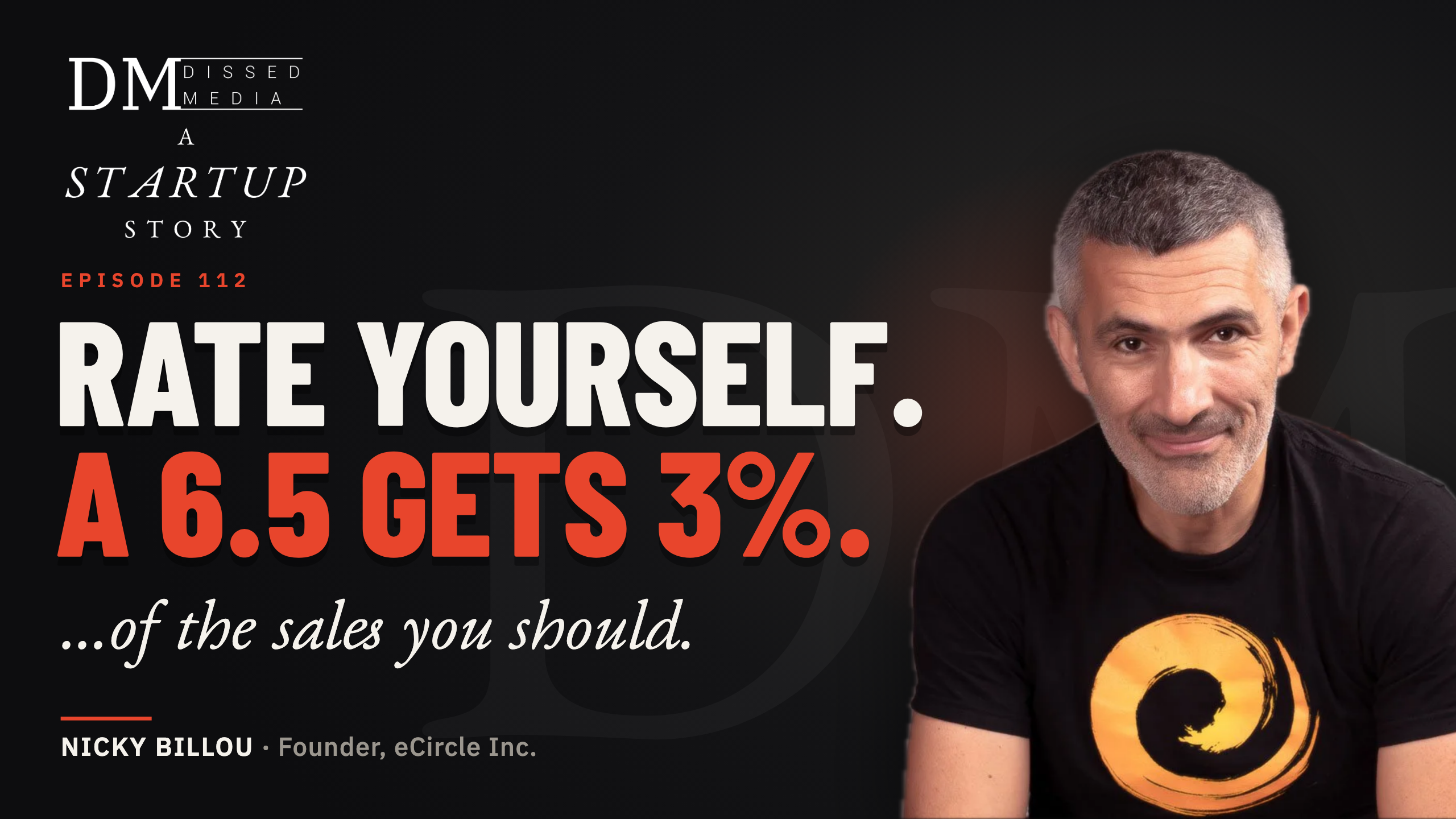
To make the point, Nicky asked Ben to rate himself honestly as a salesperson on a scale of one to ten, and Ben, after noting that it depends on what he is selling, settled on six and a half. Nicky’s reply was that a six and a half captures roughly three percent of the sales a person should be getting from buyers who are a perfect fit, that a nine and a half captures about 60 percent, that a full commitment at ten captures them all, and that anything below a nine falls under 20 percent; he calls this the steep effort to benefit ratio. In his view, a business owner’s first job is to become a ten out of ten at selling, and someone unwilling to do that may be better off working for a person who will, since the alternative is often years of barely making it, with the stress on a family’s sense of security that tends to come with it.
From Free to $10,000: Coaching Should Be Uncomfortable
Nicky believes that a coach whose clients see him as a friend and feel happy with how he treats them is failing them, because the job is to make people uncomfortable enough with where they are that they commit to getting somewhere better. He told the story of Lance, a real estate investor in Texas with a gift for buying RV parks and making them profitable, who had been coaching people for free and paid Nicky $11,000 for three months of help building a paid program. Together they created an eight-week program, and when Lance suggested charging about $600, Nicky told him $2,500, which Lance was sure no one would pay; he then sold it to ten people, stalled, and went through the same conversation again at $5,000, where he sold eight more, before the price rose to $8,000 and finally to $10,000, which is what he charges today. Lance, by Nicky’s telling, has days when he curses Nicky’s name to his wife and days, after four or five sales, when he praises it, and Nicky says that is how it should be, since his goal inside a coaching relationship is for clients to succeed more than for them to like him.
Fire and Ice
Ben was candid that he is a different case, describing himself as more purpose than profit driven after years on the hamster wheel; he is careful about return on investment and knows that love does not pay the bills, though he tends to respond to a slow stretch by asking how to retool and improve the work more than by counting what it has failed to earn. He gave himself the six and a half because he is stronger on the operations side than in sales, and he recalled being asked point blank, long ago, what he was selling with the podcast, a question it took him a couple of months to answer. Nicky replied that he does not work with money-first people either, and he explained that his business runs on a pairing of fire and ice, with Nicky as the one who pushes clients to get to work and his partner as the one who nurtures them and handles the one-on-one coaching. Both men agreed that some people need a firm push and someone to hold them accountable, and Nicky was clear that his approach suits people who are unhappy with their current level of sales and impact and want to reach and help more people; for anyone else, he says, it is probably not a good fit. For a broader look at how authority and visibility support that kind of selling, the site’s guide to what thought leadership is and how to build it covers related ground.
Connect With Nicky Billou
The best way to start working with Nicky is to book a time at eCircle Academy and fill out the intake form, the same process he described in the episode.
- Book a call and fill out the intake form: ecircleacademy.com/appointment
- eCircle Academy: ecircleacademy.com
- Website: nickybillou.com
- The Thought Leader Revolution: thethoughtleaderrevolution.com
- The Sovereign Man Podcast: sovereignman.ca
Frequently Asked Questions
How do you sell without being pushy?
Nicky Billou recommends what he calls listen mode: learn about the other person’s business and challenges first, suggest a follow-up only if you hear something you can genuinely help with, and then ask directly whether they agree. If they do not, the conversation ends there, which tends to build more trust than any pitch.
What is the steep effort to benefit ratio?
It is Nicky’s term for how sharply results fall as selling skill drops. By his estimate, a salesperson who rates themselves six and a half out of ten captures about three percent of the sales they should be getting, a nine and a half captures about 60 percent, and only a full commitment at ten captures them all.
How should a mastermind group handle pitching?
In Nicky’s groups, members are free to do business with each other, but pitching in the group chat is not allowed and sales conversations happen one on one. The dinners focus on small pods that give feedback on each member’s current issue, with a speaker and occasionally a sponsor who may give a short pitch.
Who is Nicky Billou?
Nicky Billou is co-founder of eCircle Academy, host of The Thought Leader Revolution and The Sovereign Man Podcast, and an author of 11 books. He helps coaches, consultants, experts and creatives become confident at selling, and he runs business mastermind dinners in Toronto.
Episode 112 is available now wherever you listen to podcasts. Watch the full conversation on the DissedMedia YouTube channel at @DissedMedia and subscribe to help us reach 100,000 subscribers by the end of 2026.
More at dissedmedia.com, rostr.studio, dailypitch.news, and benolmos.com.