

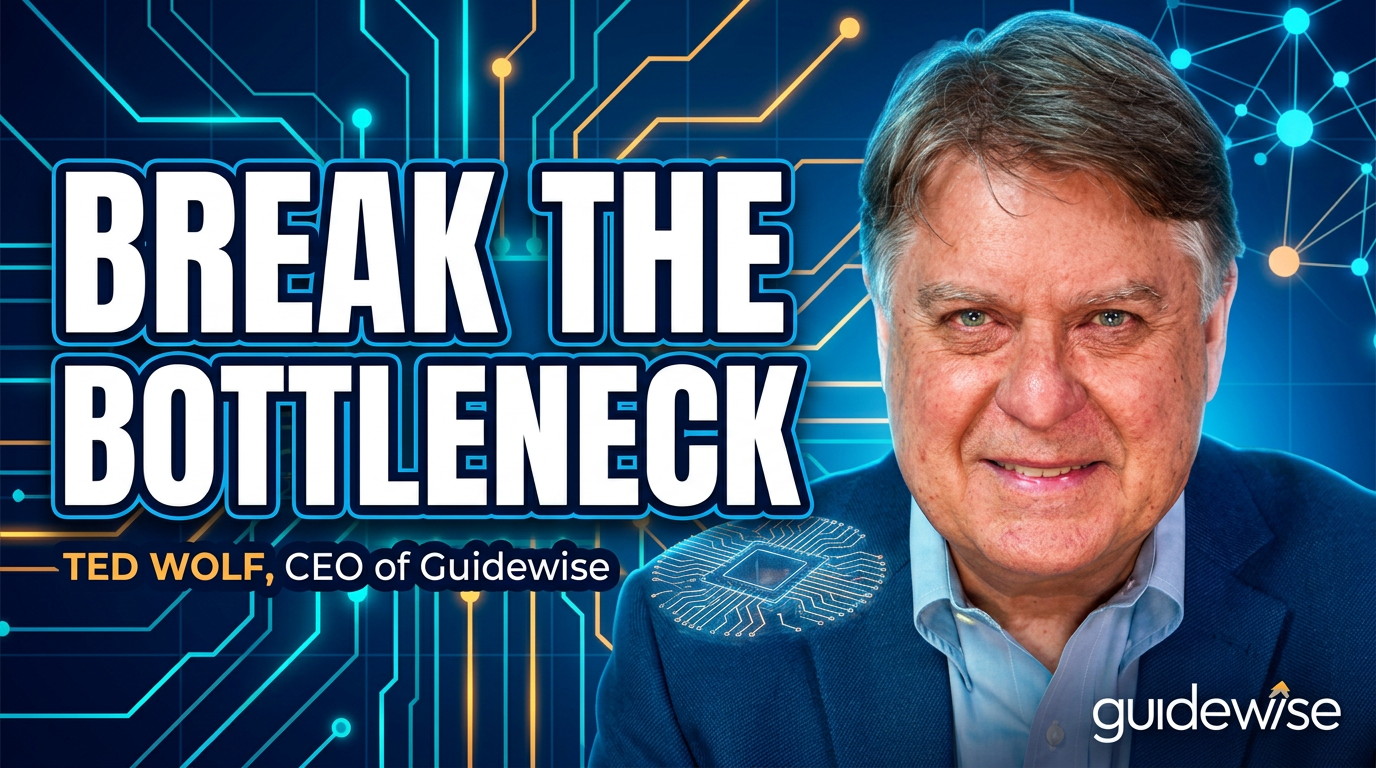
Knowing how to sell your business at the valuation you want may depend, according to Ted Wolf, upon showing a buyer that the company can operate and keep improving without its owner making every decision. He believes AI agents for business have become one of the most direct ways to prove that kind of transferability in the two to three years before a sale. Ted co-founded GuideWise, an AI consulting firm, with his son. He is also the author of The Intelligent Business Equation, a story-driven book that follows a business owner through the process of preparing her company for acquisition. In Episode 108 of DissedMedia: A Startup Story, he joined Ben Olmos to talk through the wave of owners preparing to exit and the role AI may now play in how buyers and lenders assess a company, along with the five closes he believes an owner needs in place before going to market.
From $1,000 and Two Employees to a Public Company Acquisition
Ted’s path into the questions he now answers for other owners began years ago at IBM, where he and his brother were both working when they decided to leave and start a technical consulting and IT staffing company with two employees, themselves, and a combined $1,000. Because they had no outside investors and little equity behind them, they went looking for a $10,000 line of credit and were turned down by nine of the ten banks they approached. The tenth, which Ted describes as the most conservative of the group and the one they least expected to say yes, approved the line on the spot. The brothers kept that bank as their primary lender for the life of the company without ever shopping the account. Ted tends to tell that story as a reminder that outcomes are hard to predict and that persistence in knocking on doors can matter as much as any plan. The company eventually grew to roughly 650 billable technical professionals across the United States, supported by somewhere between 75 and 100 recruiters, salespeople, and administrative staff. Ted estimates that it was generating in excess of $125 million in today’s dollars when it was acquired by a publicly traded company. He credits the many mistakes made along the way, and the lessons drawn from each of them, with shaping much of what he has done since.
How Executive Coaching Led Ted to GuideWise

After the sale, Ted moved into executive coaching, where he found that he could often bring a CEO and the senior leadership team along on where the market was heading while the middle of the organization struggled to follow. Communication, in his view, was failing to travel from the top of the company to the bottom quickly enough, which left firms slow to act on opportunities they had already recognized. That observation led him into a deeper study of how people adopt change, an area where he cites a failure rate of roughly 70%. His conclusion was that much of what leaders call resistance is a natural response to uncertainty, the reaction of someone who does not yet understand what a change will mean for them personally. Ted also came to believe that leadership starts from within, since a manager who has never learned to process conflict will seemingly have a hard time guiding a team through it. Conflict, he argues, now shows up inside organizations daily as technology and business shift faster than people can comfortably absorb.
GuideWise grew out of a conversation with his son, who had come home from New York after working in technology consulting at Deloitte and suggested that the two of them combine Ted’s business experience with the technical side. The idea took shape just before COVID, and when generative AI arrived publicly a few years later, the opportunity became, in Ted’s word, staggering. The firm now focuses upon helping organizations build what Ted calls an intelligent business, one that uses AI to raise its valuation whether the owner eventually intends to sell or to hand the company to a successor. That depth of bench, he believes, is what makes either outcome possible.
The Silver Tsunami and How to Sell Your Business in a Crowded Market
The silver tsunami refers to the large number of business owners in their 50s and 60s whose net worth is largely locked inside the companies they built, and who will at some point need to convert that equity into personal wealth through a sale or some other kind of transition. Ted estimates that as many as 10 million mid-sized businesses may need to change hands over the next seven years. Because he sees buyer demand, particularly from private equity, holding roughly steady from one year to the next, the result may be a market in which supply rises faster than the appetite to acquire. In that environment, he believes an owner hoping to be acquired faces something close to a 30% chance of a successful sale, which makes the question of how to sell your business a matter of differentiation as much as timing. Ted also notes that many banks, including SBA lenders, have begun to ask what a company plans to do with AI before extending credit. It is not yet a hard requirement as he describes it; however, lenders appear concerned that a business without a credible AI plan may be overtaken by a competitor within two to three years, which would put repayment at risk.
Ben framed the stakes in practical terms during the conversation, pointing to the local plumber or electrician who has spent 20 or 30 years building a trusted brand in their area, has no family member interested in taking over, and now simply wants to cash out. Owners in that position who are exploring the mechanics of a sale may find the U.S. Small Business Administration’s guide to closing or selling a business a useful starting point alongside the strategic questions Ted raises. The generational shift in succession planning covered previously on The Daily Pitch offers additional context on why so many of these transitions are arriving at once.
Transferability and the Runway Before a Sale
Of everything Ted shared, his emphasis on transferability may be the most useful idea for owners, since buyers evaluating a company tend to ask whether it is systems driven, meaning whether the business would continue functioning if the owner or several key employees walked out the door. A company that folds without those people seemingly takes a hit on its multiple. Ted argues that a company without AI in its operations will increasingly take a similar hit, because acquirers want to see that the business can adapt and compound its own capabilities after the sale closes. He compares AI implementation favorably with ERP rollouts, which he says succeed only about 30% of the time, and suggests that AI, done correctly, is considerably easier to put in place. The qualifier matters, since he is equally clear that AI implemented poorly will do little for valuation.
Because buyers will look closely at the quality of earnings exercise and at how EBITDA holds up under scrutiny, Ted believes owners need a runway of two to three years to prove that the business performs the way they say it does. That means the right time to start thinking about how to sell your business is well before a buyer calls. Profit, in his framing, is one piece of what an acquirer looks for; however, it is far from the whole picture. An owner who assumes strong earnings alone will carry a sale may be surprised by how quickly a buyer uncovers the real valuation. Ral West made a similar case in his conversation about how to build a business that runs without you, drawing on his own experience with systems and delegation.
The Leapfrog Moment and the Intelligent Business Flywheel
Ted sees a wide learning gap between what AI can now do inside a company and how most people are using it. Many professionals, he suggests, believe they have adopted AI because they write better emails or build presentations faster with it, while much of what the technology can do inside operations goes unexplored. He pointed to an MIT study suggesting that a large majority of AI pilot agents fail. He attributed those failures largely to pilots that were never connected to a business objective, which is consistent with his view that handing AI to a few high performers and telling them to experiment tends to produce scattered results. What he expects over the coming year is a leapfrog moment, a period in which more companies begin reporting significant bottom-line results from AI and competitors who have not prepared find themselves overtaken, quite possibly by smaller firms that nobody saw coming.
The mechanism he describes is a flywheel, where the first agents a company deploys produce returns that fund the next phase of agents and assistants, and where AI helps people in the business become more capable while those people in turn make the agents more effective. The result, as he sees it, is compounding intelligence across the organization over time. Ted noted that what took him and his brother 18 years to build might be possible in seven or eight with AI. He described the companies that get this right as benevolent predators, firms that borrow some of private equity’s discipline around building value while extending that value to employees and customers as well. Rob Broadhead made a related point in his discussion of AI implementation challenges, where he argued that weak business processes tend to be exposed quickly once AI is introduced.
Lessons From the Dot-Com Era for Today’s AI Valuations
Ben raised the comparison many observers are now making between current AI valuations and the dot-com boom that preceded the bust of the early 2000s, and Ted, who lived through both, answered with a measure of optimism grounded in history. He recalled buying early shares of Google at around $60 and watching many investors sell during the stock’s early stumbles. He also pointed to Apple’s recovery after Steve Jobs returned, arguing that the companies that endured were the ones with a strong value proposition they could actually deliver for clients. In his reading, each prior technology wave, from the arrival of computers in accounting departments through the rise of the commercial internet, rewarded the businesses that took the time to apply the technology to a real business case. He expects AI to follow a similar pattern with plenty of volatility along the way.
Ted is less certain which AI companies will lead in the long run, and he allows that the eventual winners may not yet exist; however, he believes the next wave of wealth creation may come from professional services firms and manufacturers that implement AI properly and build foundations that competitors will find difficult to match. He also acknowledged the need for compliance and guidelines around how AI is used, drawing a comparison to the harm social media caused many young people, and expressed hope that the industry can avoid repeating those mistakes as adoption spreads.
The Five Closes in The Intelligent Business Equation
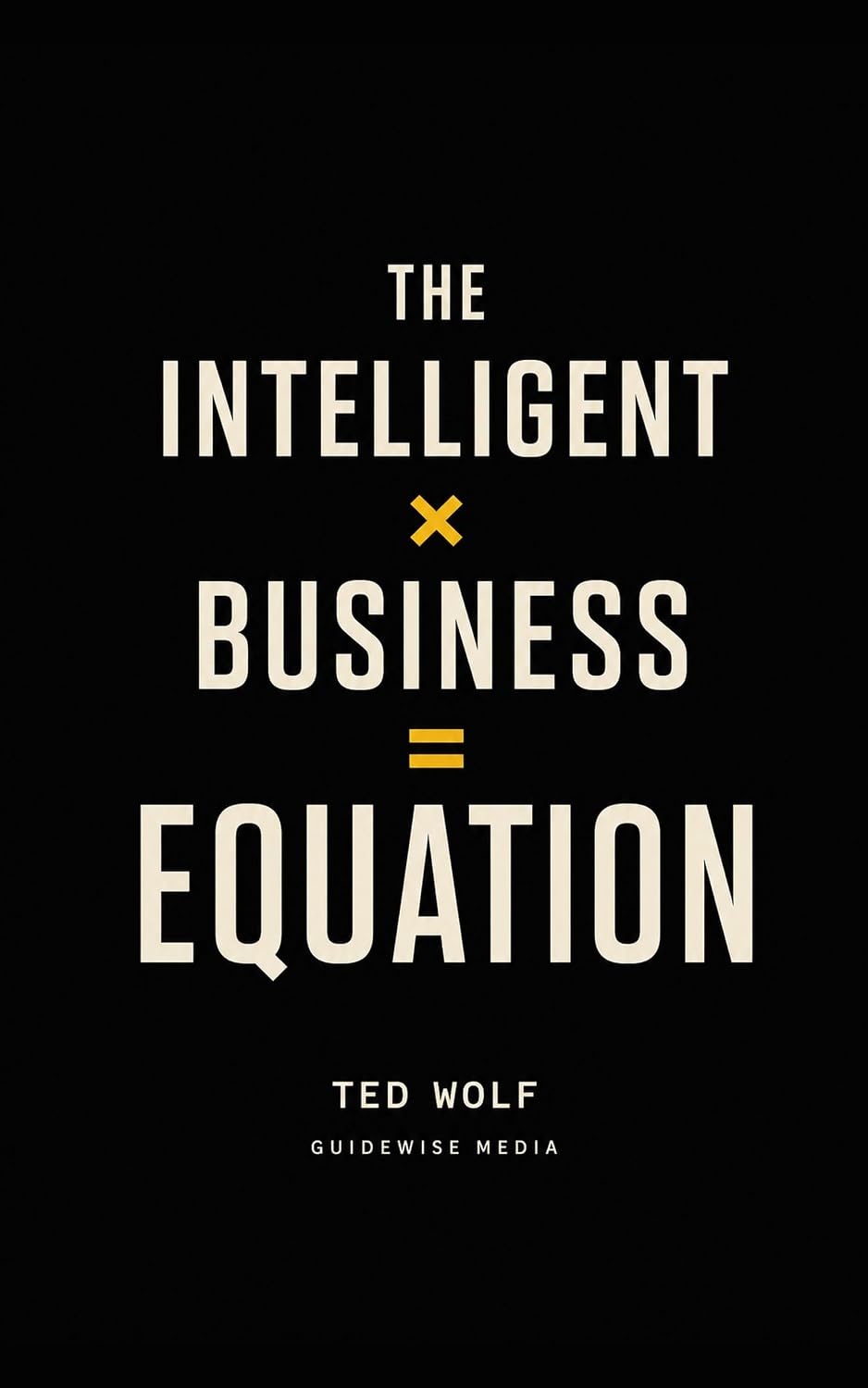
Ted’s book takes the form of a story, following a business owner who never intended to sell until private equity firms started calling, and whose first meeting with a buyer reveals, within an hour or so, how much less her company may be worth than she had assumed. It is a short scene, and it sets up everything that follows. The remainder of the book walks her through what Ted calls the five closes, a term borrowed from the reconciliation that happens when the books are closed each month. The first close centers upon the numbers, which means knowing EBITDA well enough to manage by it and identifying the income that guarantees it through a quality of earnings exercise. Systems form the second close, removing the kind of people dependence that shows up when a single employee is known as the fixer who repairs the books at month-end without anyone else understanding why, a dependence Ted says will reduce valuation almost immediately.
Implementing AI is the third close, while the fourth, which he calls the context close, involves orchestrating AI across the enterprise so that every area of the business works from the same numbers and terminology. That shared context allows the company to learn something from each new order and become a little smarter each day. Leadership makes up the fifth close, built on the idea that leaders must learn to lead themselves first and to process fear and doubt so they can communicate the right context to their teams. Ted treats these closes as multipliers. Because any one of them falling to zero cancels out the others, he argues that an owner cannot compensate for a weak leadership team with strong numbers. The story ends with the owner leading a platform company that private equity is eager to acquire, and Ben compared the format to The Five Dysfunctions of a Team, which uses a similar fable structure to make management ideas easier to absorb.
Planning the Last Mile Before You Need It
Near the end of the conversation, Ted turned the question back on Ben, who has said he has no plans to retire, and challenged him to think about what Ted calls the last mile of the entrepreneurial journey, the endgame that determines whether a company continues after its founder steps back. Ted describes preparing for that stage as something close to restarting the business, since it requires a new round of preparation to make sure the company can live on after the owner has done everything they want to do with it. His advice is to avoid waiting, because something in an owner’s personal life or health may force a pivot sooner than expected, and because the pace of change appears to be accelerating, the ten-year horizon owners once assumed may no longer hold.
Ben shared how he has built AI into his own teaching, structuring assignments around better prompting so that students enter the workforce able to use these tools well. Ted connected that approach to his broader view that AI may push people toward stronger critical thinking and emotional intelligence, echoing the old instruction to know thyself. Owners who want to go further on building a company a buyer will want may also find value in Tyrus Shivers on how to build a sellable business.
Connect With Ted Wolf and GuideWise
To learn more about GuideWise and its approach to building an intelligent business, visit guidewise.ai. Ted’s book, The Intelligent Business Equation, is available on Amazon Kindle, and listeners can reach Ted directly through LinkedIn or through the contact information on the GuideWise website.
Frequently Asked Questions
How do I sell my business for the highest price?
Owners who want the strongest price tend to start preparing two to three years ahead, giving themselves time to clean up their financials and document the systems that keep the company running, so that results hold up under a buyer’s quality of earnings review. Ted Wolf argues that transferability carries significant weight with acquirers, so learning how to sell your business at a premium may come down to proving the company can operate without its owner, and increasingly to showing how AI is improving its performance.
What is the silver tsunami in business?
The silver tsunami describes the large number of business owners in their 50s and 60s preparing to exit companies that hold most of their net worth. Ted Wolf estimates that as many as 10 million mid-sized businesses may need to change hands within roughly seven years. That may increase competition among sellers while buyer demand stays relatively flat.
Can AI increase the value of my business?
According to Ted, AI can raise a company’s valuation when it is tied to clear business objectives and implemented across the organization, since it may make the business more productive and easier to transfer to a new owner. He also cautions that AI implemented poorly is unlikely to move valuation, which is why he recommends a structured approach over unguided experimentation.
How long does it take to prepare a business for sale?
Ted recommends a window of two to three years, which allows enough time to implement changes and then prove them out in the financial statements a buyer will review, and owners who begin earlier tend to have more options when the time comes to exit.
Episode 108 is available now wherever you listen to podcasts, and it may be worth a listen for anyone weighing how to sell your business in the years ahead. Watch the full conversation on the DissedMedia YouTube channel at @DissedMedia and subscribe to help us reach 100,000 subscribers by the end of 2026.