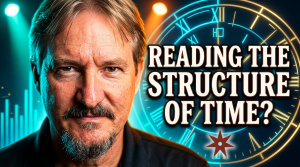
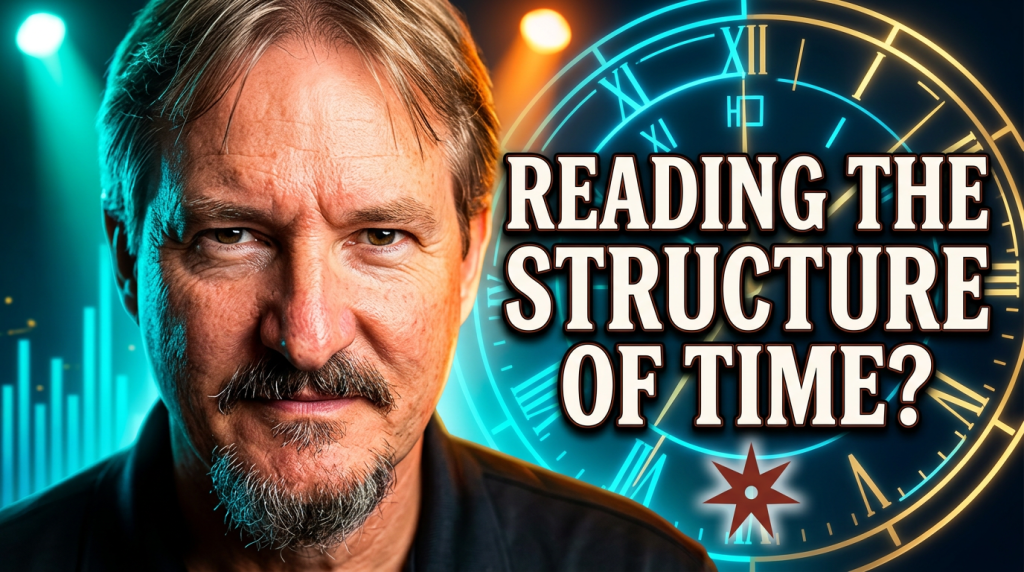

Business astrology may seem an unlikely topic for a podcast built around founders and the people who lead alongside them. Ben Olmos, who describes himself as a natural skeptic shaped by years of doctoral research, came into Episode 107 of DissedMedia: A Startup Story with his reservations fully intact. His guest, Ric Thompson, co-founder of Temporal Intelligence, offered to read him live on air using nothing more than his name and the details of his birth. There was no questionnaire or interview beforehand, and the audience could watch in real time whether the findings landed.
The conversation began somewhere unexpected, with a book Ben had recently finished by Roland Orzabal of Tears for Fears, which opens by warning readers that it contains a good deal of astrology. Ric is quick to say that he asks nobody to believe in astrology or to study any of the symbolic systems his company draws upon; his interest, as he describes it, centers upon observation, and upon whether the patterns these systems describe seem to fit the person in front of him. Over roughly 90 minutes, Ben put that claim to a public test, and the results gave both men plenty to discuss about how leaders might come to understand the way they are built.
From Dial-Up Outages to Mercury Retrograde

Ric’s path into this work started in the early 2000s, when he and his wife Liz bought an internet service provider in the days of dial-up. Coming from a technical background, he was inclined to dismiss it when Liz pointed out that a run of failed hard drives and oddly identical customer complaints had arrived alongside Mercury retrograde. The pattern, however, repeated three or four times a year, and by the time they sold the company the whole team had learned to avoid launching new projects during those windows. Ric’s guiding principle, as he puts it, is that when something seems crazy and still works, the craziness matters far less than the result.
In 2003 the couple launched Healthy, Wealthy and Wise, an online personal development magazine they ran for about 13 years while working with prominent speakers and authors, Tony Robbins among them. Behind the scenes, Ric says, a surprising number of bestselling authors quietly timed their book launches to astrology. He recalls one campaign that pulled out every stop and stalled at number two on the New York Times list. Four months later, a relaunch on the date a Vedic astrologer had recommended reached number one, despite a smaller group of promoters and a much shorter runway.
How Temporal Intelligence Turns Business Astrology Into a Written Report
As the couple experimented with more systems in their personal and professional lives, Ric began to wonder what a single report might look like if it read one person through all of them at once. Such a report might combine Western and Chinese astrology with numerology and several other traditions. Before AI, that kind of synthesis seemed nearly impossible to produce at a reasonable cost, so Liz took the lead once AI tools matured. The first results were hundreds upon hundreds of data points that Ric describes as essentially unusable, until she chose to treat them the way military intelligence treats incoming signals, filtering out the noise and paying attention only where patterns appeared.
The resulting document, which Temporal Intelligence calls a Structural Architecture, leads with the places where several of its seven systems agree about an individual. Ric notes that these systems were developed by cultures across the world, sometimes thousands of years apart, so any agreement between them seems to him worth treating as genuine signal. The emphasis falls upon practical application, since knowing how a person is built, along with how they may not be built, can ripple out across a career and a business along with the relationships inside both. Ben supplied only his name and the details of his birth. He had met Ric through Lady Jen Du Plessis, a past guest of the show, and had spoken with him for perhaps half an hour before the recording.
Why Observation May Matter More Than Self-Reporting
Ben studied industrial psychology partly because one question would not leave him alone, namely how to make people happy. That pursuit led him through trait theory and on to instruments such as the Myers-Briggs Type Indicator, which grew out of Carl Jung’s work, as well as the DiSC profile used at many corporate retreats. He holds a standing complaint about one popular online version of these tools, which labels itself a test; in his view a person can fail a test, while an assessment simply returns information about who someone is.
Ric values those instruments; however, he points out that any self-reporting system requires that a person already understand themselves. Ben agreed that behavioral scientists generally regard self-reporting as one of the weaker ways to collect data, since people tend to steer their answers toward whoever they hope to be. Ric’s answer returns again and again to the first step of the scientific method, which is simple observation. He does not claim to know why these systems seem to work, and he compares the situation to gravity, which people relied upon for most of human history, eventually building the science of ballistics around it, long before anyone could explain how it operated.

Plain Speech and a Career of Reinvention
The first finding Ric shared, supported by four of the seven traditions, held that Ben does his best work through plain speech aimed at people who are not yet in the room. Speaking to a crowd of two hundred seemingly costs him little more than speaking to a pair of colleagues. Ben’s reaction was immediate, since he has long told people that he lacks the capacity to change how he presents himself from one audience to the next, and he tends to cut through barriers by boiling a situation down to its simplest form. Ric observed that many people rank public speaking as a greater fear than death, which may make this a strength worth aiming deliberately and on a schedule, through outlets such as the podcast itself.
A second finding described movement as structural, a history of changing the frame through new places and new subjects, along with new people and new versions of the work. Ben has physically relocated fewer times than many, so the literal reading missed. The broader reading landed, however, because an old colleague had recently reached out on LinkedIn to remark upon all of his reinventions. Ben sees those shifts as parts of himself that were always present, across a career that has spanned operations, data and analytics, college teaching, and a media company of his own. He admits he has never had a simple answer when someone asks what he does. Ric contrasted this with his late father, an aeronautical engineer who accepted one of his first job offers after college and stayed with it until retirement.
Taking On More Than Can Be Finished
The finding that drew the strongest reaction concerned taking on more than can be carried. In that pattern, saying yes costs nothing on the day, and six weeks later there is a quiet list of things that are mostly done with no obvious next step. Ben joked that he refused to believe it before conceding the point, describing a mix of FOMO and tenacity that has kept DissedMedia going longer than many might have expected, along with a reluctance to ask for help. He explained that taking on too much once contributed to serious anxiety for him, which led him to build a system that places his primary work above everything else and treats other projects as sub-priorities.
Ric paired that constraint with what the report called the strongest asset in Ben’s read, a capacity to hold a plan across years and reduce a mess to order. Ben connected it to a career that gravitated toward operations and project management, along with Six Sigma and process flow methodologies. It also helps explain Rostr Studio, the podcast operations platform he built after seeing how much chaos goes into booking guests and managing a release calendar. His family, he admits, has learned that even a casual mention of a new idea may prompt him to draft a business plan on the spot. Ric’s advice was to treat this as a capability that fires whether or not anyone aims it, and to apply some discipline about where it points, closing or formally abandoning open commitments before accepting new ones.
Structural Constraints and Speaking Before Judgment
Ric described constraints as load-bearing walls to navigate. One of them suggested that Ben’s reactions can reach speech before they reach judgment, particularly when something crosses a line about fairness. Ben acknowledged a habit, strongest in his younger years, of correcting anyone he heard say something inaccurate, and he recalled a colleague once asking whether he wanted to be right or to be liked. Age has taught him to pause, he says, and he leans upon advice he has heard often, that an email which feels good to write probably should not be sent. The report suggested a fixed delay, measured in hours, before anything sharp, with each remark judged by what it is likely to do in the room.
Ric also walked through how Temporal Intelligence applies its findings to seven pillars, with examples drawn from decision-making and revenue. The revenue read suggested that Ben’s biggest wins tend to be built over time, which Ben confirmed by describing DissedMedia as a long game. He initially expected people to read long-form articles shared on LinkedIn, only to learn that scrolling audiences would rather watch and listen; the shift to video podcasting brought more traction along with the hope of a break-even year on operating costs. Ric added a timing note from the report, a period running from March through October 30 in which a stall in public reach may feel like a verdict on the work itself, with the suggestion to keep publishing on a set schedule and to judge reach across a full year.
How Managers Might Use This With Their Teams
Ben framed part of the episode for the managers in the audience, suggesting that a report like this could help a leader understand and serve a team. He added that it should never be used to hunt for weaknesses or to dominate how people work, the same caution he offers about Myers-Briggs and DiSC. In his view those instruments read like the Reader’s Digest version of what a Structural Architecture offers, and he sees value in leaders sharing parts of their own profiles so that their teams understand some of their reactions. Ric agreed with the comparison while adding a caution of his own. There is so much power in knowing how someone else is built, he says, that he would encourage people in corporate settings to get their own report and share only what feels relevant, and he admitted he is not sure he would want his own boss holding his.
Ric shared two client stories that illustrate where the work tends to land. A senior manager laid off during a wave of consulting downsizing had grown depressed by the repeated interviews required to collect unemployment. Her report suggested she was built to find roles through networking, which matched every job she had ever held, and within a week she had a meeting with a former colleague that eventually became a new position. Another client, whose income had arrived for decades in dramatic waves of success followed by hard troughs, learned to prepare for both and told Ric he wished he had seen the pattern twenty years earlier. Temporal Intelligence now also works with coaches and consultants, placing reports in their hands with a client’s permission.
How to Connect With Ric Thompson

Ric invites listeners to reach out directly at ric@temporalread.com, spelled without a k, and to include a little background, such as whether they are navigating a career decision or working with clients of their own as a coach or consultant. More about Temporal Intelligence and its Structural Architecture reports is available at temporalread.com, and Ric can also be found on LinkedIn.
Frequently Asked Questions
What is business astrology?
Business astrology generally refers to applying astrological systems to questions about work and leadership, including the timing of major decisions. In this episode, Ric Thompson describes an approach that combines seven symbolic systems from different cultures and focuses upon the points where they agree, using the results to inform how a person approaches career and business decisions.
What is a Structural Architecture from Temporal Intelligence?
A Structural Architecture is a written report built from a person’s name and birth details, with no questionnaire involved. It describes what the person appears to be built to do, along with the constraints they may need to work around, and applies those findings to areas such as decision-making and revenue.
How does this compare to Myers-Briggs or DiSC?
Myers-Briggs and DiSC rely upon self-reported answers, which assumes a person already understands themselves. Ric Thompson argues that his approach rests upon observation instead, while Ben Olmos described traditional personality instruments as the Reader’s Digest version of the deeper detail he saw in his own report.
Should managers use astrology-based reports with their teams?
Both Ben and Ric urged caution. Ben believes such tools may help leaders understand and serve their people when used with that intent, and Ric suggests that individuals get their own reports and share only the parts they consider relevant with colleagues or a manager.
For more conversations from the show, see our episode with Lady Jen Du Plessis on how to monetize a podcast, Daniel Alfon on how to network on LinkedIn, Ben Albert with networking tips for introverts, and Ben’s reflection on what 100 episodes of bootstrapping a podcast actually cost.
Episode 107 is available now wherever you listen to podcasts. Watch the full conversation on the DissedMedia YouTube channel at @DissedMedia and subscribe to help us reach 100,000 subscribers by the end of 2026.