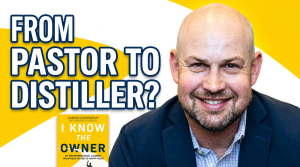
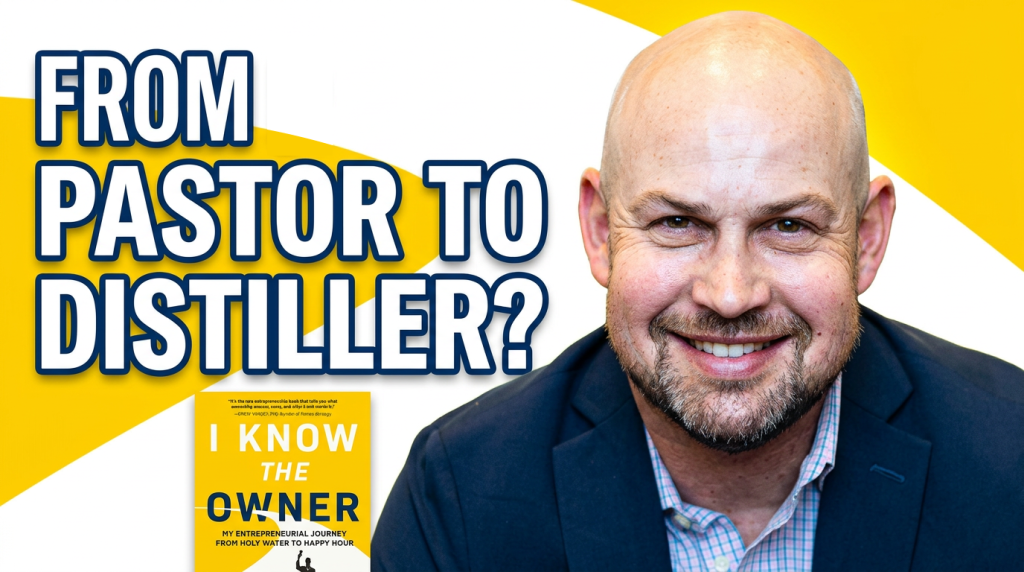

Learning how to start a distillery tends to involve far more regulation and selling than the picture of a founder standing over a copper still would suggest, and most of that education arrives after the doors are already open. Matt Estrin, founder of 477 Distilling in Greeley, Colorado, spent fifteen years as a music pastor before he taught himself to distill on a five-gallon stovetop still, and nine years after opening the business his craft spirits are distributed across nine states.
Matt joined DissedMedia: A Startup Story to talk with host Ben Olmos, who has worked in the wine industry for more than a decade and knows the regulatory landscape from the supplier side. Their discussion moves from the anniversary trip that started everything through a forced rebrand and an expansion that moved too quickly, and it closes with the year in which the business took a serious toll on his health; for anyone weighing whether to leave a steady paycheck for a venture of their own, it may be a useful account of what the leap looks like once the early excitement has worn off.
From Music Pastor to Craft Distiller
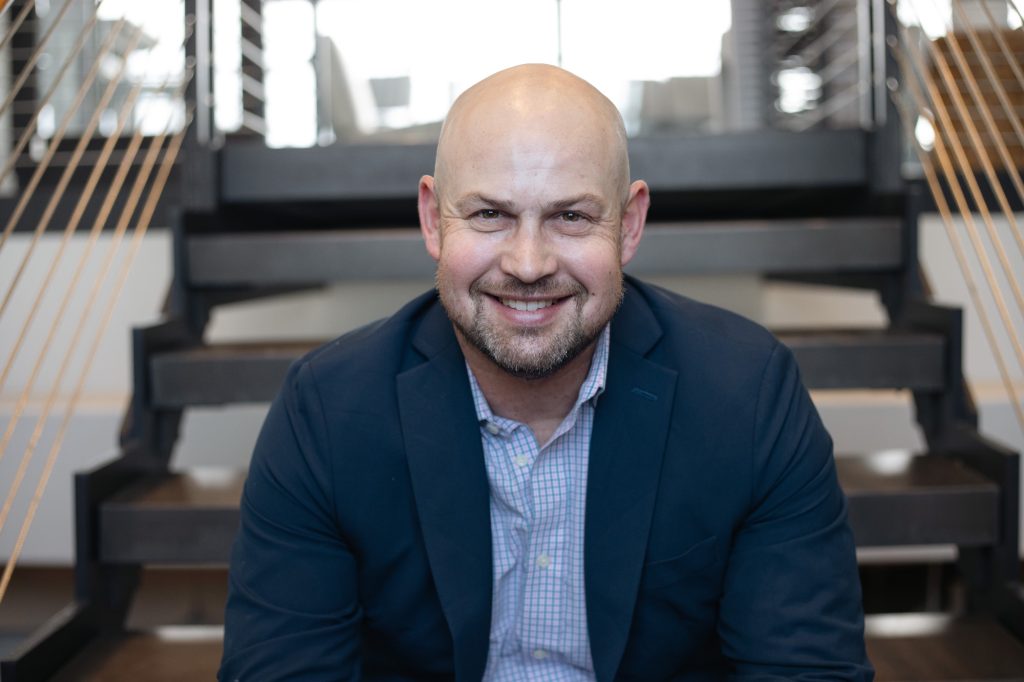
Matt explains his career through the idea of a calling, which he likens to a passion that sits deep enough that a person feels compelled to be part of it. That feeling carried him through five years at a church in Jacksonville, Florida and another ten in Colorado, and he says he loved the work and was good at it. Somewhere in his mid-thirties the passion began to shift, and around the same time he and his wife took an anniversary trip to Napa Valley, where he became fascinated with how alcohol was made and with the way a tasting room could gather people of very different backgrounds around a single glass. He came home convinced that he had to be part of the industry, and since whiskey was what he liked to drink, he bought a five-gallon stovetop still and began reading every book he could find.
The stovetop still eventually gave way to a 32-gallon system, and friends who came by were handed whatever recipe he was testing that week, which gave him a steady source of feedback long before he had anything to sell. Ben noted that the wine and spirits business is unusually generous with what it knows, and Matt agreed, saying it is hard to find a jerk in the industry and that the other distillery in his town is run by friends who cheer for his success. He added, with some humor, that the larger companies tend to buy a craft producer once it grows big enough to compete with them, which he considers a built-in exit strategy.
How to Start a Distillery With More Knowledge Than Capital
The decision to leave a steady paycheck came after Matt’s grandfather passed away and left the couple an inheritance that he describes as too small to fund the business and large enough to let them dream. Before committing, he enrolled at Moonshine University in Louisville, Kentucky, a school whose name draws laughs and whose weeklong courses run from early morning until nine at night. The curriculum covered production alongside the laws that differ in every state, and it included the federal permitting and labeling requirements administered by the Alcohol and Tobacco Tax and Trade Bureau. He returned with industry connections and a clearer sense of what he was getting into, and with recipes already developed, the risk seemingly felt smaller than it otherwise would have. Readers interested in another founder who changed direction well into a career may also want the earlier episode on career reinvention after 50 with Andrew Brummer.
What the coursework could not teach him was something about his own role. Matt had imagined his days hauling grain and coming home dirty after long hours of mashing and fermenting, and he learned quickly that a business grows when its founder spends less time making the product and more time selling it. He handed production to a member of his team and went out to bring people into the tasting room and meet distributors; however, the surprise was that he came to enjoy working on the business more than working in it.
The Cease and Desist Behind the 477 Distilling Name
The distillery opened as Tower 56, a name taken from the lifeguard tower at 56th Street in Newport Beach, California, which stood just outside the back porch of his grandmother’s beach house and served as the backdrop of his childhood. In 2020 the company received a cease and desist letter from a business with a similar name, even though Tower 56 had gone through the trademark registration process. Matt’s brother, an attorney who does not practice trademark law, thought the case could probably be won, although the fight might cost $100,000 in legal fees and take years to resolve.
By then the name had already become harder to use. As distribution reached liquor stores five and seven hours from Greeley, Matt found that a Colorado distillery named for a California lifeguard tower was a story he could tell well in person and one that retailers and bartenders struggled to repeat. He chose to treat the letter as an opening and went looking through local history, where he learned that Greeley was founded as an alcohol-free community and did not legalize alcohol until 1969. The measure drew what he says remains the largest per capita voter turnout in the city’s history, and it passed by 477 votes. Customers who were there from the first day still say they are heading down to Tower, which Matt regards as a small privilege of having been early.
Owning Your Backyard Before Crossing State Lines
Alcohol in the United States moves through what is known as the three-tier system, in which producers generally sell to licensed distributors who in turn sell to retailers, and Ben pointed out that the rules governing those relationships change from one state to the next. Colorado is unusual in allowing a distillery to distribute its own product, so for the first several years Matt took the orders and delivered the cases himself, which protected his margins and consumed his time. The advice he had taken from Moonshine University was to own the backyard before expanding, and he pointed to a Colorado distillery that he said sold for $110 million while drawing 85 percent of its distribution revenue from inside the state, even with placements across the country.
When demand outpaced what one person with a truck could deliver, he signed with a beer distributor in northern Colorado that carried only four spirits, and that small portfolio turned out to matter a great deal. Matt describes most distributors as logistics teams whose salespeople will favor whatever earns the company the most, so a producer does best where the distributor needs its brand to hit a goal. The same logic held in Wisconsin, his first market outside Colorado, where a distributor with six salespeople covering the state treated the relationship as a partnership. About two years ago the company began chasing new states with less attention to who the distributor was, and rough entries into Nebraska and Iowa followed; he has since withdrawn from some states and ended a couple of relationships. His conclusion is that holding a distribution license and being the right partner are separate questions, and Ben added that a distributor can be excellent at its work and still be a poor fit for a particular brand.
Seven Ventures and a Preference for Brick and Mortar
The distillery was the first of seven ventures. An axe throwing bar came next, and its success led a town about an hour away to recruit him to open a cocktail bar and a second axe throwing venue there. The second venue closed within six months, since the concept seemingly needs a larger population than a small town can supply, and the cocktail bar was eventually sold to the managers who ran it. He later opened a gourmet waffle restaurant called Oak and Maple, and about two years ago he moved 477 Distilling into a much larger facility in another city with the restaurant concept under the same roof, which he calls the largest capital investment and the biggest risk he has taken. Looking across the list, Matt sees a founder who builds physical places where people gather, and he doubts he would ever start an online business.
I Know the Owner and the Chapter He Did Not Want to Write
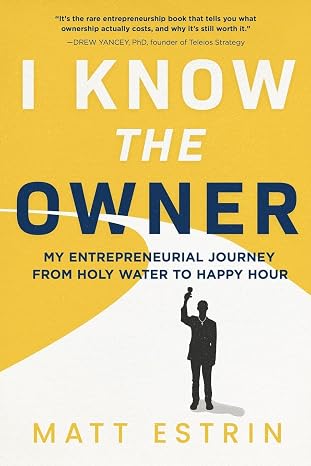
For most of the past seven years, someone has told Matt about once a week that they would love to own a business someday, and roughly once a month someone asks to meet and hear how he started. He found himself repeating the same stories, and he also felt that the business books he reads are largely written by founders who sold a company for hundreds of millions of dollars and reduced the experience to a handful of steps. His book, I Know the Owner, is intended as an account from someone who is still inside the business, part memoir and part practical advice. By his own rough count, of every hundred people who have told him they want to start something, about three have done it, and he would like to see that number rise.
The hardest section to write concerns 2022. The first two years of the pandemic were uncertain and yet financially strong, since customers were at home with money to spend; however, when that spending dried up he faced weeks in which making payroll was in doubt. The accumulated strain surfaced as a fixation on a medical problem that no doctor could find, and it was his wife and his mother who urged him to seek help. He spent about a year and a half in professional counseling and took up triathlons to rebuild his physical health, and he shares the story in the hope that it makes asking for help feel less like weakness to other owners. Ben, who has spoken about his own period of panic attacks, agreed that this is the part of entrepreneurship that rarely gets discussed, and readers who recognize the pattern may find the Daily Pitch piece on burnout symptoms useful.
Frequently Asked Questions
How do you start a distillery?
Starting a distillery in the United States generally begins with learning production and the regulatory requirements, which include federal permitting and state licensing. Matt Estrin recommends formal training and tested recipes before opening, along with a plan to win the local market before pursuing distribution in other states.
What is the three-tier system in alcohol distribution?
The three-tier system is the structure most states use to regulate alcohol sales, in which producers sell to licensed distributors and distributors sell to retailers. The rules vary by state, and some states, Colorado among them, allow a distillery to distribute its own products.
Why did Tower 56 change its name to 477 Distilling?
The distillery received a cease and desist letter in 2020 over its original name, and Matt Estrin chose to rebrand instead of spending an estimated $100,000 on a legal fight. The new name refers to the 477-vote margin by which Greeley, Colorado legalized alcohol in 1969.
How can I find Matt Estrin and 477 Distilling?
Matt can be reached through 477distilling.com and his personal site, mattestrin.net. The distillery does not ship spirits directly to consumers, so he suggests asking a local liquor store to request 477 Distilling products.
Matt’s full conversation with Ben covers more ground than a single article can hold, including the differences between selling beer and selling spirits and the reasons a recipe that works at home rarely translates directly into a commercial product. The full episode with Matt Estrin on how to start a distillery is below, and you can learn more about his book and his businesses at mattestrin.net.
More at dissedmedia.com, rostr.studio, and benolmos.com.